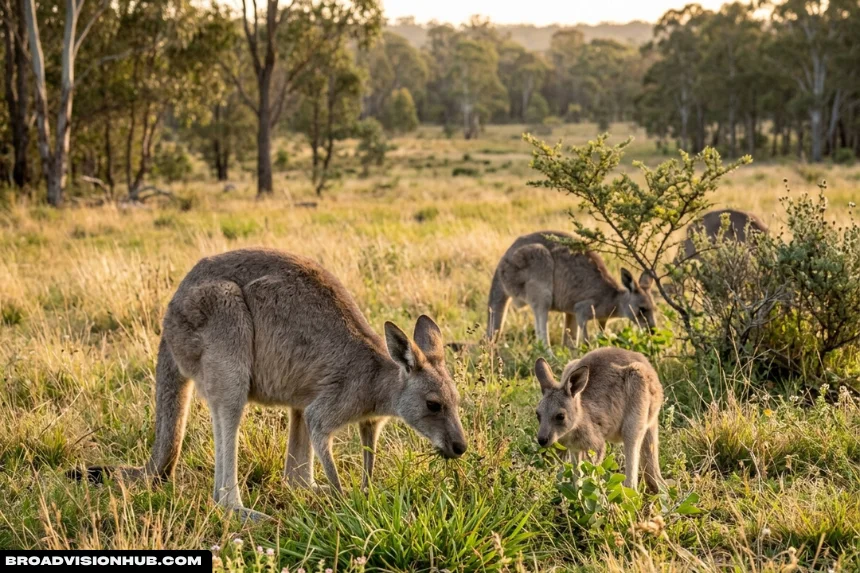
What do kangaroos eat? Most large, ground-dwelling kangaroos are herbivores that feed mainly on grasses. Depending on the species, habitat, season, and available moisture, they may also eat leaves, shrubs, herbs, forbs, flowers, and other plant material. Joeys begin life on their mother’s milk, while kangaroos in professional care receive carefully balanced forage and pellets rather than human snacks.
However, not every kangaroo eats the same menu. Red kangaroos in dry inland country face different food choices from eastern greys in wetter woodlands. Moreover, “kangaroo” is sometimes used loosely for macropods such as wallabies and tree kangaroos, whose diets can differ substantially.
What Do Kangaroos Eat? Quick-Answer Table
| Question | Direct answer |
|---|---|
| What do kangaroos eat most often? | Grasses form the main food of most large terrestrial kangaroos. |
| Are kangaroos herbivores? | Yes. The familiar red, eastern grey, western grey, and antilopine kangaroos primarily eat plants. |
| Do kangaroos eat leaves? | Yes. Some species browse leaves and shrubs, especially when grass quality or availability changes. |
| Do kangaroos eat fruit? | Wild large kangaroos do not generally depend on fruit, although some smaller macropods and tree kangaroos eat more fruit. |
| Do kangaroos eat meat? | Large terrestrial kangaroos are plant-eaters; claims that they normally eat meat are not supported by reliable zoological sources. |
| What do baby kangaroos eat? | Joeys first drink milk, then gradually sample grass and other vegetation before they are fully weaned. |
| What do captive kangaroos eat? | Zoos and licensed carers use grass, hay, browse, formulated macropod pellets, and other foods selected by animal-care professionals. |
| When do kangaroos feed? | Many feed most actively from late afternoon through dawn, although timing varies with species, weather, and disturbance. |
| Do kangaroos need water? | Yes. They drink water, but moisture-rich plants and heat-avoidance behavior can reduce how often some species need to drink. |
| Should people feed wild kangaroos? | No. Human feeding can cause poor nutrition, habituation, crowding, and dangerous interactions. |
Kangaroo Diet Key Facts
| Topic | Verified summary |
| Animal group | Kangaroos belong to the macropod family, a group of marsupials that also includes wallabies and related animals. |
| Main diet type | Herbivorous and adapted to fibrous plant material. |
| Core foods | Native and introduced grasses, plus varying amounts of herbs, forbs, leaves, and shrubs. |
| Feeding style | Mostly grazing, although some species browse more than others. |
| Digestion | Foregut fermentation in a chambered stomach; kangaroos are not true ruminants. |
| Young | Milk first, followed by a gradual transition to vegetation. |
| Wild feeding advice | Observe from a distance and do not offer food. |
| Important distinction | Tree kangaroos and smaller macropods may have broader diets than the large animals usually meant by “kangaroo.” |
What Do Kangaroos Eat in the Wild?
In the wild, large kangaroos eat mainly grasses and other low-growing plants. However, their exact diet changes as vegetation grows, dries, or disappears. Their food choices also reflect body size, habitat, rainfall, and the nutritional value of available plants.
The commonly recognized large terrestrial kangaroos are the red kangaroo, eastern grey kangaroo, western grey kangaroo, and antilopine kangaroo. The broader kangaroo family includes many related macropods, but everyday searches usually refer to these large ground-dwelling species.
The Main Foods in a Wild Kangaroo’s Diet
A typical wild diet may include:
- Native and introduced grasses
- Grass shoots and blades
- Herbs and forbs
- Leaves from low plants
- Shrubs and other browse
- Flowers and flowering plant parts
- Occasional bark or woody material when preferred forage is limited
Grass is the safest general answer because it dominates the diets of many large species. Nevertheless, a universal list can mislead readers because local plants and rainfall differ.
The San Diego Zoo’s kangaroo and wallaby guide describes most kangaroos and wallabies as grazers that clip grass and sometimes pull down branches for leaves. Therefore, kangaroos should not be described as animals that eat only lawn-like grass.
How Does Diet Vary Among Kangaroo Species?
The four large kangaroo species share a plant-based diet, but they do not select foods in identical proportions. In general, eastern greys and antilopine kangaroos are strongly associated with grassy habitats, while red and western grey kangaroos can broaden their diet when local conditions change.
Red Kangaroo Diet
Red kangaroos live across much of Australia’s arid and semi-arid interior. Grasses usually remain central to their diet, even in dry country. However, they may also consume forbs and some shrubs when those foods are available.
Field research shows that red kangaroo diets shift with rainfall. Forbs may increase during favorable wet periods, while grasses can remain dominant in drought. Consequently, claims that red kangaroos switch mainly to fruit or roots in dry weather are too broad.
Eastern Grey Kangaroo Diet
Eastern grey kangaroos commonly occupy forests, woodlands, farmland edges, parks, and other areas with reliable grass. They are primarily grazers and often seek young, green grass when it is available.
Queensland Government guidance on living with kangaroos and wallabies notes that eastern greys use altered landscapes with shelter, water, and grass. As a result, people often see them on lawns and grassy clearings.
Western Grey Kangaroo Diet
Western grey kangaroos eat coarse grasses and may browse some shrubs. Their habitat includes grasslands, open forests, woodlands, and coastal vegetation, so their menu varies across their range.
The official Perth Zoo western grey kangaroo profile confirms that the species eats coarse grasses and some shrubs. That concise description is more reliable than long food lists that do not explain which items matter in the wild.
Antilopine Kangaroo Diet
Antilopine kangaroos live in tropical northern Australia, particularly in savanna woodland and open grassland. They feed mainly on grasses and often use areas where seasonal rains produce fresh growth.
Because northern wet and dry seasons sharply change the landscape, feeding conditions can shift during the year. However, the species remains a grazing herbivore rather than an animal with a routine mixed diet of meat and plants.
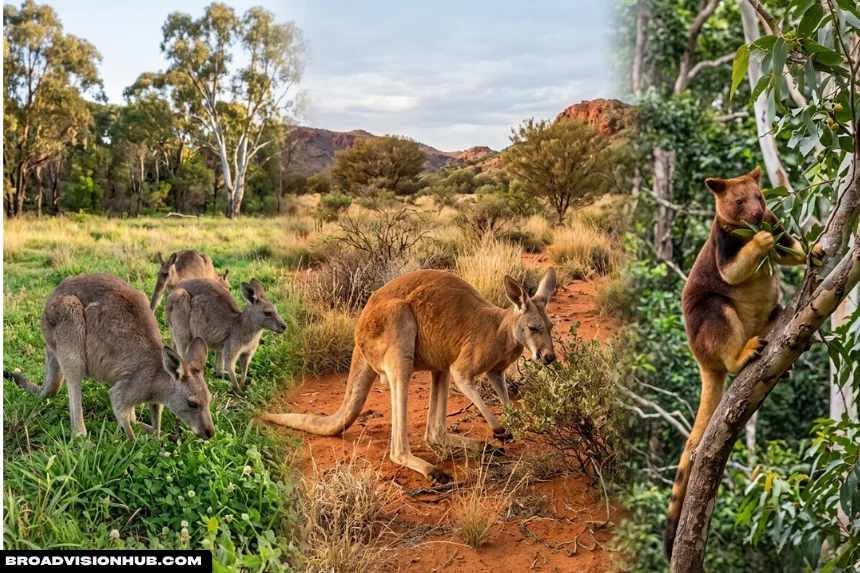
What Do Kangaroos Eat During Different Seasons?
Kangaroos respond to rainfall, drought, fire, temperature, and plant maturity. Therefore, seasonal diet change usually means a change in the proportions of grass, forbs, leaves, and shrubs—not a complete switch to an unrelated food type.
After rain, new grass shoots and soft herbs offer moisture and nutrients, while flowering plants and forbs may become more important. During dry conditions, plants grow tougher, so kangaroos may feed longer, travel farther, or include more browse.
Severe drought creates the greatest pressure. Adults select the best remaining forage and avoid daytime heat. However, young-at-foot joeys can be vulnerable because they are still developing the ability to process high-fiber plants efficiently.
How Do Kangaroos Digest Grass and Tough Plants?
Kangaroos use foregut fermentation to break down fibrous food. Their stomach has specialized chambers where microorganisms ferment plant material before it moves through the rest of the digestive tract.
However, kangaroos are not true ruminants. Cattle regurgitate cud as an essential part of rumination, whereas kangaroos may only occasionally regurgitate and rechew material in a behavior called merycism.
Their incisors clip vegetation, while broad cheek teeth grind it. As those teeth wear, rear molars can move forward. Meanwhile, gut microbes release energy from fiber. Consequently, rich, sugary, or highly processed food does not suit a digestive system adapted to steady amounts of rough plant material.
When Do Kangaroos Eat?
Many kangaroos feed most actively during the cooler hours from late afternoon through the night and into early morning. Nevertheless, activity patterns are flexible rather than fixed.
In hot weather, kangaroos often rest in shade at midday and graze when conditions cool. During mild or cloudy weather, they may also feed in daylight.
When pasture becomes scarce, kangaroos may graze longer. Studies record differences by species, sex, season, and pasture quality. Therefore, “every kangaroo eats for exactly six to ten hours” is not a universal fact. Kangaroos also feed in loose groups called mobs, although each animal selects plants independently.
Do Kangaroos Drink Water?
Kangaroos need water, but they may obtain a meaningful share of it from fresh vegetation. Species living in dry environments also conserve water by resting during hot periods and feeding when temperatures are lower.
Red kangaroos can endure long intervals between drinks under suitable conditions. However, exact claims such as “all kangaroos can live for months without water” remove important context. The result depends on the species, weather, health, life stage, and moisture content of available forage.
Kangaroos drink from natural and artificial sources when water is available. Moreover, lactating, young, sick, or heat-stressed animals may need more. A lack of visible drinking does not mean they can survive without water indefinitely.
What Do Baby Kangaroos Eat?
Baby kangaroos, called joeys, begin life entirely dependent on milk. After birth, the tiny, undeveloped joey reaches the pouch, attaches to a teat, and continues growing while nursing.
As it matures, a joey starts tasting grass and other vegetation while continuing to drink milk. The Northern Territory Government’s overview of kangaroos and wallabies explains that joeys nurse for months before feeding on grass and plants.
Milk changes during lactation, and some older joeys continue nursing after leaving the pouch. Therefore, an orphaned joey should never receive cow’s milk or homemade formula without expert direction.
What Do Kangaroos Eat in Captivity?
Professionally managed kangaroos receive diets designed around fiber, species needs, body condition, dental health, and the foods available at the facility. Their diet may include grass, hay, fresh browse, formulated herbivore or macropod pellets, and limited produce selected by keepers or veterinarians.
Zoo diets should not be copied casually. A vegetable used as training reinforcement is only one part of a carefully balanced daily ration.
Northern Territory Government guidance on caring for macropods recommends grass, kangaroo pellets, lucerne hay, browse, and fresh water for adults in care. It also describes reducing milk as joeys eat more solids. Anyone who finds an orphaned or injured kangaroo should contact a licensed wildlife carer or veterinarian.
Should People Feed Wild Kangaroos?
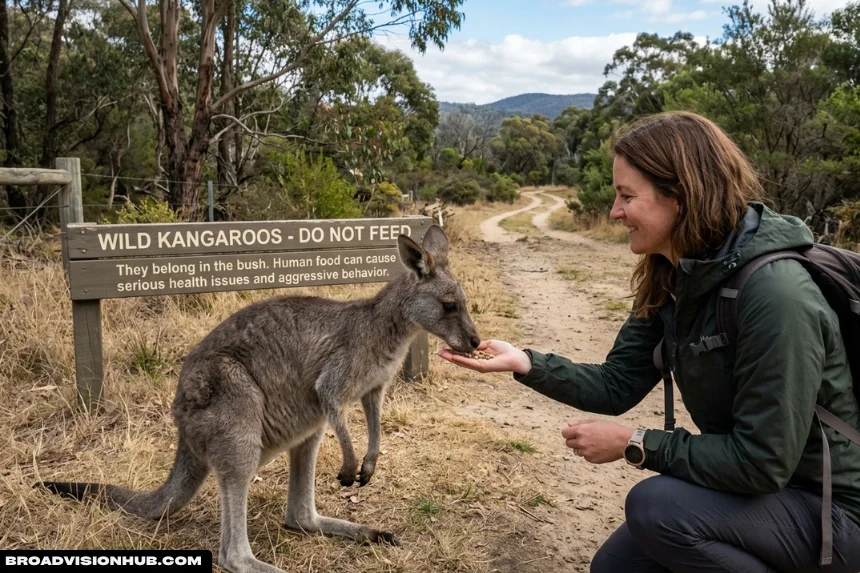
People should not feed wild kangaroos. Feeding may seem compassionate, but it can change natural behavior, concentrate animals in small areas, spread disease, and encourage kangaroos to approach people.
Queensland Government advice warns that fed kangaroos can become habituated and seek food from people. They may become demanding or defensive, while large males can cause serious injuries.
Bread, chips, crackers, sweets, and processed foods contain the wrong balance of fiber, sugar, and salt. Even produce can be too rich in large amounts. During genuine emergencies, follow specialists. New South Wales Government advice on helping wildlife in emergencies gives only short-term options and warns against hand-feeding.
Foods People Should Not Offer to Wild Kangaroos
Do not offer:
- Bread, crackers, cereal, or baked goods
- Candy, chocolate, or sweetened foods
- Chips or salty processed snacks
- Pet food
- Meat
- Large amounts of fruit or carrots
- Moldy hay or spoiled produce
- Unidentified garden plants
- Any food intended to attract kangaroos for photographs
Instead, watch from a safe distance and allow the animals to forage naturally. Moreover, secure garbage, avoid leaving pet food outside, and never encourage children to approach a feeding kangaroo.
Do Tree Kangaroos Eat the Same Foods?
Tree kangaroos live mainly in forest canopies and often eat leaves, shoots, flowers, fruit, and ferns. Some species also consume insects, eggs, or small animal matter.
For example, Perth Zoo’s Goodfellow’s tree kangaroo profile describes an omnivorous diet dominated by plant foods but sometimes including insects, eggs, and small birds. Therefore, claims that “kangaroos eat meat” may refer to a tree kangaroo, not the familiar red and grey species.
Common Myths About What Kangaroos Eat
Several claims appear repeatedly online, although the evidence is weak or the wording lacks context.
Myth: Every kangaroo eats fruit. Large wild kangaroos mainly graze and browse. Fruit may appear in some managed diets or the diets of tree kangaroos, but it is not a universal staple.
Myth: Kangaroos are true ruminants. They are foregut fermenters with chambered stomachs, but they do not perform true rumination in the same essential way as cattle.
Myth: Kangaroos never drink. They can obtain moisture from plants and may drink infrequently, yet they still require water.
Myth: Bread is a harmless treat. Bread is nutritionally inappropriate, encourages habituation, and can replace natural high-fiber forage.
Myth: All animals called kangaroos share one diet. Large terrestrial kangaroos, wallabies, rat-kangaroos, and tree kangaroos occupy different habitats and may eat different foods.
FAQs About What Kangaroos Eat
1. What Is a Kangaroo’s Favorite Food?
Fresh grass is the closest general answer, particularly for large terrestrial kangaroos. However, scientists usually describe food selection rather than a single “favorite,” because availability, species, season, and plant quality all influence what an animal chooses.
2. Do Kangaroos Eat Grass?
Yes. Grass forms the core diet of red, eastern grey, western grey, and antilopine kangaroos. Moreover, many kangaroos select young green shoots when rainfall produces fresh growth.
3. Do Kangaroos Eat Leaves and Shrubs?
Yes, although the amount varies among species and habitats. Western grey and red kangaroos may include shrubs or leaves, while eastern greys often rely heavily on grass.
4. Do Kangaroos Eat Fruit?
Large wild kangaroos do not normally depend on fruit. However, fruit may appear in limited professional-care diets, and some tree kangaroos eat considerably more fruit than ground-dwelling kangaroos.
5. Do Kangaroos Eat Meat?
Red and grey kangaroos are herbivores, so meat is not part of their normal diet. Nevertheless, some tree-kangaroo species may occasionally consume insects, eggs, or small animal matter, which can cause confusion in broad online lists.
6. What Do Joeys Eat?
Young joeys drink their mother’s milk. Later, they begin sampling grass and plants while they continue nursing, and ultimately they shift to a fully herbivorous adult diet.
7. Do Kangaroos Chew Cud?
Not in the same way as cattle. Kangaroos are foregut fermenters and may occasionally regurgitate and rechew food, but researchers call this merycism rather than true rumination.
8. How Often Do Kangaroos Drink Water?
There is no single schedule. Kangaroos may drink less often when fresh vegetation supplies moisture, while heat, drought, lactation, health, and species differences can increase their need for water.
9. What Food Do Zoos Give Kangaroos?
Zoos commonly use grass, hay, browse, high-fiber pellets, and carefully selected produce or greens. However, trained staff balance the complete diet, so visitors should never copy zoo feeding practices with wild animals.
10. Why Should You Not Feed Wild Kangaroos?
Feeding can cause nutritional problems, habituation, crowding, disease transmission, and aggressive encounters. Therefore, the safest and most responsible choice is to observe kangaroos without offering food.
Conclusion: What Do Kangaroos Eat and Why Does It Matter?
So, what do kangaroos eat? Large terrestrial kangaroos mainly eat grasses, supported by varying amounts of herbs, forbs, leaves, shrubs, and other vegetation. Species, rainfall, season, age, and habitat shape the exact menu, while joeys transition slowly from milk to fibrous plants.
Ultimately, kangaroo digestion and behavior evolved around natural forage rather than human handouts. Understanding that difference helps readers interpret online food lists, distinguish ground kangaroos from tree kangaroos, and make safer choices around wildlife. The best way to support a wild kangaroo is not to feed it, but to protect its habitat, give it space, and let it choose its own food.