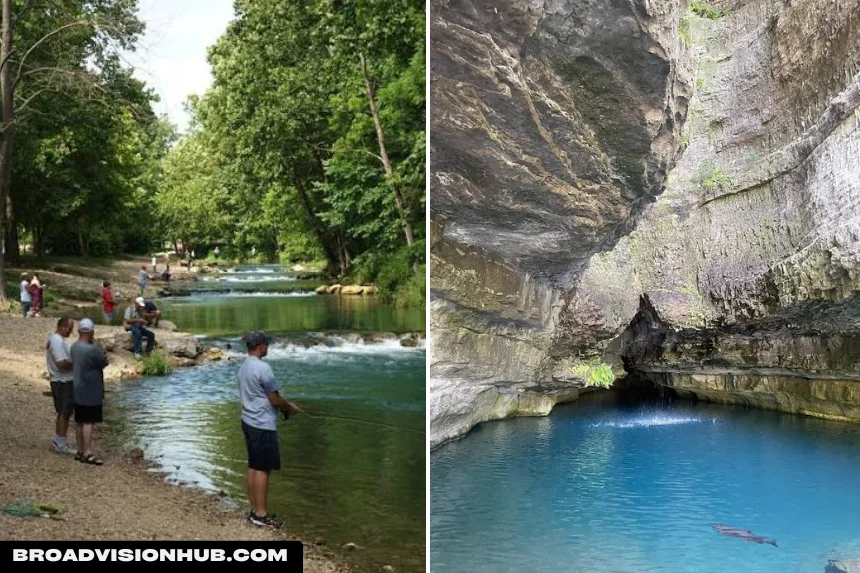
Roaring River State Park is a scenic southwest Missouri destination known for its spring-fed trout stream, forested hiking trails, campgrounds, cabins, and family-friendly attractions. The park sits in a narrow Ozark valley near Cassville, where steep wooded hills surround remarkably clear water.
Fishing is the main attraction. However, visitors do not need to be anglers to enjoy the park. Families can see trout near the hatchery, visit the nature center, enjoy a picnic, or explore one of seven designated trails. Meanwhile, overnight guests can choose from campsites, rustic cabins, lodge rooms, and accommodations at the Emory Melton Inn and Conference Center.
This guide explains where the park is, why it is worth visiting, what to do, and how its trout-fishing system works.
Quick Answer: What Can You Do at Roaring River State Park?
Roaring River State Park is best known for trout fishing in a cold, spring-fed river. In addition, visitors can hike seven trails, view the spring, walk around the fish hatchery, visit the Ozark Chinquapin Nature Center, picnic, camp, and stay in cabins or lodge rooms. Therefore, the park works well for day trips, fishing weekends, family outings, and longer Ozark vacations.
Quick Facts About Roaring River State Park
| Topic | Visitor information |
|---|---|
| Location | Near Cassville in southwest Missouri |
| Official address | 12716 Farm Road 2239, Cassville, MO 65625 |
| Best known for | Spring-fed trout fishing |
| Main fish species | Rainbow trout and brown trout |
| Hiking | Seven designated trails |
| Camping | Basic, electric, and sewer/electric/water sites |
| Lodging | Rustic cabins, housekeeping units, CCC Lodge rooms, and rooms at the Emory Melton Inn |
| Family attractions | Fish hatchery, nature center, picnic areas, short hikes, and seasonal programs |
| Dining | Full-service restaurant at the Emory Melton Inn |
| Official managers | Missouri State Parks and the Missouri Department of Conservation |
Missouri State Parks lists fishing, hiking, camping, lodging, picnicking, nature programs, and dining among the park’s main visitor services.
Where Is Roaring River State Park?
Roaring River State Park is in Barry County in the southwest Missouri Ozarks. Its official address is 12716 Farm Road 2239, Cassville, Missouri 65625. Although Cassville is the nearest city, the park itself lies in a wooded valley surrounded by rugged hills.
The drive into the park is part of the experience. During the final mile, the road drops about 400 feet from the Ozark Plateau into the river valley. As a result, first-time visitors may be surprised by the sudden change from relatively level countryside to steep bluffs, deep hollows, and forested slopes.
Cell service may be inconsistent in hilly or remote sections. Therefore, visitors should download the official park map before leaving home. It is also wise to save campground, cabin, and trail information for offline use.

How Far Is the Park From Cassville?
The park is only a short drive south of central Cassville. However, travel time can vary because the final approach includes winding roads and a steep descent into the valley.
Visitors arriving with an RV or travel trailer should allow additional time. Moreover, drivers should watch for cyclists, wildlife, pedestrians, and slow-moving vehicles near campground entrances.
Roaring River State Park or Roaring River Conservation Area?
Roaring River State Park and Roaring River Conservation Area are not the same destination.
The state park contains the main trout stream, campgrounds, cabins, hiking trails, the nature center, picnic facilities, and lodging. In contrast, the conservation area is a separate Missouri Department of Conservation property with its own boundaries and regulations.
Therefore, visitors should not use a conservation-area map when trying to reach a state-park campsite, cabin, fishing zone, or trailhead. Always confirm the property name before following directions or reviewing activity rules.
Why Is Roaring River State Park Worth Visiting?
Roaring River State Park combines convenient visitor facilities with a rugged Ozark landscape. Consequently, it appeals to anglers, campers, hikers, families, photographers, and travelers who simply want a peaceful place outdoors.
The park is especially worth visiting for the following reasons:
Cold, Clear Spring Water
Roaring River Spring sends more than 20 million gallons of clear, approximately 57-degree water into the river each day. Because the water remains cold, it creates suitable conditions for trout and supports the park’s popular fishery.
Scenic Ozark Terrain
The surrounding landscape includes limestone, dolomite, shale, and chert formations. Additionally, visitors can see oak-hickory woodlands, dolomite glades, spring-fed pools, wooded ridges, and deep hollows.
More than 600 plant species have been documented in the park. The protected Roaring River Hills Wild Area also contains 2,075 acres of rugged, relatively undeveloped terrain.
Activities for Different Types of Visitors
Anglers can fish for stocked trout. Meanwhile, hikers can choose among seven trails with different lengths and terrain. Families can visit the hatchery and nature center, while overnight visitors can stay in a tent, RV, cabin, lodge room, or inn room.
As a result, groups do not need to spend the entire day doing the same activity.
Year-Round Appeal
The traditional catch-and-keep trout season runs from March through October. However, a scheduled winter catch-and-release season provides another reason to visit during colder months. Hiking, photography, wildlife observation, and scenic drives can also be enjoyable outside the busiest summer period.
Some facilities operate seasonally or follow reduced schedules. Therefore, visitors should check current hours, advisories, and reservation availability before traveling.

Best Things to Do at Roaring River State Park
Although trout fishing attracts many visitors, the park offers several activities that do not require a rod or fishing permit.
See Roaring River Spring
Roaring River Spring emerges from a narrow, canyonlike gorge surrounded by ferns, mosses, rock walls, and forest. Its clear blue-green water makes it one of the park’s most recognizable natural features.
A pathway near the spring allows visitors to appreciate the scenery without taking a long hike. Therefore, the spring is a practical stop for families, older visitors, and travelers with limited time.
However, visitors should respect barriers and posted rules around the spring and hatchery. The spring pool is a protected natural feature rather than a general swimming area.
Visit the Roaring River Fish Hatchery
The fish hatchery is closely connected to the park’s trout-fishing tradition. Visitors can walk near the hatchery area and see trout in the raceways or nearby water.
Children often enjoy watching the fish gather and move through the clear pools. Additionally, the hatchery helps families understand why the river can support such a heavily used trout fishery.
The Missouri Department of Conservation manages fishing regulations and the hatchery property. Fishing is allowed only in designated waters and during posted hours.
Visitors should avoid feeding or touching fish unless a posted program specifically allows it. They should also keep children away from raceway edges and restricted work areas.
Visit the Ozark Chinquapin Nature Center
The Ozark Chinquapin Nature Center introduces visitors to the park’s geology, habitats, plants, and wildlife. Its name refers to the Ozark chinquapin, a rare tree found on some of the park’s rocky ridges.
Inside, visitors can see interpretive displays and live-animal exhibits. Outside, a pollinator garden contains more than 60 native plant species. Therefore, the center provides a useful break from fishing or hiking, especially for families and first-time visitors.
The center’s operating days and hours can change. For that reason, check the official schedule before planning a visit around it.
Enjoy a Picnic
Picnicking is an easy way to experience the park without committing to a full day of fishing or hiking. Visitors can bring lunch, relax near the river, and combine the meal with a short walk through the hatchery or spring area.
The park also has picnic shelters that may be reservable. However, availability can be limited during weekends, holidays, family reunions, and fishing events.
Food should remain attended and properly stored. Additionally, visitors should clean tables and remove trash before leaving to avoid attracting wildlife.
Explore Historic Park Features
Several park buildings and structures reflect the work completed by the Civilian Conservation Corps during the 1930s. Stonework, cabins, trails, and lodge features help give the park its traditional Ozark character.
These structures are not merely decorative. Instead, they show how early public recreation projects shaped the park visitors use today.
Roaring River State Park Fishing Guide
Trout fishing is the signature activity at Roaring River State Park. However, anglers must understand the fishing seasons, permit requirements, zones, tackle restrictions, and possession limits before casting a line.
The Missouri Department of Conservation manages the regulations. Because rules and fees can change, anglers should review the current regulation summary when purchasing their permit or trout tag.

Trout Seasons and Fishing Hours
The regular catch-and-keep trout season runs daily from March 1 through October 31. During this period, fishing begins and ends at posted times that vary by month.
The opening and closing times are:
| Month | Fishing begins | Fishing ends |
| March | 6:30 a.m. CST or 7:30 a.m. CDT | 6 p.m. CST or 7 p.m. CDT |
| April | 7 a.m. | 7:30 p.m. |
| May | 6:30 a.m. | 8:15 p.m. |
| June and July | 6:30 a.m. | 8:30 p.m. |
| August | 7 a.m. | 8 p.m. |
| September | 7:30 a.m. | 7:15 p.m. |
| October | 7:30 a.m. | 6:30 p.m. |
The winter catch-and-release season generally runs from the second Friday in November through the second Monday in February. Fishing is available on Fridays, Saturdays, Sundays, and Mondays from 8 a.m. to 4 p.m. During this season, anglers must release all trout immediately and may use flies only.
Because dates can shift each calendar year, confirm the current winter schedule before traveling.
Fishing Permit and Daily Trout Tag Requirements
From March 1 through October 31, most anglers need:
- A valid Missouri fishing permit
- A daily trout tag purchased for the park
The current daily trout-tag price is $5 for anglers age 16 and older and $3 for anglers age 15 and younger. Trout tags and fishing permits can be purchased at the park.
Missouri State Parks states that anglers age 15 and younger and Missouri residents age 65 and older are generally exempt from the state fishing-permit requirement. However, separate trout-tag rules can still apply. Therefore, visitors should not assume that a fishing-permit exemption removes every requirement.
During the winter catch-and-release season, an annual trout permit replaces the daily trout tag. A fishing permit is also required unless the angler qualifies for an exemption.
After buying a daily tag, anglers must sign and display it as required. They should also keep their fish separate and properly identified.
Understanding Fishing Zones 1, 2 and 3
The trout stream is divided into three zones. Each zone permits different types of flies, lures, or bait. Therefore, anglers should identify their zone before choosing tackle.
| Fishing zone | Permitted tackle | Important restriction |
| Zone 1 | Artificial lures, unscented soft-plastic baits, and flies | Natural bait, scented bait, food, and dough-style bait are prohibited |
| Zone 2 | Flies only | A designated section is catch-and-release only |
| Zone 3 | Artificial lures, soft plastics, flies, and natural or scented bait | Anglers must still follow posted boundaries and general trout-park rules |
Zone 1
Zone 1 extends from the hatchery to the posted sign at the mouth of Dry Hollow Creek. Anglers may use artificial lures, qualifying soft-plastic baits, and flies.
However, natural bait, scented products, food, and dough or paste-style bait are not permitted in this zone.
Zone 2
Zone 2 extends from the mouth of Dry Hollow Creek to the old dam near the lower end of Campground 3. Only flies are permitted.
Part of Zone 2 is designated for catch-and-release fishing. Trout caught in that section must be returned to the water immediately and unharmed. Missouri State Parks also identifies this posted section as a multiple-use area where wading and swimming are allowed.
Visitors should read all nearby signs because the fishing and recreation rules can change at posted boundaries.
Zone 3
Zone 3 extends from the old dam to the park boundary. It allows the broadest range of options, including artificial lures, soft-plastic baits, flies, and natural or scented bait.
Because of this flexibility, Zone 3 may feel easier for beginners who prefer bait fishing. Nevertheless, anglers must still follow all posted rules, daily limits, fishing hours, and tackle restrictions.
Trout Limits and Size Rules
During the catch-and-keep season, the daily limit is four trout, and the possession limit is eight trout.
Brown trout must measure at least 15 inches. In contrast, the park regulations list no minimum length for rainbow trout. Once an angler has four trout in possession, that person must stop fishing for all species within the trout park.
Only one pole or rod may be used at a time. Additionally, gigging, snagging, snaring, and collecting live bait are prohibited.
Anglers must keep their catch separate from another person’s fish. Each catch should also be identified with the angler’s name and address.
Important Wader Rule
Shoes, boots, and waders with felt or other porous fibrous soles are prohibited in Missouri trout parks, including Roaring River. This restriction helps prevent the spread of invasive didymo algae between waterways.
Instead, anglers should use approved rubber-soled or other nonporous footwear with suitable traction.
Beginner Trout-Fishing Tips
First-time anglers can improve their experience with a few simple preparations.
Arrive before fishing begins. Parking areas and popular banks can fill quickly on busy weekends. Moreover, arriving early provides time to buy a tag and review the zone map.
Choose the zone before buying bait. A legal bait in Zone 3 may be prohibited in Zone 1 or Zone 2. Therefore, select the fishing location before preparing tackle.
Read posted signs. Zone boundaries and catch-and-release sections are marked along the river. Never rely only on another visitor’s description.
Ask the tackle-shop staff for guidance. Park staff can explain current conditions and suggest suitable fishing methods. The park also provides a fish-cleaning and fillet station for legally kept trout.
Bring approved footwear. Riverbanks may be wet, rocky, or slippery. However, felt-soled waders are prohibited.
Keep the current regulations nearby. Fishing hours, permit requirements, and seasonal rules can change. Consequently, the current Missouri fishing summary should take priority over old blog posts or social-media advice.
Roaring River State Park Hiking Trails
Roaring River State Park has seven designated hiking trails. They range from short walks near historic and natural features to longer routes through rugged Ozark terrain. Therefore, visitors can choose a trail that matches their available time and fitness level.
Although some trails are short, distance alone does not show their difficulty. Steep stone steps, exposed roots, loose rocks, and rapid elevation changes can make a brief route feel challenging. Additionally, distances shown by hiking apps may differ because some apps include connectors or approach paths. The official park map should guide your final route choice.
Roaring River State Park Trail Comparison
| Trail | Official listed distance | General difficulty | Main experience | Best suited for |
|---|---|---|---|---|
| Deer Leap Trail | 0.2 mile | Short but rugged | Overlook above the spring and fish hatchery | Visitors seeking a quick scenic climb |
| Devil’s Kitchen Trail | 1.4 miles | Rugged | Bluffs, caves, rock formations, and wooded slopes | Hikers interested in geology |
| Eagle’s Nest Trail | 2.6 miles | Moderate to rugged | River views, forest, and a climb toward one of the park’s higher points | Visitors wanting a longer scenic hike |
| Fire Tower Trail | 4.4 miles | Longer and rugged | Wild-area terrain, ridges, glades, and remote woodland | More experienced hikers |
| Pibern Trail | Mid-length woodland route | Moderate | Changing forest habitats, bluffs, slopes, and a small Ozark stream | Hikers seeking a quieter trail |
| River Trail | 0.6 mile, linear | Easy to moderate | River scenery between the CCC Lodge and Campground 3 | A relaxed riverside walk |
| Springhouse Trail | 0.4-mile loop | Generally easier | Woodland, wildflowers, and a historic springhouse structure | Families and short-hike visitors |
The park’s current trail materials list Deer Leap at 0.2 mile, Devil’s Kitchen at 1.4 miles, Eagle’s Nest at 2.6 miles, Fire Tower at 4.4 miles, River Trail at 0.6 mile, and Springhouse Trail at 0.4 mile. However, hikers may cover more distance when using connectors or returning along a linear route.
Deer Leap Trail
Deer Leap Trail is one of the park’s shortest hikes. Nevertheless, it includes a steep climb and rugged stonework. The trail leads toward an overlook and boardwalk above the fish hatchery and spring.
Because the route is short, many visitors assume it will be effortless. However, the steps may feel demanding for young children, older adults, or anyone with limited mobility. Wet leaves and damp stone can also become slippery.
The overlook provides one of the park’s most recognizable views. Therefore, Deer Leap is a strong choice for visitors who want a scenic hike without committing to several hours on the trail.
Devil’s Kitchen Trail
Devil’s Kitchen Trail is a 1.4-mile rugged loop. It passes limestone bluffs, small caves, forest, and unusual rock formations. As a result, it offers more variety than many trails of a similar length.
The trail’s name comes from a rock feature associated with a local story about Civil War-era activity. However, visitors should focus on the terrain rather than treating the caves as unrestricted exploration areas.
Missouri State Parks maintains a cave advisory because white-nose syndrome has harmed bat populations. Consequently, hikers should obey closure signs and avoid entering restricted caves.
Eagle’s Nest Trail
Eagle’s Nest Trail follows Roaring River for part of its route before climbing toward one of the park’s higher points. The official trail material lists a distance of 2.6 miles.
This route combines river scenery, forest, and elevation change. Therefore, it suits visitors who want a more substantial hike without choosing the park’s longest option.
The climb can become tiring in hot or humid weather. Additionally, leaves may conceal roots and loose stones during fall. Hikers should carry water and allow more time than the mileage alone suggests.
Fire Tower Trail
Fire Tower Trail is a 4.4-mile loop that provides access to the 2,075-acre Roaring River Hills Wild Area. It passes rugged woodland, deep hollows, open dolomite glades, and ridges where rare Ozark chinquapin trees may grow.
Because much of the route feels more remote, hikers should prepare carefully. For example, each person should carry water, a trail map, weather protection, and a basic first-aid kit. Visitors should also tell someone when they expect to return.
This trail offers the best option for hikers seeking distance and a quieter natural setting. However, it may not suit families with very young children or visitors who only brought casual footwear.
Pibern Trail
Pibern Trail was constructed by the Civilian Conservation Corps during the 1930s. It crosses different Ozark habitats, including wooded slopes, limestone forest, bluffs, and a small stream.
Its distance can appear differently on third-party maps because mapped loops and connector sections vary. Therefore, visitors should check the current official trail map at the park before starting.
Pibern Trail is a useful choice for hikers who want more than a brief overlook walk but do not want to commit to Fire Tower Trail. Moreover, its varied habitat can make it appealing for seasonal wildflowers and bird observation.
River Trail
River Trail is a 0.6-mile linear path that runs parallel to Roaring River between the CCC Lodge and Campground 3. Because it follows the valley, it provides close views of the water and surrounding bluffs.
The route is generally more approachable than the steep ridge trails. However, hikers must remember that a linear trail requires a return trip unless another person collects them at the opposite end.
River Trail works well for visitors who want a gentle walk after fishing or eating lunch. Additionally, campground guests may use it to explore the river corridor without planning a long hike.
Springhouse Trail
Springhouse Trail is a 0.4-mile loop through a wooded area containing a variety of trees and seasonal wildflowers. It also passes a historic springhouse structure.
Because the route is short, it can fit easily into a family day trip. For example, visitors may combine it with the nature center, hatchery, spring, and a picnic.
Even so, conditions may become muddy after rain. Supportive shoes remain a better option than sandals or smooth-soled footwear.
Best Trail for Families and Beginners
Springhouse Trail is generally the most practical starting point for families who want a short woodland walk. River Trail is another suitable choice because it follows the river and avoids the longer climbs found on ridge routes.
Deer Leap Trail is also short. However, its steep and rugged sections may make it harder than its mileage suggests.
Families should choose a trail based on terrain rather than distance alone. Additionally, parents should keep children close near steep slopes, water, bluffs, and stone steps.
Best Trail for Scenic Views
Deer Leap Trail offers a rewarding view above the spring and hatchery. Therefore, it is a strong option for visitors with limited time.
Eagle’s Nest Trail provides a longer experience with river and elevated woodland scenery. Meanwhile, Fire Tower Trail offers broader exposure to the wild area and rugged Ozark landscape.
Best Trail for Experienced Hikers
Fire Tower Trail is the clearest choice for visitors seeking the park’s longest designated route. Its 4.4-mile loop passes through less-developed terrain and requires more preparation.
However, distance is not the only consideration. Summer heat, ticks, slippery surfaces, sudden storms, and limited water access can increase the difficulty.
Hiking Safety in the Ozarks
Before hiking, download or photograph the official trail map. Cell service may be unreliable in the valley, so visitors should not depend entirely on a live mapping app.
Wear supportive shoes with traction. Additionally, carry drinking water, insect repellent, sun protection, and rain gear. Check for ticks during and after the hike, especially when walking near tall grass or low vegetation.
Finally, review the park’s status map before departure. Weather, maintenance, conservation work, or storm damage may temporarily close a trail.
Roaring River State Park Camping Guide
Camping at Roaring River State Park gives visitors more time to fish, hike, and enjoy the valley. The park has three campgrounds with basic, electric, family, and sewer/electric/water sites.
However, the campgrounds do not offer identical facilities or operating seasons. Therefore, visitors should compare the areas before making a reservation.
Choosing Among the Three Campgrounds
| Campground | Operating period | Available site types | Best suited for |
|---|---|---|---|
| Campground 1 | Year-round | Electric and family sites | Winter campers and visitors who value year-round facilities |
| Campground 2 | February 25 through October 31 | Electric and family sites | Seasonal camping with convenient access to park activities |
| Campground 3 | February 25 through October 31 | Basic, electric, full-hookup, and family sites | Tent campers, RV travelers, and visitors wanting the widest site selection |
Campground 1 remains available year-round. Its accessible showerhouse and restrooms also stay open throughout the year. Additionally, several frost-free water spigots provide year-round water access.
In contrast, Campgrounds 2 and 3 follow a seasonal schedule from February 25 through October 31. Their water and shower services are generally available during that operating period.
Campground 1
Campground 1 offers electric and family campsites. Because it operates year-round, it is the most practical option for winter campers.
The year-round showerhouse and frost-free water access provide added convenience. However, travelers should still check the reservation system for winter availability, weather effects, and temporary closures.
Campground 1 may also suit visitors who prefer dependable facilities over being as close as possible to every fishing section.
Campground 2
Campground 2 offers electric and family campsites during the main camping season. It can work well for families and RV travelers who do not require sewer and water connections at their individual site.
Because its operating period is seasonal, campers should confirm when showers and water services begin and end. Additionally, popular trout-season weekends may fill early.
Campground 3
Campground 3 offers the widest range of site types. Visitors can choose among basic, electric, sewer/electric/water, and family campsites.
As a result, this area can accommodate both traditional tent camping and larger RV setups. It is also near River Trail and stretches along an active section of the park valley.
However, campground maps should be reviewed carefully. A site that looks close to the water may also experience more pedestrian movement, fishing activity, or morning noise.
Basic, Electric and Full-Hookup Sites
A basic campsite does not provide an individual electric connection. Therefore, it generally suits tents and campers who can manage without powered equipment.
An electric campsite supplies electrical service. Some park sites offer 50-amp connections, although visitors must verify the exact service for their chosen site.
A sewer/electric/water site provides the most complete utility setup. These sites are usually the most convenient for larger RVs and longer stays.
Family campsites provide extra room. However, availability is limited, so larger groups should reserve early.
Restrooms, Showers and Campground Facilities
Campground facilities vary by area. Depending on the campground, visitors may have access to restrooms, showers, water, laundry facilities, a dump station, and accessible features.
Campground 1 has a year-round accessible showerhouse. Campground 3 also lists facilities such as showers, laundry, a dump station, and access near the nature center.
Campers should not assume every site sits near every amenity. Therefore, review the campground map and site photographs before booking.
How to Reserve a Campsite
Missouri State Parks allows campsites to be reserved up to 12 months in advance. Reservations can be completed through the official reservation system or by calling the state camping reservation number.
Popular weekends may sell out well ahead of time, especially during trout season, holidays, and fall-color periods. Consequently, visitors with fixed travel dates should reserve as early as possible.
Unreserved sites may sometimes be available for walk-up registration. However, campers must check posted instructions or speak with park staff before occupying a site.
Important Camping Rules
Camping at one Missouri state park or historic site is limited to 15 days within a 30-consecutive-day period.
Pets must remain supervised and on a leash no longer than 10 feet. Electronic collars and portable fencing do not replace the physical-leash requirement.
Additionally, campers bringing firewood must follow current Missouri firewood advisories. Transporting untreated firewood can spread harmful insects and tree diseases.
Cabins and Lodging at Roaring River State Park
Visitors who prefer a bed and private indoor space can choose from several lodging types. Roaring River State Park offers modern inn rooms, rustic cabins, duplex units, and fourplex units.
The official lodging inventory lists 26 motel rooms, 10 cabins, and 16 duplex or fourplex units. Motel rooms and cabins are generally available from March through October, and reservations are required.
Rustic Cabins, Duplexes and Fourplex Units
The cabins and housekeeping units are located in different areas of the park. Each includes a kitchen and two bedrooms, which can make these accommodations practical for families or small groups.
However, guests should compare individual units before booking. Layout, parking access, stairs, outdoor space, pet policies, and proximity to the river may differ.
Only a limited number of cabins allow dogs, and an additional fee applies. Therefore, travelers bringing a pet must reserve a qualifying unit rather than assuming every cabin is pet-friendly.
Emory Melton Inn and Conference Center
The Emory Melton Inn and Conference Center stands on a hill near the park entrance. It has 26 guest rooms, including rooms with balconies and valley views, as well as kitchenette suites.
The inn also contains meeting areas and a full-service restaurant. Consequently, it can be convenient for visitors who want to enjoy the park without cooking or managing campground equipment.
Wi-Fi is available in the inn’s lobby and meeting rooms. However, guests should confirm room-specific amenities when reserving.
Historic Lodge Character
Historic structures contribute to the park’s atmosphere. The CCC and Works Progress Administration built trails, cabins, shelters, hatchery structures, and the lodge during the 1930s.
These buildings connect modern visits with the park’s early development. Additionally, native stone and timber architecture helps the lodging areas blend into the surrounding Ozark landscape.
Choosing Between Camping and Lodging
Camping is generally best for visitors who want an outdoor experience and direct access to campground life. In contrast, cabins provide kitchens, bedrooms, and more weather protection.
Inn rooms may suit couples, older travelers, business groups, or anyone who prefers hotel-style convenience. Therefore, the best choice depends on budget, group size, cooking needs, mobility, and comfort preferences.
Food, Supplies and Dining
The Roaring River Restaurant operates inside the Emory Melton Inn and Conference Center. It serves full-service breakfast, lunch, and dinner, as well as quick snacks. The restaurant also provides catering for meetings, reunions, weddings, and other events.
Hours may change by season. Therefore, guests should confirm current dining hours rather than planning every meal around the restaurant without checking.
The park store sells:
- Fishing tackle and equipment
- Fishing permits and daily trout tags
- Camping supplies
- Charcoal
- Groceries
- Souvenirs and apparel
Because the store sits near the park entrance, it provides a convenient stop before reaching a campsite or fishing area. However, campers should still bring essential medications, specialized equipment, and enough food for unexpected schedule changes.
Family Activities at Roaring River State Park
Families can enjoy Roaring River State Park even when not everyone wants to fish. The hatchery, nature center, picnic areas, spring, short trails, and interpretive programs provide several ways to build a varied day.
Fishing With Children
Fishing can help children engage with the river and learn basic outdoor skills. However, adults should choose a safe bank, review zone restrictions, and supervise children closely near deep or fast-moving water.
Zone 3 may offer more tackle choices for beginners. Nevertheless, families must confirm the current regulations before purchasing bait or setting up equipment.
A child who does not want to fish can still watch trout at the hatchery, walk near the spring, or join a short nature activity.

Ozark Chinquapin Nature Center
The Ozark Chinquapin Nature Center includes displays about park habitats, geology, and wildlife. It also has live-animal exhibits and an outdoor pollinator garden with more than 60 native plant species.
The official page currently lists the center as open Friday through Monday from 9 a.m. to 5 p.m. and closed Tuesday through Thursday. However, seasonal schedules and temporary closures can change, so families should verify the hours before arriving.
Interpretive Programs
Park programs are generally offered on most weekends from March through October. Activities may focus on wildlife, geology, plants, history, or outdoor skills.
The weekly schedule is posted around the park and through official park communication channels. Therefore, families staying several days should check the current program list after arrival rather than depending on an old online schedule.
Short Hikes and Picnic Breaks
A low-stress family visit can combine the spring, hatchery, nature center, picnic lunch, and Springhouse Trail. This plan provides several short activities without requiring children to spend hours on one trail.
Additionally, the park has reservable picnic shelters for larger gatherings. River Shelter can accommodate up to 75 guests, while CCC Shelter can accommodate up to 50. Both include tables, grills, electrical outlets, and nearby restroom facilities. Rates and availability should be confirmed when reserving.
A Simple Half-Day Family Plan
Start near the spring and hatchery while children have the most energy. Next, visit the nature center and explore its exhibits. Afterward, stop for lunch at a picnic area or the restaurant.
Finally, choose Springhouse Trail or a short section of River Trail. This schedule allows families to see the park’s main features without turning the day into a demanding hike.
Best Time to Visit Roaring River State Park
The best time to visit Roaring River State Park depends on whether fishing, hiking, camping, or family activities matter most. Spring and fall usually offer comfortable hiking conditions. Meanwhile, summer provides longer fishing hours and a full range of seasonal services.
Winter is much quieter. However, some campgrounds, lodging units, dining services, and visitor facilities follow reduced schedules. Therefore, always check official hours before planning an off-season trip.
Visiting in Spring
Spring attracts anglers because Missouri’s catch-and-keep trout season begins on March 1. In 2026, the season continues through October 31. Fishing hours change throughout the season, so anglers should confirm the correct opening and closing times for their travel month.
March can feel especially busy around opening day and popular weekends. However, later spring visits may provide a better balance of fishing, hiking, wildflowers, and comfortable temperatures.
Rain can make trails muddy or slippery. Consequently, visitors should bring waterproof footwear and check the Park and Site Status Map before departure.
Visiting in Summer
Summer works well for families, campers, and visitors who want to spend a full day outside. Fishing hours extend later during June and July, while the nature center, restaurant, park store, campgrounds, and lodging generally operate on their main seasonal schedules.
However, Missouri summers can become hot and humid. Hikers should start early, carry enough water, and avoid the most exposed routes during the hottest part of the day.
The river water remains cold even when the surrounding air feels warm. Therefore, anyone entering an approved wading area should expect a sudden temperature difference.
Visiting in Fall
Fall is one of the strongest seasons for combining hiking, camping, and trout fishing. Cooler temperatures often make longer routes more comfortable. In addition, the forested valley can provide attractive fall color.
The catch-and-keep trout season ends on October 31. Campgrounds 2 and 3 also list October 31 as the end of their regular operating season. Campground 1, however, remains open year-round.
Popular fall weekends may fill quickly. Therefore, visitors who need a specific campsite or lodging unit should reserve early.
Visiting in Winter
Winter offers quieter scenery and scheduled catch-and-release trout fishing. For the 2026–2027 season, Missouri lists catch-and-release fishing from November 13, 2026, through February 8, 2027. Anglers must release every trout and use flies only. They also need a trout permit and fishing permit unless an exemption applies.
Park-ground hours are shorter from November 1 through February 24, when the grounds are generally open from sunrise to sunset. In contrast, the main-season schedule extends from sunrise to 10 p.m.
Campground 1 remains available year-round, including access to its showerhouse, restrooms, and several frost-free water spigots. However, winter weather can affect roads, trails, and other services.
Swimming, Wading, Pets and Accessibility
Visitors should understand where water recreation is permitted before entering the river. They should also review pet and accessibility information because conditions vary across the park’s historic and natural terrain.
Can You Swim at Roaring River State Park?
Roaring River State Park does not list a developed swimming beach or public pool. Instead, the official fishing rules identify a specific multiple-use section of Zone 2 where swimming and wading are allowed.
This approved area extends within the posted catch-and-release section between Dry Hollow Creek and the sign below the Highway F bridge. Visitors must follow all signs because other parts of the trout stream remain managed primarily for fishing.
Swimming or wading should not occur:
- Inside the spring pool
- In hatchery raceways
- In restricted fishing water
- Near dams or unsafe currents
- Wherever signs prohibit water entry
The river is spring-fed and cold. Additionally, underwater rocks can be slippery. Children should remain closely supervised, even in shallow water.
Are Dogs Allowed at Roaring River State Park?
Dogs and other pets are welcome in most outdoor areas when their owners follow Missouri State Parks rules. Pets must remain on a physical leash no longer than 10 feet. Electronic collars and portable fences do not satisfy the leash requirement.
Owners must also:
- Keep pets supervised and under control
- Prevent excessive barking
- Remove pet waste
- Keep pets away from wildlife
- Avoid leaving animals unattended outside a tent or camping unit
Pets are not allowed inside most state park buildings or public swimming areas. However, service animals assisting people with disabilities follow separate rules.
Only a limited number of lodging units allow dogs, and an additional fee applies. Therefore, visitors must reserve a participating pet-friendly unit rather than bringing a dog to any available cabin.
Accessibility at Roaring River State Park
The park provides several accessible facilities, although its steep valley, historic structures, and natural trails can still create challenges.
Accessible features include designated campsites, showerhouses, picnic areas, nature-center access, fishing platforms, park-store parking, inn rooms, and selected lodge facilities. The Emory Melton Inn has accessible parking and mobility features in its 26 guest rooms.
The park also has accessible fishing locations in Zones 1 and 2, along with another pier near the fish-cleaning station. The fish-cleaning station includes accessible parking, running water, and compliant work surfaces.
However, accessibility differs across historic cabins, shelters, walkways, and lodge levels. Some paths contain slopes, flagstone, gravel, steps, or uneven surfaces. Therefore, visitors with specific mobility needs should contact the park office before selecting a campsite, cabin, fishing platform, or activity.
Suggested Roaring River State Park Itineraries
A simple itinerary can help first-time visitors avoid spending too much time driving between different areas. These plans can be adjusted according to weather, fishing hours, mobility, and seasonal facility schedules.
One-Day Family Itinerary
Morning: Begin at Roaring River Spring and the fish hatchery. Children can watch trout while adults learn how the spring supports the park’s cold-water fishery.
Late morning: Visit the Ozark Chinquapin Nature Center. The center includes wildlife, geology, habitat, and live-animal exhibits. Its current schedule lists Friday through Monday from 9 a.m. to 5 p.m., although hours may change.
Lunch: Use a picnic area or eat at the restaurant inside the Emory Melton Inn.
Afternoon: Walk Springhouse Trail or a section of River Trail. These options are more manageable than longer ridge routes.
Final stop: Return to the river, visit the playground, or explore the historic park structures before leaving.
One-Day Fishing Itinerary
Before fishing begins: Arrive early enough to park, buy a fishing permit and daily trout tag, and identify the correct fishing zone.
Morning: Fish during the cooler part of the day. Zone 3 may suit beginners because it allows a wider range of permitted bait and tackle. However, all anglers must follow the exact restrictions posted for their location.
Midday: Take a lunch break, visit the hatchery, or ask park-store staff about current fishing conditions.
Afternoon: Return to the same zone or try another area after changing tackle to match its rules.
After fishing: Use the fish-cleaning and fillet station for legally kept trout. Stop fishing immediately after reaching the daily four-trout limit.
Two-Day Camping or Cabin Itinerary
Day One
- Arrive and complete campsite or lodging check-in
- Explore the spring and hatchery
- Eat lunch or prepare food at the campsite
- Hike Deer Leap or Springhouse Trail
- Fish during the afternoon
- Eat dinner at the restaurant or campsite
Day Two
- Begin with early fishing or a riverside walk
- Hike Eagle’s Nest, Devil’s Kitchen, or Fire Tower Trail
- Visit the nature center
- Stop for a final picnic
- Check the campsite, cabin, or room before departure
Visitors choosing Fire Tower Trail should allow more time and carry enough water because it is the park’s longest designated trail.
What to Pack for Roaring River State Park
Your packing list should match your activities and the season. However, most visitors will benefit from bringing the following items:
Fishing Supplies
- Valid fishing-permit information
- Money or payment method for a daily trout tag
- Tackle permitted in the selected fishing zone
- Approved nonporous footwear
- Landing net and legal fish-storage supplies
- Current fishing-regulation summary
Porous felt or fibrous-soled waders are prohibited in Missouri trout parks because they may spread invasive didymo algae.
Hiking and Day-Use Supplies
- Supportive walking or hiking shoes
- Refillable water bottles
- Sunscreen
- Hat and sunglasses
- Insect repellent
- Rain jacket
- Basic first-aid kit
- Downloaded park and trail maps
- Extra clothing layers
Missouri State Parks maintains a statewide tick-awareness advisory during the main outdoor season. Therefore, visitors should check clothing, skin, children, and pets after hiking.
Camping Supplies
- Reservation confirmation
- Tent or RV equipment
- Cooking supplies
- Food-storage containers
- Flashlights or headlamps
- Bedding
- Firewood that complies with current advisories
- Pet leash and waste bags where applicable
The park store sells fishing tackle, camping supplies, groceries, charcoal, and other basic items. Nevertheless, visitors should bring specialized equipment and important medication from home.
Nearby Places to Visit
Visitors staying for several days can combine the park with other southwest Missouri destinations.
Cassville
Cassville is the nearest community and provides fuel, groceries, restaurants, and other travel services. Therefore, it is a practical stop before entering the park valley.
Mark Twain National Forest
The Ava, Cassville, and Willow Springs Ranger District of Mark Twain National Forest provides additional opportunities for hiking, scenic drives, camping, and exploring public forestland. Missouri State Parks lists the national forest among its recommended nearby attractions.
Table Rock Lake
Table Rock Lake offers boating, fishing, shoreline recreation, and scenic views. It can be added to a longer southwest Missouri road trip, especially for visitors continuing toward Branson.
Eureka Springs
Eureka Springs, Arkansas, is a reasonable addition for travelers exploring both sides of the Missouri–Arkansas border. Because mountain roads can be winding, visitors should use current navigation rather than relying on a fixed drive time.
Important Tips Before Your Visit
Check the Official Park Status
Weather, flooding, maintenance, conservation work, or storm damage may temporarily affect roads, trails, campsites, or facilities. Missouri State Parks directs visitors to its Park and Site Status Map for temporary closures.
Review Current Advisories
The park may post temporary wildlife, firewood, cave, trail, or public-safety notices. Therefore, read the advisories shortly before departure rather than relying on information saved several months earlier.
Download the Maps
Download the park, campground, fishing-zone, and trail maps before leaving home. Cell service may be limited in the narrow valley.
Confirm Facility Hours
The nature center, park office, camp-fee office, restaurant, store, lodging, and seasonal campground services follow different schedules. For example, the nature center currently opens Friday through Monday and closes Tuesday through Thursday.
Reserve Early
Campsites can be reserved up to 12 months in advance. Lodging is generally available from March through October and requires reservations.
Do Not Depend on Old Fishing Advice
Fishing zones, permits, prices, seasons, and approved tackle can change. Therefore, the current Missouri Department of Conservation regulations and posted park signs should always take priority over blogs, videos, and old social-media posts.
Frequently Asked Questions About Roaring River State Park
What Is Roaring River State Park Famous For?
Roaring River State Park is famous for trout fishing in a clear, cold, spring-fed stream. It is also known for its fish hatchery, seven hiking trails, Ozark valley scenery, historic structures, campgrounds, cabins, and nature center.
Is Roaring River State Park Free to Enter?
Yes. Missouri does not charge a general entrance fee for admission to its state parks and historic sites. However, visitors must pay for services such as fishing permits, daily trout tags, camping, cabins, lodge rooms, reserved shelters, and some organized activities.
Do You Need a Fishing License at Roaring River?
Most anglers need a Missouri fishing permit and a daily trout tag from March 1 through October 31. The daily tag currently costs $5 for anglers age 16 and older and $3 for anglers age 15 and younger. Exemptions may apply to the fishing permit, but not necessarily to every trout-fishing requirement.
During winter catch-and-release fishing, anglers need a trout permit and fishing permit unless exempt.
How Many Hiking Trails Are in the Park?
The park has seven designated trails: Deer Leap, Devil’s Kitchen, Eagle’s Nest, Fire Tower, Pibern, River, and Springhouse trails.
Can Beginners Fish at Roaring River?
Yes. Beginners can buy permits, trout tags, tackle, and supplies at the park store. Staff may also provide advice based on current fishing conditions. Zone 3 generally offers the broadest selection of legal bait and tackle, which may make it easier for first-time anglers.
Does Roaring River State Park Have Cabins?
Yes. The official lodging inventory includes 10 cabins, 16 duplex or fourplex units, and 26 motel rooms. The park also offers lodging at the CCC Lodge and Emory Melton Inn and Conference Center.
Can You Camp in an RV?
Yes. The three campgrounds include electric sites, 50-amp options, and sewer/electric/water sites. Campground 3 offers the widest variety, while Campground 1 remains open year-round.
Is the Park Suitable for Children?
Yes. Children can watch trout at the hatchery, visit the nature center, fish with adult supervision, enjoy picnic areas, use the playground, and take short hikes. However, adults should supervise children closely near the river, spring, steep trails, and hatchery raceways.
Can You Swim in the River?
Swimming and wading are permitted only in the posted multiple-use portion of Zone 2. Visitors should not enter the spring pool, hatchery areas, dams, or sections where signs prohibit water recreation.
Are Pets Allowed on the Trails?
Pets are generally allowed in outdoor areas and on trails when kept on a physical leash no longer than 10 feet. Owners must control their pets, remove waste, and keep them outside most buildings and public swimming areas.
Is Roaring River State Park Open in Winter?
The park remains accessible in winter, although hours and services are reduced. Campground 1 stays open year-round, while Campgrounds 2 and 3 follow seasonal schedules. Winter catch-and-release trout fishing is also available on specified dates.
How Long Should You Spend at the Park?
A half-day is enough to see the spring, hatchery, nature center, and one short trail. However, a full day allows time for fishing or a longer hike. A two-night stay works better for visitors who want to fish, hike, explore the nature center, and relax without rushing.
Are Roaring River State Park and the Conservation Area the Same?
No. Roaring River Conservation Area is a separate Missouri Department of Conservation property. It has different boundaries, facilities, activities, and regulations. Visitors should confirm the exact destination before following a map or reviewing rules.
Final Thoughts on Visiting Roaring River State Park
Roaring River State Park offers much more than a place to catch trout. Visitors can explore a clear natural spring, watch fish at the hatchery, hike through rugged Ozark terrain, camp beside the river, stay in historic lodging, and spend time with family outdoors.
However, the best trip begins with careful planning. Check current fishing regulations, facility hours, weather, maps, and park advisories before leaving home. Additionally, choose trails and accommodations that match your group’s mobility and experience.
Whether you visit for one afternoon or an entire weekend, the combination of cold spring water, forested hills, historic structures, and practical visitor facilities makes the park one of southwest Missouri’s most rewarding outdoor destinations.
LEARN MORE ABOUT : Dinosaurs in Jurassic World Dominion