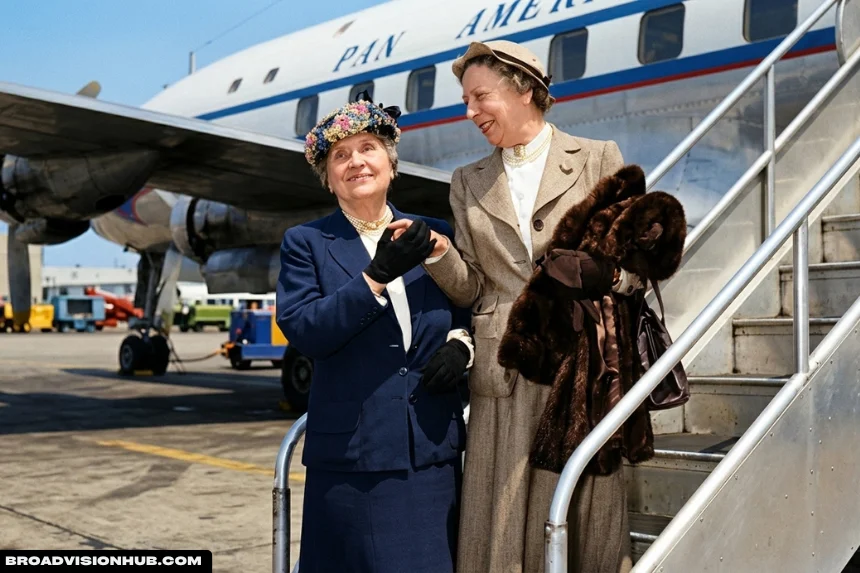
Did Helen Keller fly a plane? Yes. In June 1946, Helen Keller took the controls of a four-engine aircraft and guided it for approximately 20 minutes while flying over the Mediterranean. However, she did not fly alone, handle the entire journey or qualify as a licensed pilot.
A professional pilot remained beside Keller throughout the experience. Meanwhile, her companion and interpreter, Polly Thomson, relayed the pilot’s instructions through tactile communication. Keller then responded by operating the aircraft’s controls. A contemporary newspaper report preserved by the American Foundation for the Blind documents the flight, while Perkins School for the Blind explains the accommodations that made it possible.
Therefore, the most accurate answer is not simply “yes” or “no.” Keller genuinely controlled an aircraft during flight, but she did so for a limited period under professional supervision.
Quick answer: Helen Keller flew a plane in June 1946 by taking the controls of a four-engine aircraft for about 20 minutes over the Mediterranean. The pilot stayed beside her, while Polly Thomson communicated his directions through Keller’s hand. Keller did not fly solo or operate the complete flight.
Did Helen Keller Fly a Plane? Quick Facts
| Question | Verified answer |
|---|---|
| Did Helen Keller control an airplane? | Yes |
| When did it happen? | June 1946 |
| How long did she control it? | Approximately 20 minutes |
| Where did it happen? | Over the Mediterranean |
| What type of aircraft was it? | A four-engine airplane |
| Was Keller alone at the controls? | No, the regular pilot remained beside her |
| Who communicated the instructions? | Her companion and interpreter, Polly Thomson |
| How were instructions delivered? | Through tactile communication in Keller’s hand |
| Did she fly solo? | No |
| Did she hold a pilot’s licence? | No evidence indicates that she did |
| Did she operate the whole international flight? | No, she controlled the plane for one portion of the journey |
| Is the story supported by historical evidence? | Yes, a contemporary 1946 report survives in the Helen Keller Archive |
The basic event is well documented. Nevertheless, online Did Helen Keller fly a plane summaries sometimes exaggerate it by suggesting that Keller independently operated an international flight from departure to arrival. The historical evidence supports a supervised period at the controls, not a solo aviation record.
What Happened During Helen Keller’s 1946 Flight?
Helen Keller was travelling internationally in June 1946 when she received an opportunity to sit at the aircraft controls. According to a contemporary report titled “Wonderful Helen Keller Flies a Plane,” she piloted a four-engine airplane for about 20 minutes over the Mediterranean. The American Foundation for the Blind preserves that report in its Helen Keller Archive.
The plane was already part of a professionally operated journey. Therefore, Keller did not prepare the aircraft, conduct the takeoff or assume full responsibility for navigation.
Instead, she occupied the control position for a limited period while the pilot remained next to her. The pilot monitored the aircraft and communicated the necessary directions through Polly Thomson. Keller followed those instructions and guided the plane.
This distinction is important because the phrase “flew a plane” can describe several different levels of involvement. It might mean:
- Riding as a passenger.
- Touching the controls briefly.
- Guiding an aircraft under supervision.
- Serving as the responsible pilot for an entire flight.
- Flying alone after formal training.
Keller’s experience fits the third description. She did more than sit inside the aircraft or pose beside the controls. However, she did not perform an independent solo flight.
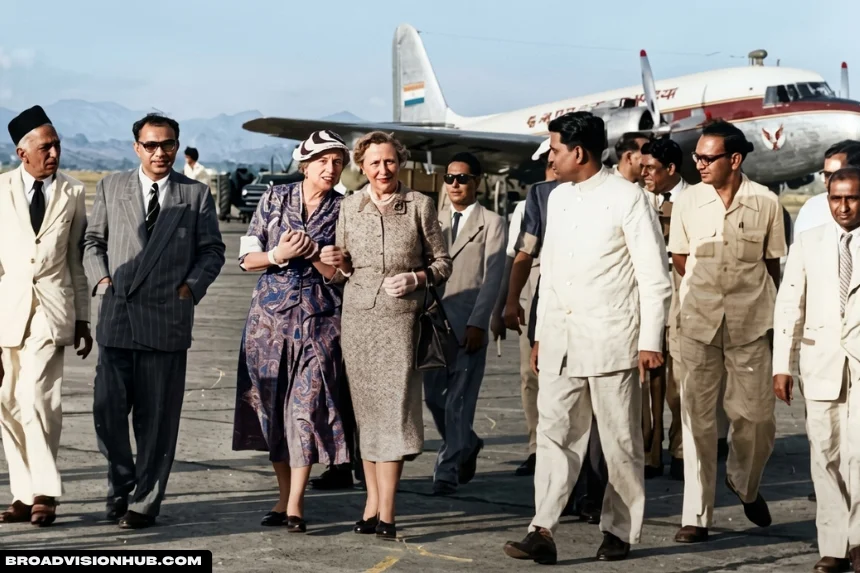
Did Helen Keller Really Control the Plane?
Yes. The surviving report says that Keller Did Helen Keller fly a plane piloted the aircraft for approximately 20 minutes rather than merely sitting in the cockpit. Perkins School for the Blind also identifies the event as a genuine example of Keller operating a plane with accommodations.
Keller responded to instructions by manipulating the aircraft’s controls. Meanwhile, the pilot remained responsible for supervising the flight and could intervene when necessary.
Therefore, two statements can both be accurate:
- Helen Keller genuinely flew the airplane for part of the journey.
- Helen Keller did not independently command the entire flight.
The second statement does not cancel the first. Supervised flying still involves physically controlling the aircraft. In fact, student pilots routinely operate controls while experienced instructors remain ready to assist.
Nevertheless, Keller’s experience differed from formal flight training. She was not completing a licensing programme, recording certified flying hours or preparing for a solo flight. Instead, she received a rare opportunity to experience how an airplane responded to her movements.
How Did Helen Keller Fly a Plane Without Seeing or Hearing?
The flight became possible through an adapted communication process.
The pilot sat beside Keller and gave Did Helen Keller fly a plane directions to Polly Thomson. Thomson then communicated those instructions into Keller’s hand. After receiving each direction, Keller moved the appropriate aircraft controls. Perkins School for the Blind confirms that the pilot accommodated Keller by routing instructions through Thomson.
The process can be understood in five stages:
- The professional pilot monitored the aircraft.
- He determined what movement Keller needed to make.
- He communicated the instruction to Polly Thomson.
- Thomson translated it through tactile hand communication.
- Keller operated the controls while the pilot supervised.
Consequently, Keller did not need spoken radio instructions to reach her directly. Information travelled through a communication method she had used successfully for decades.
This system did not remove Keller’s role. Thomson communicated the directions, but Keller made the physical control movements. Likewise, the pilot provided supervision, yet Keller experienced how the aircraft responded beneath her hands.
Who Was Polly Thomson?
Polly Thomson was Keller’s longtime secretary, companion and interpreter. She joined the household shared by Keller and Anne Sullivan in 1914. After Sullivan’s death in 1936, Thomson became Keller’s principal companion and interpreter.
Thomson was not originally trained as a teacher of deafblind people. However, Sullivan taught her the manual alphabet and showed her how to communicate with and assist Keller. Over time, Thomson became fast enough at fingerspelling to keep pace with Keller’s conversations and professional activities.
Moreover, Thomson travelled extensively with Keller. She interpreted conversations, helped manage correspondence and supported Keller during public appearances. Perkins reports that she spent 46 years with Keller, making her one of the most significant people in Keller’s adult life.
During the 1946 flight, Thomson Did Helen Keller fly a plane served as the communication link between the pilot and Keller. Without that link, spoken cockpit directions would not have been accessible to Keller.
However, describing Thomson’s role should not imply that she flew the aircraft for Keller. Thomson passed along information; Keller acted on it.

What Is Tactile Communication?
Tactile communication allows a deafblind person to receive language or other information through touch.
Keller commonly communicated by placing her hand on another person’s hand while that person formed letters using the manual alphabet. Through extensive experience, she could understand fingerspelled words rapidly.
During the flight, Thomson used Keller’s established hand-based communication method to relay the pilot’s instructions. Perkins confirms that the pilot communicated with Keller through Thomson rather than expecting Keller to hear verbal commands.
For example, Thomson could communicate directions involving:
- Turning in a particular direction.
- Adjusting the position of the controls.
- Holding the plane steady.
- Responding to the pilot’s next instruction.
The exact wording of every cockpit direction has not been preserved in the accessible summary of the event. Therefore, an article should not invent a complete dialogue between Keller, Thomson and the pilot.
Still, the documented communication chain is clear: the pilot instructed Thomson, Thomson communicated through Keller’s hand, and Keller operated the controls.
Could Helen Keller Feel How the Plane Was Moving?
Although Keller could not see the horizon or hear the engines, she could experience the aircraft through touch and movement.
While holding the controls, she Did Helen Keller fly a plane could feel physical resistance, vibration and changes in the plane’s motion. Her body could also register movement as the aircraft responded.
However, those sensations did not provide every piece of information required to operate a plane safely. The pilot still needed to monitor instruments, navigation, traffic and broader flight conditions.
Therefore, touch helped Keller experience and control the aircraft, while the sighted and hearing pilot retained responsibility for the information she could not access directly in that cockpit.
This arrangement demonstrates the purpose of accessibility. An accommodation does not pretend that every person receives information in the same way. Instead, it delivers essential information through a usable channel.
Did Helen Keller Fly the Plane Alone?
No. Keller did not complete a solo flight.
Perkins states that the pilot sat beside her and provided instructions through Polly Thomson. Therefore, a trained professional remained present and actively supervised the experience.
A solo flight normally means that no other qualified pilot is aboard to control or supervise the aircraft. Keller’s experience does not meet that definition.
Accordingly, the article should avoid claims such as:
- Helen Keller flew solo across the Mediterranean.
- Keller independently piloted a plane between European cities.
- The professional crew left her alone in the cockpit.
- Keller completed an unaided international flight.
None of those statements reflects the available evidence.
A more accurate sentence is:
Helen Keller operated an airplane’s controls under a pilot’s supervision for approximately 20 minutes.
That description confirms her direct participation while preserving the technical context.
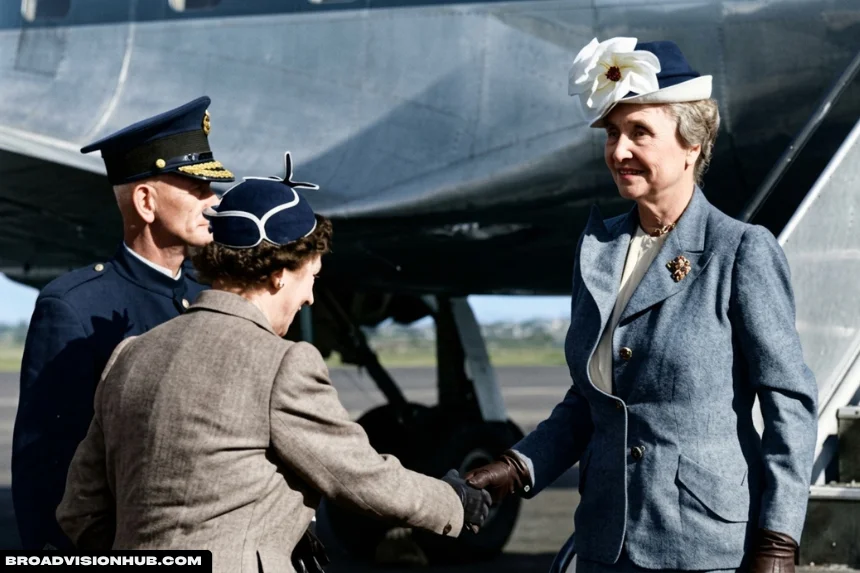
Was Helen Keller the Official Pilot of the Flight?
No. The regular pilot and flight crew remained officially responsible for the aircraft.
Keller temporarily occupied the controls during an established journey. However, she did not take legal command of the flight or replace the professional pilot.
This distinction matters because aviation uses “pilot” in more than one way. In ordinary conversation, someone who is steering an aircraft may be said to be piloting it. In regulatory or professional contexts, however, the pilot in command carries formal responsibility for the flight.
Therefore, the contemporary report’s statement that Keller “piloted” the plane should be understood as describing her physical operation of the controls, not formal command authority.
Was Helen Keller a Licensed Pilot?
There is no evidence that Keller held a pilot’s licence.
She did not complete a documented flight-training programme, pass aviation examinations or qualify for independent flight. Instead, the 1946 event was a supervised experience during one of her international journeys.
Therefore, it would be inaccurate to describe her as:
- A licensed pilot.
- A commercial aviator.
- A military pilot.
- A solo pilot.
- A professional flight instructor.
Nevertheless, saying that she was not licensed does not mean that she did nothing meaningful. She still operated a large aircraft’s controls during flight and demonstrated how adapted communication could provide access to an activity many observers assumed was impossible.
Did Helen Keller Take Off or Land the Plane?
The reliable accounts used for this article describe Keller controlling the plane for about 20 minutes while it was already travelling over the Mediterranean. They do not establish that she performed takeoff or landing.
Consequently, writers should not claim that she:
- Taxied the aircraft.
- Accelerated along the runway.
- Lifted it into the air.
- Managed its final approach.
- Landed it at the destination.
Those phases require precise coordination, instrument monitoring and communication with flight personnel. The surviving account focuses on her period at the controls during the airborne part of the journey.
Therefore, the strongest wording is:
Keller guided the aircraft while it was in flight; there is no reliable evidence that she handled takeoff or landing.
How Long Did Helen Keller Fly the Plane?
The archived 1946 report gives a duration of approximately 20 minutes.
That period was long enough for Keller to experience the plane’s response and make sustained control movements. However, it represented only one portion of a much longer international journey.
Some online retellings create confusion by attaching the complete route to Keller’s time at the controls. For instance, saying that she “flew an international route” may imply that she piloted the plane for the whole journey.
A more accurate explanation is:
During an international flight, Keller controlled the aircraft for about 20 minutes.
The difference between those sentences is small grammatically but significant historically.
Where Did Helen Keller Fly the Plane?
The contemporary report states that Keller’s time at the controls occurred over the Mediterranean during a journey that later brought her to Scotland.
Many modern accounts associate the event with travel between Rome and Paris. However, the most important verified geographic point is that she controlled the airplane over the Mediterranean during her 1946 travels.
Therefore, the article does not need to overstate a precise departure-and-arrival route unless the route is tied to clear primary documentation.
The central fact remains the same: Keller took the controls while the plane was airborne during a European journey.
What Kind of Plane Did Helen Keller Fly?
The American Foundation for the Blind’s archival description identifies it as a four-engine airplane.
Numerous modern accounts call the aircraft a Douglas C-54 Skymaster. However, when writing a carefully sourced article, the safest wording is “four-engine aircraft” unless a reliable archival source clearly confirms the exact model.
This approach prevents a supporting detail from becoming more certain than the surviving evidence allows.
The aircraft’s size still adds useful context. Keller was not controlling a small recreational glider or a simple training plane. Instead, she handled the controls of a large, multi-engine aircraft during an international journey.
What Did the Pilot Do While Keller Was Flying?
The pilot remained beside Keller, monitored the plane and provided the directions she followed.
His responsibilities likely included information and tasks beyond Keller’s temporary control role, such as:
- Monitoring the flight instruments.
- Maintaining situational awareness.
- Following the planned route.
- Watching weather and flight conditions.
- Remaining ready to take back the controls.
- Coordinating with the rest of the crew.
These general duties explain why supervised control does not equal full command. However, the exact division of cockpit tasks during those 20 minutes is not comprehensively preserved in the brief historical account.
Therefore, the article should focus on what the sources confirm: Keller operated the controls, while the professional pilot remained present and supervised her.
Was the Flight Just a Publicity Stunt?
The available historical evidence confirms that the event occurred and received newspaper coverage. However, whether organisers also recognised its publicity value is a separate question.
Keller was already a globally recognised author, lecturer and disability-rights advocate. Her travels frequently attracted journalists and public attention. Nevertheless, public interest does not make the flight false.
The key factual questions are:
- Did she sit at the controls? Yes.
- Did she operate them? Yes.
- Did a pilot supervise her? Yes.
- Did Thomson relay instructions? Yes.
- Was the complete event an independent solo flight? No.
Therefore, even if the event was intended partly to generate public interest, that would not erase Keller’s actual participation.
Why Do People Question Whether Helen Keller Flew a Plane?
Some people question the story because they imagine that flying is possible only through direct sight and hearing. Others encounter exaggerated versions of the event and then reject the entire claim when they learn that Keller had assistance.
Perkins explains that false claims questioning Keller’s accomplishments continue to circulate online. The institution identifies the assumption that a deafblind person could not have achieved such things as an example of ableism.
The confusion often comes from treating assistance as evidence of fraud.
However, accommodations do not mean that a person did not perform the activity. For example:
- A student pilot receives instructions from an instructor.
- A traveller uses an interpreter.
- A blind professional uses accessible technology.
- A deaf participant receives information through sign language.
In each case, information becomes accessible without transferring every action to the person providing support.
Likewise, Thomson did not replace Keller at the controls. She made the pilot’s directions accessible so Keller could respond herself.
Accessibility Did Not Make the Achievement Less Real
The most useful lesson from the flight is not that Keller somehow overcame deafblindness without assistance. Instead, the event shows how effective communication can create access.
Keller’s disabilities did not disappear when she entered the cockpit. Rather, the people around her adjusted the method used to deliver instructions.
The pilot communicated through Thomson. Thomson used the manual alphabet that she had learned after joining Keller and Anne Sullivan. Keller then applied the information through her own movements. Perkins documents Thomson’s development as Keller’s interpreter and her long role in Keller’s adult life.
Therefore, the flight involved teamwork, but teamwork does not erase individual participation.
A fair description recognises all three roles:
- The pilot supervised the aircraft.
- Thomson made the instructions accessible.
- Keller operated the controls.
Myth Versus Fact
| Popular claim | Accurate explanation |
|---|---|
| Helen Keller never flew a plane | False. A contemporary report says she controlled one for about 20 minutes. |
| She flew completely alone | False. A professional pilot remained beside her. |
| Polly Thomson flew it for her | False. Thomson communicated instructions; Keller operated the controls. |
| Keller piloted the entire international journey | False. She controlled the aircraft for one portion of the flight. |
| She took off and landed | Not supported by the available evidence. |
| She was a licensed pilot | No evidence supports that claim. |
| Her disabilities made the event impossible | False. The cockpit communication was adapted through tactile interpreting. |
| Receiving assistance means she did not really fly | Misleading. She directly manipulated the aircraft controls under supervision. |
The Most Accurate Way to Describe the Event
Writers often make one of two errors.
The first error is denial:
Helen Keller could not have flown because she was deafblind.
That statement ignores the archival record and the role of accessible communication.
The second error is exaggeration:
Helen Keller independently flew a plane across Europe.
That statement removes the pilot, Thomson and the limited duration of Keller’s control.
Instead, use this historically responsible description:
Why Was Helen Keller Travelling by Plane in 1946?
Helen Keller’s 1946 flight occurred during an international advocacy journey rather than a recreational aviation lesson. That year, the American Foundation for Overseas Blind appointed Keller as its counsellor on international relations. She and Polly Thomson then travelled through Britain, France, Italy, Greece and Scotland to investigate conditions facing blind and disabled people after World War II.
European schools, libraries, workshops and rehabilitation services had suffered extensive wartime damage. Keller later wrote about meeting blind children and adults whose educational opportunities and independence had been severely affected. Therefore, she used the journey to raise awareness and encourage financial support for rehabilitation programmes.
The airplane experience happened during this larger mission. Consequently, the 20 minutes at the controls were only a small part of a demanding international trip centred on disability advocacy.
Was the 1946 Journey Keller’s First Airplane Experience?
No. Helen Keller had experienced air travel before taking the controls in 1946.
An archival film clip from her 1919 silent film, Deliverance, shows Keller wearing aviation clothing and riding in the open cockpit of a biplane. However, the archive describes that scene as an airplane ride rather than evidence that she controlled the aircraft.
Therefore, the two events should not be confused:
| Aviation event | What happened |
|---|---|
| 1919 biplane appearance | Keller rode in an open-cockpit airplane during filming for Deliverance |
| 1946 Mediterranean flight | Keller operated a four-engine airplane’s controls for approximately 20 minutes under supervision |
| Independent solo flight | No evidence shows that Keller ever flew alone |
The 1946 journey was also significant because archival material describes it as Keller’s first flight across the Atlantic. Nevertheless, “first Atlantic flight” refers to her travel experience, not to independently piloting an aircraft across the ocean.
What Route Did Helen Keller’s Flight Follow?
The surviving newspaper report states that Keller controlled the aircraft over the Mediterranean during a European journey. Her broader tour included London, Paris, Rome, Naples, Athens and Scotland.
Many modern summaries say that the specific flight travelled from Rome to Paris. That description may reflect the sequence of the tour, although the accessible archival summary does not provide a complete minute-by-minute route for Keller’s time at the controls.
Therefore, the safest wording remains:
Helen Keller controlled the aircraft for about 20 minutes over the Mediterranean during a 1946 European journey.
This sentence preserves the strongest documented details without implying that she personally navigated the full route between two cities.
What Did Helen Keller Say About Flying?
Reports about the event describe Keller as calm and steady while handling the aircraft. A Britannica account says she compared the sensation of the controls beneath her hands to touching precious jewels.
That comparison makes sense within Keller’s broader experience of understanding objects and environments through touch. She could feel the shape, position and resistance of the controls. Moreover, she could sense vibration and movement as the airplane responded.
The crew reportedly noticed the sensitivity of her touch and her lack of nervous shaking. However, those observations should not be turned into exaggerated claims that she instinctively understood every cockpit instrument. She operated the controls by following instructions, while the professional pilot continued monitoring the aircraft.
Did Keller Describe the Experience as Frightening?
The available accounts emphasize confidence rather than fear. Keller had already travelled widely and had experienced an airplane ride years earlier. Therefore, entering the control position did not represent her first exposure to aviation.
Nevertheless, the surviving sources do not preserve a complete personal narrative from Keller describing every emotion she felt during those 20 minutes. Writers should avoid inventing dramatic thoughts or conversations that are not present in the record.
What Could Keller Physically Control?
The historical sources establish that Keller handled the airplane’s controls, but they do not provide a detailed technical list of every control surface she adjusted.
In a conventional aircraft, movement of the main control column or wheel can affect the airplane’s pitch and bank. Foot pedals can affect directional control. However, the archival account does not clearly state whether Keller used all those controls or only the primary hand-operated mechanism.
Therefore, the article should not claim that she independently managed:
- Engine power
- Navigation instruments
- Radio communication
- Fuel systems
- Altitude calculations
- Weather decisions
- Takeoff procedures
- Landing procedures
The documented fact is narrower: Keller responded to relayed instructions and guided the aircraft through its primary controls while the pilot supervised.
Did She Simply Rest Her Hands on the Controls?
No evidence supports the idea that Keller merely touched an inactive control for a photograph.
The contemporary article states that she piloted the airplane for approximately 20 minutes. Perkins also describes the pilot sitting beside Keller and communicating operating instructions through Polly Thomson. Together, those sources indicate active control rather than a staged cockpit pose.
However, the pilot’s presence remained essential. He watched the flight, selected the instructions and retained the ability to intervene.
Did the Pilot Completely Give Up Control?
The pilot allowed Keller to operate the controls, but that does not mean he surrendered responsibility for the airplane.
A professional pilot remained beside her throughout the exercise. Perkins specifically explains that he communicated instructions through Thomson. Therefore, he continued directing the activity even while Keller made the physical control movements.
Modern aircraft used for training may also have connected or duplicate controls. An instructor can monitor a student’s movements and take over when necessary. Although Keller’s experience was not a formal lesson, the principle of supervised operation was similar.
Consequently, “the pilot gave Keller the controls” should not be interpreted as:
- The pilot left the cockpit.
- Keller became pilot in command.
- The crew stopped monitoring the flight.
- She made independent navigation decisions.
- She held sole responsibility for passenger safety.
The professional crew remained responsible for the aircraft.
How Important Was Polly Thomson’s Role?
Polly Thomson’s role was essential because she converted spoken directions into a form Keller could receive.
Thomson had joined the household shared by Keller and Anne Sullivan in 1914. Over time, she learned fingerspelling and became Keller’s secretary, travelling companion and principal interpreter. After Sullivan died in 1936, Thomson supported Keller during lectures, interviews and international tours.
During the flight, Thomson did not make aviation decisions. Instead, she transmitted information:
- The pilot observed the airplane and selected an instruction.
- He communicated the instruction to Thomson.
- Thomson fingerspelled or conveyed it into Keller’s hand.
- Keller interpreted the message.
- Keller moved the control.
- The pilot observed the result and provided the next instruction.
Therefore, the achievement involved cooperation among three people with distinct responsibilities.
| Person | Main role |
|---|---|
| Helen Keller | Physically operated the aircraft controls |
| Polly Thomson | Made the pilot’s instructions accessible through tactile communication |
| Professional pilot | Monitored the airplane, issued instructions and retained flight responsibility |
Crediting Thomson does not reduce Keller’s role. Likewise, crediting Keller does not mean ignoring the support that made her participation possible.
Would Keller Have Been Able to Sense a Turn?
Yes, Keller could experience some aircraft movement through physical sensation.
A person inside a moving airplane may feel changes in pressure, vibration, acceleration and body position. Keller could also feel resistance through the control mechanism as she moved it.
However, physical sensation alone would not provide all the information needed for safe independent flight. A pilot also relies on instruments, visual references, navigation data, weather information and communication with the crew or ground services.
Consequently, Keller’s sense of touch helped her operate the controls, while the pilot supplied the broader situational information required to keep the aircraft safe.
Was Keller’s Deafblindness Hidden From the Crew?
No. Keller was already internationally famous as a deafblind author and advocate. The communication method was deliberately adapted around her access requirements rather than concealed from the crew. Perkins describes the pilot’s accommodations directly.
The event was remarkable because the crew expected a person without sight or hearing to face serious barriers in the cockpit. Nevertheless, the pilot and Thomson created a communication chain that allowed Keller to participate.
Therefore, the flight should not be framed as a trick in which people pretended that she could see or hear. Her disabilities remained present. The method of delivering information changed.
Why Accessible Assistance Does Not Make the Story False
Online discussions sometimes treat assistance as evidence that Keller did not really operate the airplane.
That argument sets an unrealistic standard. Student pilots, trainee drivers, athletes and professionals frequently receive coaching or instruction while performing an activity themselves. Receiving information does not mean another person makes every movement.
During Keller’s flight:
- The pilot supplied professional direction.
- Thomson supplied communication access.
- Keller supplied the physical response at the controls.
The arrangement demonstrates accessible participation rather than independent professional qualification.
Perkins explains that modern doubts about Keller’s documented accomplishments often arise from ableist assumptions that a deafblind person could not have achieved them. The school’s archivist points to contemporary records and the accommodations Keller used as evidence against those claims.
Was Keller Flying for Entertainment or Advocacy?
The immediate control experience may have offered personal enjoyment. However, her journey had a serious humanitarian purpose.
In 1946, Keller began international work as a representative of the American Foundation for Overseas Blind. During seven major journeys between 1946 and 1957, she visited dozens of countries and promoted education, employment and rehabilitation for people with vision loss.
Her first postwar European tour exposed her to damaged schools, inadequate services and the needs of people blinded during the war. She later appealed for American financial support to help rebuild opportunities for blind Europeans.
Consequently, the flight belongs within a much larger story. Keller was not travelling through Europe to become a celebrity pilot. She was travelling to advocate for disabled people whose lives and support systems had been disrupted by war.
How the Flight Fits Keller’s Broader Life
The airplane episode was consistent with Keller’s willingness to travel, try unfamiliar activities and challenge restrictive assumptions.
The American Foundation for the Blind reports that Keller made seven international journeys between 1946 and 1957, visiting 35 countries across five continents. She met political leaders, addressed public audiences and encouraged governments to improve services for blind people.
Moreover, she had already spent decades communicating through interpreters, using typewriters, delivering speeches and working within public institutions. Her flight was therefore not an isolated “miracle.” Instead, it represented another activity made accessible through planning, skill and cooperation.
Framing the event only as an unbelievable stunt can hide this larger record of education and advocacy.
What Historical Evidence Supports the Story?
The most important evidence is a contemporary newspaper clipping preserved in the American Foundation for the Blind’s Helen Keller Archive. Its archival description identifies the event, the four-engine airplane, the Mediterranean location and the approximate 20-minute duration.
The archive also contains:
- A 1946 press release concerning Keller’s Atlantic flight
- Correspondence written during the same period
- Photographs and travel records
- Documentation of her European advocacy tour
- Later biographical and chronological materials
The American Foundation for the Blind describes its Helen Keller Archive as the world’s largest collection of letters, speeches, photographs, press clippings and other materials connected with Keller.
Perkins School for the Blind independently cites the archival newspaper report when explaining how the flight occurred. This institutional corroboration makes the core story much stronger than an unsupported social-media claim.
Why Contemporary Evidence Matters
A report produced near the time of an event is not automatically perfect. Newspapers can contain mistakes, simplified language or promotional framing.
Nevertheless, contemporary documentation matters because it shows that the airplane story did not first appear as a modern internet legend. The American Foundation for the Blind preserved a report from 1946, the year the flight occurred.
Furthermore, the article’s main details align with Perkins’s explanation:
- Keller operated the controls.
- The pilot remained beside her.
- Thomson communicated his directions.
- The experience lasted for a limited portion of the flight.
Therefore, the central event is historically well supported even though smaller details—such as every control movement or the precise aircraft model—remain less clearly documented.
How the Story Became Exaggerated Online
The sentence “Helen Keller flew a plane” is short, memorable and easy to remove from its context.
As it spreads, people may add assumptions:
- Keller flew entirely alone.
- She handled takeoff and landing.
- She navigated across Europe.
- She held a pilot’s licence.
- No trained pilot was beside her.
When readers learn that these additions are false, some incorrectly conclude that the entire event was fabricated.
This creates two opposing myths:
| Exaggerated myth | Denial myth |
|---|---|
| Keller independently commanded an international flight | Keller never touched or controlled an airplane |
| She flew solo | The story was invented for publicity |
| She handled every cockpit task | Thomson or the pilot secretly did everything |
| She was a qualified pilot | Deafblindness made any real participation impossible |
The historical account sits between those extremes. Keller directly operated the controls, but she did so under instruction and supervision.
Why Some Social-Media Claims Question Keller’s Life
Perkins reports that online conspiracy theories have questioned not only the airplane story but also Keller’s writing, education and even whether her deafblindness was genuine. The institution identifies these claims as examples of ableism because they begin with the assumption that a disabled person’s documented achievements must be fraudulent.
Scepticism can be healthy when it leads readers to examine evidence. However, disbelief based only on disability is not meaningful historical analysis.
A responsible fact-check asks:
- Is there contemporary documentation?
- Do credible archives preserve it?
- Are the accommodations explained?
- Does the precise claim match the evidence?
- Which parts are verified, and which remain uncertain?
For Keller’s flight, those questions support the conclusion that she genuinely operated the aircraft for a limited period.
Did the Flight Prove a Deafblind Person Could Become a Pilot?
The flight proved that Keller could operate an airplane’s controls when instructions were made accessible. However, it did not establish that she could independently perform every duty required of a licensed pilot using the technology available in 1946.
Therefore, the lesson should not be overstated.
The event demonstrated:
- Effective tactile communication
- Keller’s ability to follow complex directions
- Physical sensitivity to the controls
- Cooperation between disabled and nondisabled participants
- The value of adapting information
It did not demonstrate:
- Independent visual navigation
- Unassisted radio communication
- Formal pilot certification
- Solo takeoff or landing
- Responsibility for the entire flight
This balanced interpretation recognises what Keller achieved without turning one supervised experience into a professional qualification.
Why the Event Still Matters
The flight remains important because it challenges the idea that only one communication method can provide access to a technical experience.
Keller did not receive information through ordinary spoken instructions. Instead, the pilot’s message passed through Thomson’s hands. That adaptation allowed Keller to participate directly rather than remain only a passenger.
Moreover, the story shows why accessibility should not be confused with reduced standards or pretend participation. Keller needed correct instructions, concentration and physical control. The accommodation changed the path through which information reached her.
The event also reminds readers that Keller’s achievements depended on collaboration. Her life involved teachers, interpreters, archivists, organisations and supporters. Nevertheless, she remained the person learning, writing, speaking, travelling and—in this case—moving the airplane’s controls.
What Can Historians Confirm About Helen Keller’s Flight?
The surviving evidence supports the central claim that Helen Keller operated an airplane’s controls during a 1946 flight. The American Foundation for the Blind preserves a contemporary newspaper item titled “Wonderful Helen Keller Flies a Plane,” while Perkins School for the Blind independently explains how the pilot made the experience accessible to her.
Based on those institutional records, historians can responsibly confirm that:
- Keller took the aircraft’s controls.
- The experience occurred in 1946.
- She controlled the plane for approximately 20 minutes.
- The aircraft was already airborne.
- A professional pilot remained beside her.
- Polly Thomson relayed instructions to Keller.
- Keller received those directions through tactile communication.
- She did not complete an independent solo flight.
Therefore, the statement “Helen Keller flew a plane” is historically defensible as long as the article explains what she did and does not exaggerate her responsibility.
What Cannot Be Confirmed With Equal Certainty?
Some details repeated online are less securely documented than the central event.
For example, modern articles often identify the aircraft as a Douglas C-54 Skymaster and describe the route as Rome to Paris. Those details may be correct. However, the accessible description attached to the primary archival newspaper item confirms only a four-engine airplane, a Mediterranean location and an approximately 20-minute period at the controls.
Likewise, the available archival summary does not provide a complete technical record of:
- Every cockpit control Keller touched
- Every instruction the pilot issued
- The precise altitude during her time at the controls
- The exact point where she began and stopped flying
- Whether she used rudder pedals
- How much physical contact the pilot maintained with duplicate controls
- The complete flight log
- The names of every crew member present
Consequently, a trustworthy article should not turn reasonable assumptions into documented facts.
Use Strong Evidence for the Main Claim
The strongest formulation is:
In 1946, Helen Keller operated the controls of a four-engine aircraft for approximately 20 minutes over the Mediterranean while a professional pilot supervised and Polly Thomson relayed his directions through tactile communication.
That wording reflects the archival record and the Perkins explanation without adding technical details that the accessible evidence does not establish.
Did Helen Keller “Fly” or Merely “Steer” the Plane?
Both words can appear in simplified explanations, although flew is the better description when properly qualified.
In ordinary language, a person who manipulates an aircraft’s controls and changes or maintains its movement is flying the plane. The contemporary newspaper report itself described Keller as piloting the aircraft rather than merely touching the controls.
However, technical aviation language distinguishes between operating controls and serving as the pilot in command. Keller did the former, whereas the regular professional pilot retained formal responsibility for the flight.
Therefore:
| Wording | Is it accurate? | Explanation |
|---|---|---|
| Helen Keller flew a plane | Yes, with context | She physically operated its controls during flight |
| Helen Keller piloted a plane briefly | Yes, when qualified | “Piloted” describes her period at the controls |
| Helen Keller steered a plane | Broadly accurate | It simplifies the control process |
| Helen Keller flew solo | No | A professional pilot remained beside her |
| Helen Keller commanded the flight | No | She was not the pilot in command |
| Helen Keller flew from takeoff to landing | Not supported | The records describe only an airborne portion |
| Helen Keller was a licensed pilot | Not supported | No licensing evidence has been identified |
The most important issue is not which single verb appears. Instead, the surrounding sentence must explain the supervision, communication method and limited duration.
How to Describe the Flight in a School Assignment
Students should avoid both disbelief and exaggeration.
A suitable two-sentence answer is:
Helen Keller really did operate an airplane’s controls during a 1946 flight over the Mediterranean. She controlled the aircraft for about 20 minutes while a professional pilot supervised and Polly Thomson relayed his instructions through tactile communication.
A more detailed classroom paragraph could say:
Helen Keller flew a plane for a short period in 1946 during an international journey. A professional pilot stayed beside her and gave instructions to Keller’s companion, Polly Thomson. Thomson communicated those directions into Keller’s hand, and Keller responded by moving the aircraft’s controls. Therefore, the event was real, although it was not a solo or independent flight.
Wording Students Should Avoid
Do not write:
Helen Keller flew an airplane across Europe entirely by herself.
Instead, write:
Helen Keller operated an airplane under professional supervision during part of a European flight.
Do not write:
Polly Thomson flew the plane for Helen Keller.
Instead, write:
Polly Thomson communicated the pilot’s instructions, while Keller operated the controls.
Do not write:
Keller’s disabilities disappeared while she was flying.
Instead, write:
Tactile communication made the pilot’s instructions accessible to Keller.
These distinctions make the explanation both accurate and respectful.
How to Explain the Communication Process Accurately
Polly Thomson served as the communication link between Keller and the pilot.
The pilot monitored the aircraft and decided which directions Keller needed. Thomson then transmitted those directions through Keller’s hand. Finally, Keller interpreted the message and physically responded at the controls. Perkins specifically describes the pilot as sitting beside Keller and communicating through Thomson.
The process involved three separate roles:
| Participant | Responsibility |
| Professional pilot | Supervised the aircraft and issued directions |
| Polly Thomson | Converted spoken directions into tactile communication |
| Helen Keller | Interpreted the directions and operated the controls |
Therefore, neither the pilot nor Thomson should be removed from the story. At the same time, their support does not mean Keller was only a passive passenger.
Did Assistance Make the Achievement Less Genuine?
No. Assistance explains how Keller accessed the experience; it does not erase her participation.
A person can receive instructions while still completing the physical action. For example, student pilots operate aircraft while instructors supervise. Similarly, interpreters communicate information without performing every action on behalf of the person receiving it.
In Keller’s case, Thomson did not substitute her own hands for Keller’s on the controls. Instead, she provided a communication channel. Perkins uses the flight as an example of how accommodations enabled Keller to participate in an activity that many people wrongly assume was impossible for a deafblind person.
Consequently, the story should not be framed as either an unaided miracle or an artificial performance. It was an accessible, supervised aviation experience.
Why the Word “Accommodations” Matters
The flight illustrates a broader principle of accessibility: information does not have to arrive through sight or ordinary speech to be usable.
Keller could not hear the pilot’s verbal instructions. Therefore, those instructions reached her through Thomson’s tactile communication. The information remained meaningful even though the method changed.
This distinction matters because modern scepticism about Keller often begins with the assumption that a deafblind person could not read, write, travel or operate equipment. Perkins has addressed these claims directly, explaining that Keller used established communication methods and documented accommodations.
Therefore, the accurate lesson is not that disability places no limits in every situation. Rather, appropriate support can provide meaningful access to activities that would otherwise remain unavailable.
Was the Flight a Record-Breaking Aviation Achievement?
The flight was remarkable, but it should not be presented as a formal aviation record unless a qualified aviation authority documents such a record.
Keller was not attempting to earn a licence, complete a solo flight or establish a speed, altitude or distance record. Instead, she briefly experienced operating an aircraft during international travel.
Accordingly, the achievement belongs primarily to:
- Disability history
- Accessible communication history
- Helen Keller’s personal biography
- Public understanding of deafblind capability
- The history of international disability advocacy
Calling the event a world aviation record would distract from what actually made it significant.
Was Helen Keller the First Deafblind Person to Fly a Plane?
The sources reviewed for this article do not establish that Keller was the first deafblind person ever to operate an aircraft.
It may be tempting to add “first” because the story was unusual and widely reported. However, a historical first requires evidence that earlier examples did not exist.
Therefore, do not claim:
Helen Keller was the first deafblind pilot in history.
A safer statement is:
Keller’s 1946 experience became one of the best-known early accounts of a deafblind person operating an airplane.
This wording recognises the event’s importance without creating an unsupported record.
Did Helen Keller Fly Across the Atlantic?
Keller crossed the Atlantic by air in 1946 as part of her international travel. The American Foundation for the Blind archive preserves a press release concerning her first airplane journey across the Atlantic.
However, that does not mean she personally piloted the plane across the entire ocean.
Her documented period at the controls lasted approximately 20 minutes over the Mediterranean. Therefore, these are two separate facts:
- Keller travelled across the Atlantic by airplane.
- During the broader journey, she operated a plane for about 20 minutes.
Combining them into “Helen Keller piloted a plane across the Atlantic” would create a misleading impression.
How Does the Flight Fit Into Helen Keller’s Biography?
The airplane episode represents only a small part of Keller’s much larger public life.
Keller was an American author, lecturer, political activist and disability-rights advocate. After becoming deafblind in early childhood, she learned language with Anne Sullivan’s instruction and later completed higher education, published books and travelled internationally.
Her flight should therefore appear as one biographical detail rather than the main measure of her accomplishments.
An accurate article can acknowledge that the event was memorable while also directing readers toward:
- Her education
- Her published writing
- Her public lectures
- Her international advocacy
- Her work for blind and disabled people
- Her political and social activism
This broader context prevents the aviation story from becoming an isolated piece of trivia.
A Brief Helen Keller Aviation Timeline
| Year | Aviation-related event | Meaning |
| 1919 | Keller appeared in aviation footage connected with Deliverance | She experienced flying as a passenger |
| 1946 | She made her first airplane journey across the Atlantic | Part of a major international trip |
| June 1946 | Keller controlled a four-engine aircraft for about 20 minutes | Supervised period at the controls |
| After 1946 | She continued extensive international travel | Aviation supported her advocacy work |
The American Foundation for the Blind’s archive preserves material about Keller’s 1946 Atlantic journey and her time at the controls. Perkins also maintains a broader timeline of her personal and professional milestones.
How to Evaluate Online Claims About the Flight
Readers can use a simple evidence test.
1. Check whether the source cites an archive
The strongest pages connect the story to the American Foundation for the Blind’s Helen Keller Archive.
2. Check whether the pilot is mentioned
A page that says Keller flew entirely alone is leaving out essential context.
3. Check whether Polly Thomson is credited
Thomson’s interpreting role explains how spoken directions reached Keller.
4. Look for a clear duration
The best-supported figure is approximately 20 minutes.
5. Separate the complete route from Keller’s control period
Keller travelled internationally by air, but she did not personally operate the aircraft throughout the entire journey.
6. Be cautious with unsupported technical detail
Claims about the exact control inputs, cockpit dialogue or complete flight log require stronger evidence than a general historical summary.
This approach allows readers to confirm the genuine achievement without accepting every embellishment attached to it.
Frequently Asked Questions
Did Helen Keller fly a plane?
Yes. Helen Keller operated a four-engine airplane’s controls for approximately 20 minutes during a 1946 flight over the Mediterranean.
How did Helen Keller fly a plane?
A professional pilot sat beside her and communicated directions through Polly Thomson. Thomson transmitted those instructions into Keller’s hand, and Keller responded at the controls.
Did Helen Keller fly alone?
No. The professional pilot remained beside her and retained responsibility for the aircraft.
How long did Helen Keller control the plane?
The contemporary archival report states that she controlled it for approximately 20 minutes.
When did Helen Keller fly a plane?
The event occurred in June 1946 during her international travels.
Where did Helen Keller fly the plane?
The archival report places her period at the controls over the Mediterranean.
Did Helen Keller fly from Rome to Paris?
Many secondary accounts identify Rome to Paris as the route. However, the strongest accessible archival description confirms the Mediterranean location without fully documenting every route detail. Therefore, “during a European flight over the Mediterranean” is the safest wording.
What type of plane did Helen Keller fly?
The American Foundation for the Blind’s archival description calls it a four-engine airplane. Some secondary accounts identify it as a Douglas Skymaster, but writers should attribute that model rather than present it as universally confirmed.
Did Helen Keller take off or land?
The surviving account describes her controlling the aircraft while it was already airborne. It does not establish that she handled takeoff or landing.
Was Helen Keller a licensed pilot?
No evidence indicates that she held a pilot’s licence or completed formal pilot training.
Was Helen Keller the pilot in command?
No. The professional pilot remained responsible for the flight and supervised Keller’s time at the controls.
Did Polly Thomson control the plane?
No. Thomson relayed the pilot’s directions through tactile communication. Keller operated the controls herself.
Could Helen Keller feel the aircraft moving?
She could experience movement, resistance and vibration through her body and the controls. However, the professional pilot still monitored the instruments and wider flight conditions.
Did Helen Keller fly across the Atlantic?
She travelled across the Atlantic by airplane in 1946. However, the record does not say that she personally controlled the aircraft throughout the Atlantic crossing.
Was the story invented?
No. A contemporary newspaper item preserved by the American Foundation for the Blind documents the event, and Perkins School for the Blind explains how Keller received the pilot’s instructions.
Why do people doubt that Helen Keller flew?
Some people encounter exaggerated versions and then reject the full story. Others underestimate how tactile communication and professional supervision could make the experience accessible. Perkins has addressed broader misinformation about Keller’s documented accomplishments.
Conclusion
So, did Helen Keller fly a plane? Yes. The available historical evidence shows that she operated a four-engine aircraft’s controls for approximately 20 minutes over the Mediterranean in 1946.
However, Keller did not fly solo, command the entire journey or perform every cockpit duty. A professional pilot remained beside her, while Polly Thomson translated his directions into tactile communication that Keller could understand.
Therefore, the story is true when described precisely. Keller genuinely controlled the airplane during a limited and supervised part of the flight. The pilot ensured operational safety, Thomson made the instructions accessible, and Keller physically responded at the controls.
The event should neither be dismissed as impossible nor inflated into an independent aviation record. Instead, it offers a documented example of how communication, accessibility and cooperation enabled meaningful participation.
Read at Broad Vision Hub