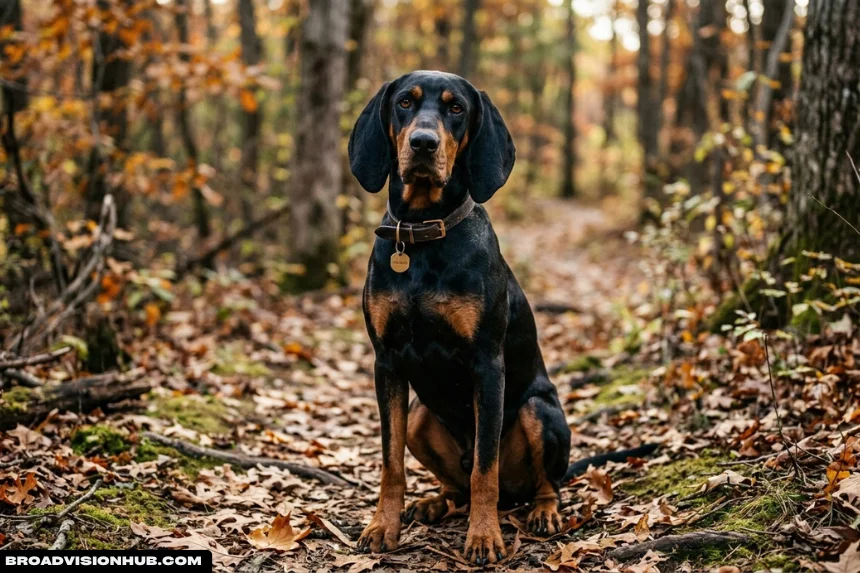
Coon Dogs, more formally called coonhounds, are American scent hounds developed to trail raccoons and signal with a carrying voice when quarry has climbed a tree. These athletic dogs combine a powerful nose, persistence, and stamina with an often affectionate, easygoing off-duty personality.
The American Kennel Club fully recognizes six coonhound breeds. However, the United Kennel Club describes seven breeds in its coonhound program because it also includes the American Leopard Hound. Therefore, both totals can be correct when the registry is clear.
Although coonhounds can make loving companions, they are not effortless pets. Their prey drive, loud baying, independent decisions, exercise needs, and ability to follow scent over distance demand patient training and secure management.
Quick Answer
| Topic | Answer |
|---|---|
| What are Coon Dogs? | American scent hounds developed to trail and tree game |
| Formal term | Coonhound |
| Fully recognized AKC breeds | Six |
| UKC coonhound-program breeds | Seven |
| Typical adult weight | Roughly 40-110 pounds across the six AKC breeds |
| Temperament | Scent-driven, persistent, vocal, social, and often relaxed after exercise |
| Exercise | Substantial daily activity plus scent-focused enrichment |
| Trainability | Intelligent but independent; rewards and consistency work best |
| Grooming | Short-coat care, nails, teeth, and regular ear checks |
| Best home | Active, prepared household with secure containment |
What Are Coon Dogs?
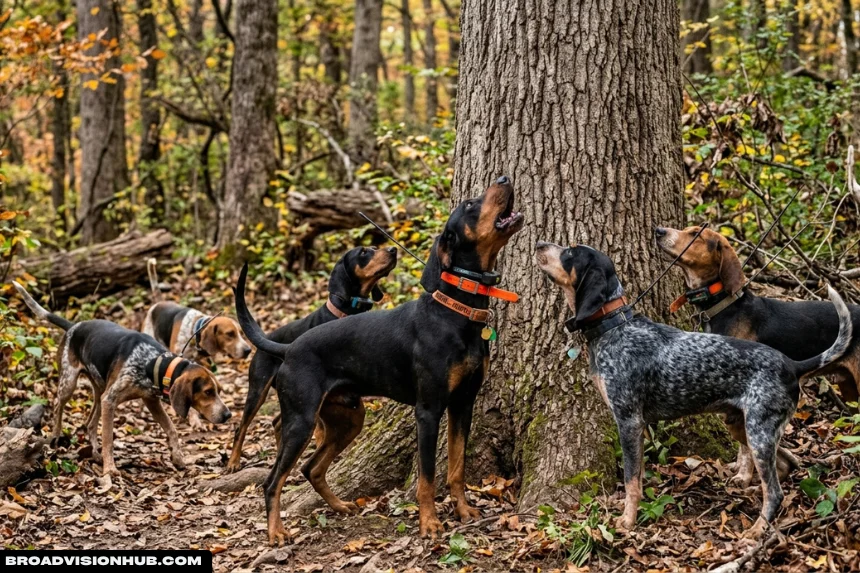
A coonhound is a domesticated scenthound developed in the United States for following game trails. Traditionally, the dog tracks a raccoon by scent, follows it when it climbs, stays near the tree, and vocalizes so the handler can locate the scene.
For example, that voice may be a long bay, a bawl, or a sharper “chop,” depending on the dog and stage of the trail. Hunters can learn to recognize an individual hound’s sounds. Meanwhile, companion owners quickly discover that the same powerful voice can carry across a neighborhood.
The term “Coon Dogs” is common in hunting language, but coonhound is clearer in formal writing. Outside the dog and hunting context, the shortened word can be offensive, so using the complete breed term avoids confusion.
Is a Coon Dog the Same as a Raccoon Dog?
No. A Coon dogs is a domesticated hunting hound, whereas a raccoon dog is a wild canid native to East Asia.
The wild animal received its English name because its facial markings resemble a raccoon’s. However, it is neither a raccoon nor a coonhound. Consequently, care advice for one does not apply to the other.
Where Did American Coonhounds Come From?
Coonhounds developed from hunting dogs brought to North America during the colonial period. European foxhounds could follow scent across the ground, but raccoons, bobcats, and other American animals often escaped by climbing trees.
Breeders therefore selected hounds that could keep working after the trail left the ground. The ideal dog needed a strong nose, endurance, independence, and the willingness to remain at the correct tree while calling the handler.
Moreover, most coonhound breeds have strong British foxhound roots. The Plott Hound is the major exception because its history traces to German Hanover hounds brought to North Carolina. As a result, Plotts also developed a reputation for bold work on larger game.
What Does “Treeing” Mean?
Specifically, treeing means following a scent trail to the tree where quarry has climbed and remaining nearby while vocalizing. The behavior lets a distant handler know where the trail ended.
Treeing does not automatically mean attacking an animal. In organized events, registries can evaluate trailing accuracy, speed, voice, and the ability to identify the correct tree. Nevertheless, actual hunting practices and legal requirements vary, so training must stay humane and lawful.
Which Coon Dog Breeds Are Recognized?
The American Kennel Club’s coonhound overview identifies six fully recognized breeds in its Hound Group. They share a working purpose, but their size, coat, pace, and hunting style differ.
| Breed | Typical size | Typical lifespan | Distinctive qualities |
|---|---|---|---|
| American English Coonhound | 45-65 pounds; 23-26 inches | 11-12 years | Fast, athletic, energetic, with several ticking patterns |
| Black and Tan Coonhound | 65-110 pounds; 23-27 inches | 10-12 years | Largest of the six, powerful scenting ability, black-and-tan coat |
| Bluetick Coonhound | 45-80 pounds; 21-27 inches | 11-12 years | Mottled blue coat, devoted nature, persistent tracking style |
| Plott Hound | About 40-60 pounds; roughly 20-25 inches | About 12-14 years | Brindle coat, German-derived ancestry, bold working character |
| Redbone Coonhound | About 45-70 pounds; roughly 21-27 inches | About 12-15 years | Solid mahogany coat, agile movement, mellow home temperament |
| Treeing Walker Coonhound | 50-70 pounds; 20-27 inches | 12-13 years | Swift, streamlined, usually tricolored, strong treeing instinct |
However, these ranges describe typical purebred adults rather than promises for every dog. Sex, genetics, nutrition, health, and working condition affect size. Moreover, coonhound mixes in rescues may fall outside the listed ranges.
Why Do the AKC and UKC Breed Counts Differ?
The AKC fully recognizes six coonhound breeds. It also records the American Leopard Hound in its Foundation Stock Service, which supports developing breeds but does not equal full AKC recognition.
By comparison, the United Kennel Club’s coonhound program describes seven breeds. UKC activities include Nite Hunts, Bench Shows, Water Races, and Field Trials. Therefore, a writer should say “six AKC-recognized breeds” or “seven UKC coonhound breeds” instead of presenting one unexplained number.
Coon Dog Temperament: What Are They Like at Home?
Coonhounds are commonly persistent, intelligent, scent-focused, and vocal. Many also enjoy people and other dogs because generations of hounds worked around handlers or packs.
At home, an adequately exercised adult may sleep for hours and seek close contact with family. Outside, however, one fresh scent can switch that relaxed dog into determined working mode. This contrast surprises owners who expect couch behavior to continue on an unfenced trail.
Nevertheless, breed tendencies do not define every individual. Early experience, socialization, training, health, age, and breeding goals all influence temperament. Consequently, prospective owners should evaluate the actual dog instead of relying only on a breed description.
Are Coonhounds Good Family Dogs?
Yes, many coonhounds become affectionate family companions. A successful home usually provides daily activity, clear routines, gentle training, and an acceptable outlet for scent work.
Nevertheless, adults must supervise every dog around young children. Children should not climb on a dog, disturb sleep or meals, pull ears, or take toys. Similarly, the hound needs a quiet place where it can rest without interaction.
Can These Hounds Live With Cats?
Some coonhounds live safely with cats, especially when raised with them, but no breed-wide guarantee is responsible. Their prey drive can make small, fast-moving animals intensely interesting.
Therefore, introductions should be gradual and controlled. In addition, use gates, leashes, crates, and separate rooms until behavior is predictable. Dogs and smaller pets should remain separated when no capable adult can supervise, particularly if the hound has a known hunting history.
How Much Exercise Do Coon Dogs Need?
Healthy adult coonhounds generally need substantial daily movement plus mental work. A quick bathroom trip or brief walk rarely satisfies a dog developed to travel, problem-solve, and follow odor over distance.
However, there is no single medically correct number of minutes for every hound. Age, breed, weather, body condition, health, and working status change the requirement. A veterinarian can help adjust activity for puppies, seniors, injured dogs, and dogs with chronic conditions.
In addition, exercise should not mean leaving the dog alone in a yard. Coonhounds also need interaction, training, and chances to use their noses. Otherwise, boredom may appear as digging, escape attempts, chewing, pacing, or prolonged baying.
Which Activities Suit a Scent Hound?
For example, long leash walks, hiking, secure-yard games, tracking exercises, and canine nose work all suit coonhound instincts. Food searches and hidden-scent games can also tire the brain without requiring miles of running.
Meanwhile, some dogs enjoy rally, agility, or appropriate field events. Swimming may suit individual Redbones and other confident swimmers, but dogs still need supervision and safe water access. Ultimately, the best routine combines aerobic movement, sniffing, training, and recovery.
How Do You Train a Coonhound?
Train a coonhound with rewards, short sessions, clear cues, and consistent management. These dogs are intelligent, yet breeding encouraged them to make decisions away from the handler. Independence is part of the working design, not proof that the dog lacks ability.
High-value food, play, praise, access to sniffing, and permission to move forward can all serve as rewards. Moreover, ending a session while the dog still wants more often produces better progress than drilling the same cue.
In addition, priorities should include attention to name, loose-leash walking, recall, “leave it,” settle behavior, handling for care, and calm greetings. Early positive socialization also helps puppies handle people, dogs, travel, surfaces, and new environments without overwhelming them.
Why Do Recall and Containment Matter?
A coonhound may understand a recall cue yet choose to follow a powerful scent. Therefore, owners should build recall gradually on a long line and reward it generously rather than testing it in an unsafe open area.
Therefore, a sturdy physical fence offers the best everyday containment. Check it for gaps, climbing points, and soil soft enough for digging. Electronic boundaries may fail to stop a highly motivated chase and cannot prevent wildlife or loose dogs from entering the property.
Can You Reduce Baying?
Although training can reduce unnecessary vocalizing, it cannot erase the breed’s natural voice. First, provide enough exercise and prevent long periods of lonely yard confinement. Then reward quiet behavior, teach a settle routine, and manage predictable triggers.
Punishing a bay without addressing its cause may increase stress. Instead, determine whether the dog is bored, alarmed, excited, frustrated, or following scent. Apartment residents should also consider walls, neighbors, and local noise rules before adopting a notably vocal hound.
Coon Dog Grooming and Everyday Care
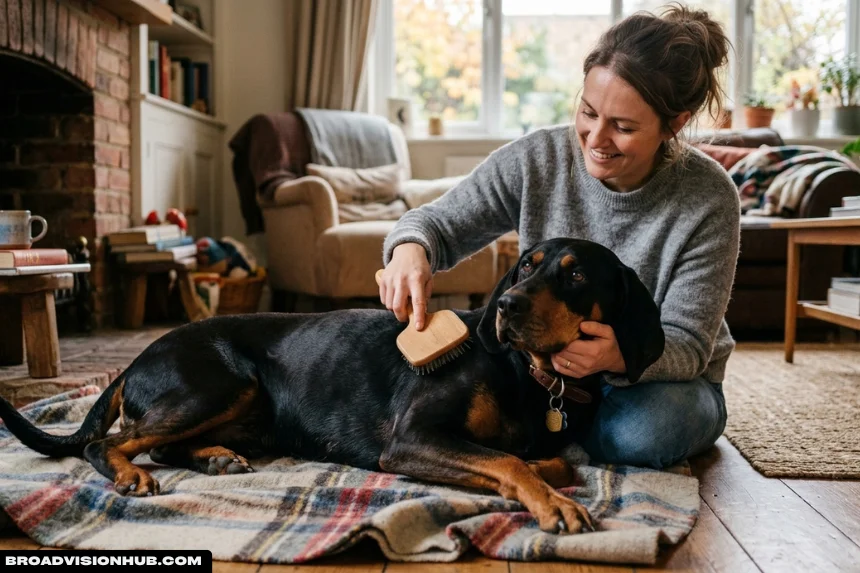
Most coonhounds have short coats that need weekly brushing and occasional bathing. However, low coat maintenance does not mean no maintenance.
Moreover, trim nails before they alter the dog’s gait, brush the teeth routinely, and monitor body condition. Working dogs may need different calories from sedentary pets, while retired or less active hounds can gain weight if their portions never change.
Meanwhile, after outdoor activity, inspect the eyes, paws, pads, skin, armpits, groin, tail area, and ears. Remove plant debris and note cuts, swelling, limping, or tenderness. In addition, dry the dog thoroughly after swimming or heavy rain.
Why Do Their Ears Need Extra Attention?
Long hanging ears can trap warmth, moisture, and debris. Check them at least weekly and after fieldwork or swimming.
Redness, strong odor, discharge, swelling, repeated head shaking, or pain needs veterinary attention. Do not insert tools deeply into the ear canal or use harsh homemade products. Instead, ask a veterinarian which cleaner and schedule suit the individual dog.
Common Coonhound Health Concerns
Coonhounds are generally athletic dogs, but health priorities differ among breeds. Hip dysplasia, eye disease, thyroid or heart testing, ear problems, obesity, bloat, ticks, and field injuries may warrant discussion with a veterinarian or responsible breeder.
For example, the Orthopedic Foundation for Animals’ CHIC screening program publishes breed-specific testing protocols developed with participating parent clubs. Importantly, a CHIC number shows that required tests were completed and made public. It does not guarantee that every result was normal.
Therefore, ask for the actual results rather than accepting “health tested” as a complete answer. Similarly, rescue adopters should request available veterinary records and schedule an examination soon after adoption.
When Is Bloat an Emergency?
Suspected bloat is always an emergency. The Merck Veterinary Manual’s bloat guidance explains that gastric dilatation-volvulus can twist a dog’s stomach and threaten its life.
For example, warning signs can include repeated unsuccessful retching, a swollen or painful abdomen, drooling, restlessness, rapid breathing, weakness, or collapse. If these signs appear, contact an emergency veterinary hospital immediately. Do not wait for the abdomen to become visibly large.
How Should Outdoor Dogs Be Protected?
The CDC’s tick-prevention guidance for pets recommends daily tick checks for animals that go outside and a veterinarian-guided preventive product. Check carefully around the ears, eyelids, collar, legs, toes, and tail.
In addition, keep rabies vaccination current under local law. The CDC notes in its rabies-prevention guidance that raccoons are among the U.S. wildlife species that can transmit rabies. Contact a veterinarian and public-health or animal-control authority promptly after a possible exposure.
This health section provides general education, not a diagnosis or treatment plan. A veterinarian should evaluate symptoms and tailor preventive care to the individual dog and local disease risks.
Are Coon Dogs Good Hunting Dogs?
Coonhounds are purpose-bred hunting dogs with exceptional scenting ability, stamina, and voice. However, not every modern coonhound hunts, and a companion dog does not need contact with live quarry to have a fulfilling life.
For example, tracking games, nose work, search exercises, and registry events can provide structured outlets. Whatever the activity, handlers remain responsible for the dog’s welfare, control, identification, vaccination, and safe return.
Similarly, hunting ability varies among individuals and bloodlines. Therefore, a breed name alone cannot promise field performance. Training, health, experience, terrain, weather, and the relationship between dog and handler all matter.
What Laws Apply to Hunting With Hounds?
Hunting rules vary by state, species, season, time of day, land ownership, and use of dogs. Some public areas also require separate access permits.
The U.S. Fish and Wildlife Service provides a state hunting-license directory and says hunters generally need a license from the state where the activity occurs. Before entering the field, check the current state wildlife-agency regulations plus any refuge, forest, county, or private-property rules. Never assume that a practice allowed in one state is legal in another.
Is a Coonhound Right for You?
Ultimately, a coonhound may suit you if you enjoy active outdoor time, patient training, scent games, and a social dog with a dramatic voice. You should also have a realistic plan for fencing, leashes, veterinary care, tick prevention, and smaller animals.
However, another breed may fit better if you need dependable off-leash freedom, minimal vocalization, or a dog satisfied with very little activity. Similarly, a home with unsecured poultry, rabbits, or cats may face management challenges.
Therefore, before adopting or buying, meet adult coonhounds and speak with people who live with them. Ask a breeder for breed-appropriate health results, or ask a rescue foster about baying, separation behavior, prey drive, house training, and other pets. The individual match matters as much as the breed label.
Coon Dog History and Recognition Timeline
| Period or year | Milestone |
|---|---|
| Colonial era | European hunting hounds arrive in North America |
| Early 1700s onward | UKC describes hunting with coonhounds as a centuries-old American tradition |
| 1750 | Johannes Plott brings German hounds to North Carolina, shaping Plott ancestry |
| 1900 | UKC recognizes the Black and Tan Coonhound |
| 1945 | Black and Tan becomes the first coonhound registered by the AKC |
| 2006 | AKC recognizes the Plott Hound |
| 2009 | AKC recognizes the Bluetick and Redbone Coonhounds |
| 2011 | AKC recognizes the American English Coonhound |
| 2012 | AKC recognizes the Treeing Walker Coonhound |
| Present | AKC fully recognizes six; American Leopard Hound remains in FSS, while UKC counts seven |
Frequently Asked Questions
What is a coon dog?
A coon dog is the colloquial name for a coonhound. It is an American scent hound developed to trail game and signal when quarry has climbed a tree.
How many breeds are recognized?
The AKC fully recognizes six coonhound breeds. However, the UKC describes seven in its coonhound program because it also includes the American Leopard Hound.
Are these hounds good family pets?
Many become affectionate family pets with exercise, training, and supervision. Nevertheless, their baying, prey drive, and scent-led independence require a prepared household.
Why do they bay so loudly?
Breeders selected a carrying voice so handlers could locate the dog from a distance in wooded terrain. Consequently, loud baying is a working feature, not simply bad behavior.
How big do they get?
The six AKC-recognized breeds generally range from about 40 to 110 pounds. Black and Tan Coonhounds occupy the upper end, while Plotts and American English Coonhounds are usually lighter.
Are coonhounds easy to train?
They are intelligent but independent. Reward-based training works well, although scent distractions mean recall and containment need lifelong attention.
Can they live with cats?
Some can, particularly with careful early introductions. However, prey drive varies, so use supervision, barriers, and separation whenever safety remains uncertain.
How much exercise do they need?
Healthy adults usually need substantial daily activity plus scent enrichment. Exact needs depend on age, health, breed, weather, and working status.
How long do they live?
Typical published ranges across the six breeds run from about 10 to 15 years. Nevertheless, genetics, preventive care, weight, accidents, and disease affect an individual dog’s lifespan.
Are Coon Dogs aggressive?
Coonhounds are not automatically aggressive, and many are social, affectionate dogs. Still, hunting drive is not the same as aggression, and owners must manage the dog’s behavior around wildlife and small animals.
Conclusion: Are Coon Dogs the Right Hounds for You?
Coon Dogs are American scent hounds built for persistence, treeing, and a voice that carries. The six fully recognized AKC breeds offer different sizes, coats, and working styles, while the UKC’s seven-breed program explains why readers encounter two valid totals.
As companions, coonhounds can be loyal, amusing, and relaxed after appropriate activity. However, they need secure containment, patient training, daily exercise, scent enrichment, ear and health care, and a family that accepts their prey drive and baying. For an owner who genuinely enjoys those traits, a coonhound can be an exceptional partner rather than merely a challenging pet.