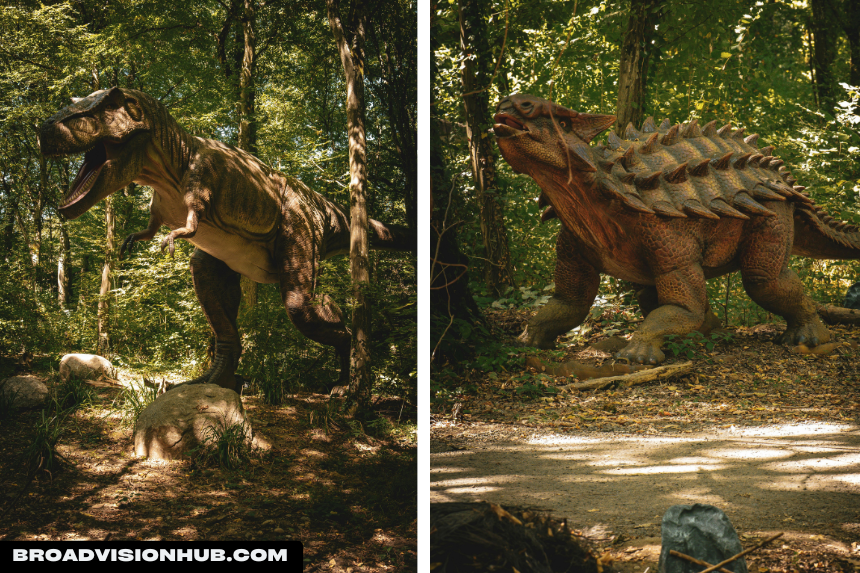
Dinosaurs in Jurassic World Dominion are one of the biggest reasons fans continue to revisit the final installment of the Jurassic World trilogy. Released in 2022, the film expands the franchise by featuring one of its largest collections of prehistoric animals, bringing together returning fan favorites alongside several species appearing in a Jurassic film for the first time.
Unlike earlier entries that focused on Dinosaurs living within isolated parks, Jurassic World Dominion explores a world where prehistoric creatures now coexist with humans across the globe. Consequently, audiences encounter a much wider variety of species throughout forests, snowy mountains, deserts, cities, and protected wildlife sanctuaries.
The movie includes more than 30 prehistoric species, although not every prehistoric animal shown is technically a dinosaur. Several pterosaurs and other extinct reptiles also appear, making the film one of the franchise’s most diverse entries from a prehistoric wildlife perspective.
This guide covers every major dinosaur featured in Jurassic World Dominion, explains which species are new or returning, compares carnivores and herbivores, discusses scientific accuracy, and highlights each dinosaur’s role in the story.
Featured Snippet: How Many Dinosaurs Are in Jurassic World Dominion?
Jurassic World Dominion features more than 30 prehistoric species, including numerous dinosaurs, flying reptiles, and other extinct animals. The film introduces several new dinosaurs, such as Giganotosaurus, Therizinosaurus, Atrociraptor, and Pyroraptor, while bringing back favorites like Tyrannosaurus rex, Velociraptor, Triceratops, and **Dilophosaurus>. Not every prehistoric creature shown is technically a dinosaur, as the film also features pterosaurs and other extinct reptiles.
Complete Overview of Dinosaurs in Jurassic World Dominion
One of the film’s greatest strengths is the remarkable variety of prehistoric animals appearing throughout the story.
Instead of focusing primarily on a handful of iconic dinosaurs, Jurassic World Dominion introduces numerous species that represent different periods, habitats, diets, and evolutionary traits.
The movie features:
- Large apex predators.
- Medium-sized carnivores.
- Feathered dinosaurs.
- Massive herbivores.
- Armored dinosaurs.
- Horned dinosaurs.
- Flying reptiles.
- Small prehistoric mammals and reptiles.
This broader ecosystem makes the world feel more realistic while giving audiences opportunities to see species that had never appeared in previous Jurassic films.
New Dinosaurs Introduced in Jurassic World Dominion
Several dinosaurs made their franchise debut in Jurassic World Dominion.
These newcomers significantly expanded the diversity of prehistoric life portrayed on screen.
Giganotosaurus
Giganotosaurus serves as the movie’s primary giant predator.
Rather than functioning as a genetically engineered hybrid like the Indominus Rex or Indoraptor, Giganotosaurus represents a real prehistoric species that lived approximately 98 million years ago.
Within the story, it becomes the dominant predator inside the Biosyn sanctuary and eventually confronts the Tyrannosaurus rex during the film’s climactic battle.
Therizinosaurus
Among the movie’s most unusual additions is Therizinosaurus.
Its enormous claws immediately distinguish it from every other dinosaur in the franchise.
Although Therizinosaurus was primarily herbivorous according to current scientific evidence, the film portrays it as highly territorial and potentially dangerous when threatened.
Its confrontation with Giganotosaurus becomes one of the movie’s most memorable sequences.
Atrociraptor
The introduction of Atrociraptor adds another intelligent predator to the Jurassic universe.
Unlike Blue and the Velociraptors, these dinosaurs are trained primarily for aggressive pursuit.
The thrilling chase through the streets of Malta showcases their speed, coordination, and hunting instincts.
Pyroraptor
Another notable newcomer is Pyroraptor.
The movie presents Pyroraptor with a feathered body, reflecting modern paleontological discoveries suggesting that many small theropod dinosaurs possessed feathers.
Its snowy environment also creates one of the film’s most visually distinctive action sequences.
Other New Prehistoric Species
Additional species introduced include:
- Moros intrepidus
- Iguanodon
- Oviraptor
The film also features Lystrosaurus, which is not actually a dinosaur. Instead, it belongs to an older group of prehistoric synapsids that lived before dinosaurs dominated Earth.
Returning Dinosaurs
While new species generate excitement, returning dinosaurs provide continuity with earlier Jurassic films.
Several iconic animals reappear throughout the story.
Tyrannosaurus Rex
The legendary Tyrannosaurus rex remains one of the franchise’s defining stars.
The familiar female T. rex once again plays a major role before facing Giganotosaurus in the movie’s final battle.
Velociraptor
Velociraptor returns through Blue and her offspring.
Blue’s storyline adds an emotional dimension rarely seen with dinosaur characters and further explores the intelligence of these animals.
Dilophosaurus
After a long absence from the franchise, Dilophosaurus finally returns.
Its memorable attack scene serves as a callback to the original Jurassic Park while introducing the species to a new generation of viewers.
Other Returning Dinosaurs
Returning species also include:
- Triceratops
- Ankylosaurus
- Stegosaurus
- Parasaurolophus
- Brachiosaurus
- Carnotaurus
- Allosaurus
- Apatosaurus
- Stygimoloch
- Sinoceratops
- Nasutoceratops
Together, these returning dinosaurs help connect Jurassic World Dominion with earlier films while showcasing the growing diversity of prehistoric life now living alongside humanity.
Carnivores vs. Herbivores
The movie features both fearsome predators and peaceful plant-eaters.
The following comparison highlights several of the most recognizable species.
| Carnivores | Herbivores |
|---|---|
| Tyrannosaurus rex | Triceratops |
| Giganotosaurus | Stegosaurus |
| Atrociraptor | Ankylosaurus |
| Velociraptor | Parasaurolophus |
| Pyroraptor | Brachiosaurus |
| Allosaurus | Iguanodon |
| Carnotaurus | Nasutoceratops |
| Dilophosaurus | Apatosaurus |
This balance between carnivores and herbivores creates a more complete prehistoric ecosystem than previous Jurassic films. Instead of emphasizing predators alone, Jurassic World Dominion demonstrates how a wide range of species coexist within the franchise’s evolving world.
In the next section, we’ll examine each major dinosaur in greater detail, explain which species feature feathers, compare the movie’s depictions with current paleontological evidence, analyze the film’s biggest dinosaur battles, and include a comprehensive size comparison table covering the most important dinosaurs in Jurassic World Dominion.
Major Dinosaur Profiles in Jurassic World Dominion
While dinosaurs in Jurassic World Dominion appear throughout the film, several species play especially important roles in advancing the story. Each brings unique physical characteristics, behaviors, and memorable moments that distinguish it from the rest of the prehistoric cast.
Tyrannosaurus Rex
The legendary Tyrannosaurus rex remains the franchise’s most recognizable dinosaur.
Although newer predators receive significant attention, the T. rex continues to symbolize the Jurassic series. In Jurassic World Dominion, the familiar female rex returns for another dramatic confrontation that reinforces her status as one of cinema’s most iconic prehistoric creatures.
Movie Role
- Apex predator.
- Returning franchise favorite.
- Central figure in the final battle.
- Represents the legacy of the original Jurassic Park films.
Scientific Background
Real Tyrannosaurus rex lived approximately 66–68 million years ago during the Late Cretaceous Period. Modern research suggests it possessed exceptional senses, powerful jaws, and a highly developed sense of smell.
Giganotosaurus
Among all the dinosaurs in Jurassic World Dominion, Giganotosaurus serves as the principal antagonist.
Unlike previous Jurassic villains such as the Indominus Rex, Giganotosaurus represents an actual prehistoric species rather than a genetically engineered hybrid.
Movie Role
- Dominant predator within Biosyn Valley.
- Main rival to the Tyrannosaurus rex.
- Largest carnivore featured in the story.
- Drives several major action sequences.
Scientific Background
Scientists believe Giganotosaurus lived roughly 98 million years ago in what is now South America.
Although the movie portrays it as larger than the T. rex, paleontologists continue to debate which species was actually larger because fossil evidence remains incomplete.
Therizinosaurus
Few newcomers attracted as much attention as Therizinosaurus.
Its long claws immediately distinguish it from every other dinosaur in the film.
Movie Role
- Highly territorial herbivore.
- Plays a decisive role during the climax.
- Creates suspense through limited but memorable appearances.
Scientific Background
Therizinosaurus belonged to an unusual group of theropods that likely relied on vegetation rather than hunting large prey.
Its massive claws probably assisted with feeding, defense, or pulling vegetation closer.
Velociraptor (Blue)
The return of Velociraptor, especially Blue, provides continuity between the Jurassic World trilogy.
Rather than functioning solely as a predator, Blue displays intelligence, parental behavior, and complex interactions with humans.
Movie Role
- Protects her offspring.
- Cooperates with Owen Grady.
- Demonstrates advanced intelligence.
- Represents the emotional connection between humans and dinosaurs.
Scientific Background
Real Velociraptors were considerably smaller than their movie counterparts and almost certainly possessed feathers.
The Jurassic franchise retains the larger design established in earlier films while adding selective feathered species elsewhere.
Atrociraptor
The introduction of Atrociraptor creates one of the movie’s most exciting chase sequences.
Unlike Blue, these animals are portrayed as relentless pursuit predators.
Movie Role
- Organized pack hunters.
- Chase Owen Grady through Malta.
- Respond to command signals.
- Display speed and coordination.
Although closely related to Velociraptor, Atrociraptor is portrayed as noticeably more aggressive.
Pyroraptor
Another memorable addition is Pyroraptor.
Its feathered appearance reflects more recent scientific interpretations than many earlier Jurassic films.
Movie Role
- Appears during the snowy mountain sequence.
- Hunts in difficult terrain.
- Demonstrates agility both on land and in water.
Scientific Background
Modern fossil evidence strongly supports the presence of feathers among many small theropod dinosaurs, making Pyroraptor one of the franchise’s more scientifically inspired designs.
Dilophosaurus
Dilophosaurus returns after first appearing in the original Jurassic Park.
Its reappearance provides one of the film’s strongest nostalgic moments.
Movie Role
- Ambush predator.
- Memorable late-film appearance.
- Callback to the 1993 classic.
The famous neck frill and venom-spitting behavior remain fictional additions created specifically for the Jurassic franchise.
Feathered Dinosaurs Explained
One of the most significant visual changes among the dinosaurs in Jurassic World Dominion is the inclusion of feathered species.
Earlier Jurassic films portrayed nearly every dinosaur with reptilian skin. However, decades of paleontological discoveries have revealed that many theropod dinosaurs likely possessed feathers.
The film reflects this research by giving feathered appearances to species such as:
- Pyroraptor.
- Therizinosaurus.
- Oviraptor.
Although not every dinosaur in the movie reflects current scientific understanding, these updated designs move the franchise closer to modern paleontology while maintaining its recognizable cinematic style.
Scientific Accuracy vs. Movie Fiction
Jurassic World Dominion combines scientific inspiration with creative storytelling.
Some elements closely resemble current fossil evidence, whereas others prioritize entertainment.
Scientifically Inspired Features
- Feathered theropods.
- Diverse dinosaur ecosystems.
- Large herbivorous behavior.
- Increased species diversity.
Fictional Elements
- Extremely aggressive behavior in many species.
- Human-sized Velociraptors.
- Dilophosaurus venom and expandable frill.
- Rapid cross-species interactions.
- Simplified prehistoric ecosystems.
Within the Jurassic universe, many differences are explained by genetic engineering rather than attempts to recreate perfectly accurate prehistoric animals.
Major Dinosaur Battles
Several action scenes stand out among the many encounters featured in the movie.
Tyrannosaurus Rex vs. Giganotosaurus
This battle serves as the movie’s climactic confrontation.
Although Giganotosaurus initially appears stronger, the conflict ultimately becomes one of the franchise’s most memorable dinosaur fights.
Therizinosaurus vs. Giganotosaurus
During the finale, Therizinosaurus unexpectedly joins the conflict.
Its enormous claws play a decisive role, making this one of the most talked-about scenes in the film.
Atrociraptor Chase
Rather than focusing on direct combat, the Malta sequence highlights coordinated pursuit.
The Atrociraptors relentlessly chase Owen Grady through crowded streets, demonstrating their speed and intelligence.
Quetzalcoatlus Airplane Attack
Although Quetzalcoatlus creates one of the movie’s biggest action scenes, it is important to remember that Quetzalcoatlus is a pterosaur, not a dinosaur.
Its attack on an aircraft remains one of the film’s most dramatic sequences.
Dinosaur Size Comparison
The following table compares several major species featured in Jurassic World Dominion.
| Species | Approximate Length | Diet | Movie Role |
|---|---|---|---|
| Tyrannosaurus rex | ~40 ft (12 m) | Carnivore | Returning apex predator |
| Giganotosaurus | ~43 ft (13 m) | Carnivore | Main antagonist |
| Therizinosaurus | ~33 ft (10 m) | Herbivore | Territorial giant |
| Velociraptor (movie version) | ~11 ft (3.4 m) | Carnivore | Intelligent hunter |
| Atrociraptor | ~10 ft (3 m) | Carnivore | Pack hunter |
| Pyroraptor | ~8 ft (2.4 m) | Carnivore | Feathered predator |
| Triceratops | ~30 ft (9 m) | Herbivore | Returning classic |
| Brachiosaurus | ~70 ft (21 m) | Herbivore | Long-necked giant |
These measurements are approximate and combine current paleontological estimates with the film’s on-screen portrayals, which occasionally differ for dramatic effect.
Fun Facts About the Dinosaurs
- Giganotosaurus is the largest non-hybrid predator ever featured in the Jurassic franchise.
- Therizinosaurus became one of the franchise’s most unusual herbivores because of its enormous claws.
- Pyroraptor is among the first prominently feathered dinosaurs shown in a live-action Jurassic film.
- Blue remains one of the few dinosaur characters with an extended story arc across multiple movies.
- Several returning dinosaurs connect Jurassic World Dominion directly to the original Jurassic Park trilogy, reinforcing the film’s role as the conclusion of a long-running cinematic saga.
In the final section, we’ll answer the most frequently asked questions about dinosaurs in Jurassic World Dominion, summarize the complete prehistoric lineup, and finish the article with a comprehensive Yoast SEO optimization checklist.
Frequently Asked Questions
How many dinosaurs are in Jurassic World Dominion?
Jurassic World Dominion features more than 30 prehistoric species, including numerous dinosaurs as well as several prehistoric animals that are not technically dinosaurs. The movie includes returning franchise favorites, newly introduced species, flying reptiles, and other extinct creatures, making it one of the most diverse entries in the Jurassic series.
What is the main dinosaur in Jurassic World Dominion?
Several dinosaurs play major roles throughout the film. However, the Tyrannosaurus rex remains the franchise’s signature dinosaur, while the Giganotosaurus serves as the movie’s primary prehistoric antagonist.
In addition, Therizinosaurus becomes a standout newcomer because of its distinctive appearance and important role during the climax.
Which new dinosaurs appear in Jurassic World Dominion?
The film introduces several dinosaur species that had not appeared in previous Jurassic movies, including:
- Giganotosaurus
- Therizinosaurus
- Atrociraptor
- Pyroraptor
- Moros intrepidus
- Iguanodon
- Oviraptor
The movie also includes Lystrosaurus, although it is a prehistoric synapsid rather than a dinosaur.
Which dinosaurs returned from earlier Jurassic movies?
Many well-known species return, including:
- Tyrannosaurus rex
- Velociraptor
- Triceratops
- Stegosaurus
- Ankylosaurus
- Parasaurolophus
- Dilophosaurus
- Brachiosaurus
- Carnotaurus
- Allosaurus
These returning species help connect Jurassic World Dominion with both the original Jurassic Park trilogy and the earlier Jurassic World films.
Is Giganotosaurus bigger than Tyrannosaurus rex?
In the movie, Giganotosaurus is portrayed as larger and more powerful than the Tyrannosaurus rex.
In real paleontology, however, scientists continue to debate the comparison because fossil evidence is incomplete. Depending on the measurement used, either dinosaur may have been larger in certain respects.
Are the dinosaurs scientifically accurate?
The film combines scientific research with fictional storytelling.
Some features reflect modern paleontology, including feathered dinosaurs such as Pyroraptor and Therizinosaurus. However, other elements—such as exaggerated behaviors, oversized raptors, and certain anatomical details—were intentionally designed for dramatic effect rather than strict scientific accuracy.
Within the Jurassic universe, these differences are often explained by genetic engineering.
Is Quetzalcoatlus a dinosaur?
No.
Quetzalcoatlus is a pterosaur, a group of flying reptiles that lived during the age of dinosaurs. Although pterosaurs shared the same prehistoric world, they are not classified as dinosaurs.
Conclusion
The wide variety of dinosaurs in Jurassic World Dominion makes the film one of the most ambitious entries in the entire Jurassic franchise. By combining iconic returning species with several newcomers, the movie creates a prehistoric world that feels larger, more diverse, and more interconnected than ever before.
Classic dinosaurs such as the Tyrannosaurus rex, Velociraptor, and Triceratops continue to play important roles, while newcomers including Giganotosaurus, Therizinosaurus, Atrociraptor, and Pyroraptor introduce fresh designs and memorable action sequences. At the same time, the inclusion of feathered dinosaurs reflects decades of paleontological discoveries, even though the filmmakers still prioritize cinematic storytelling over complete scientific accuracy.
Another strength of the film is its willingness to feature a broader range of prehistoric life. In addition to dinosaurs, viewers encounter pterosaurs and other extinct animals, reminding audiences that the prehistoric world contained far more diversity than many people realize.
Whether you’re revisiting the movie, researching your favorite species, or exploring dinosaur science for the first time, Jurassic World Dominion offers one of the franchise’s richest collections of prehistoric animals. Understanding which species appear, how they contribute to the story, and how closely they resemble their real-world counterparts makes the viewing experience even more rewarding.
Read more Grubhub Class Action Settlement