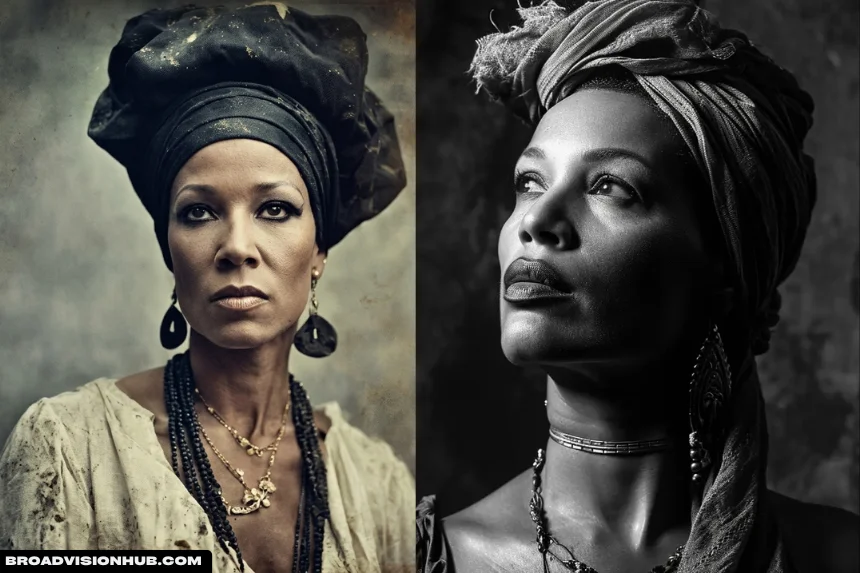
Marie Laveau II is one of the most confusing figures in New Orleans Voudou history. Popular stories describe her as the daughter who inherited the influence, name, and spiritual leadership of the famous Marie Laveau, often called the Voodoo Queen of New Orleans. However, the historical record does not identify this supposed successor as clearly as many modern biographies suggest.
Marie Laveau had two daughters with Christophe Glapion who survived into adulthood: Marie Heloïse Euchariste Glapion, born in 1827, and Marie Philomène Glapion, born in 1836. Both women have been connected with the name Marie Laveau II. Nevertheless, Louisiana historian Carolyn Morrow Long argues that neither daughter fits the later successor legend securely.
The problem is significant. Heloïse died in 1862, nearly two decades before her mother. Philomène, meanwhile, survived until 1897, but people who knew her reportedly remembered a proper Catholic woman rather than a public Voudou leader. Consequently, the identity of Marie Laveau II remains an unresolved part of New Orleans history.
Who Was Marie Laveau II?
Marie Laveau II is the name commonly used for the supposed daughter and successor of New Orleans Voudou leader Marie Laveau. Some historical accounts identify Marie Heloïse Euchariste Glapion as Marie II, while other retellings point toward her younger sister, Marie Philomène Glapion. However, strong Louisiana scholarship concludes that neither identification can be considered certain.
Therefore, Marie Laveau II should not be treated like a conventional historical figure with one undisputed birth date, death date, husband, and biography.
Instead, the name represents a historical puzzle.
There were real daughters of Marie Laveau who could have contributed to the legend. However, the dramatic image of a clearly identifiable second Voodoo Queen appears much more certain in folklore than it does in surviving documentary evidence.
Louisiana Anthology, for example, directly identifies Marie Heloïse as the daughter who became known as “Marie II.”
By contrast, Carolyn Morrow Long’s research for 64 Parishes argues that Heloïse’s death date makes that identification difficult and that Philomène does not fit the spiritual-leader story either.
That conflict is central to understanding the real Marie Laveau II story.
Marie Laveau II Quick Facts
| Marie Laveau II Fact | Best Historical Answer |
|---|---|
| Common name | Marie Laveau II |
| Associated with | Marie Laveau |
| Supposed role | Daughter and successor of Marie Laveau |
| Historical identity | Disputed |
| Candidate 1 | Marie Heloïse Euchariste Glapion |
| Candidate 2 | Marie Philomène Glapion |
| Mother | Marie Laveau |
| Father | Christophe Glapion |
| Main location | New Orleans, Louisiana |
| Religious context | New Orleans Voudou and Catholic culture |
| Exact birth date | Not securely established for “Marie II” |
| Exact death date | Depends on which daughter is meant |
| Historical certainty | Limited |
The uncertainty in this table is intentional.
For example, assigning Marie Laveau II an exact 1827 birth year assumes that Heloïse was definitely Marie II. Likewise, assigning her an 1897 death assumes that Philomène held that identity.
Neither conclusion has been established securely.
Who Was Marie Laveau?
To understand Marie Laveau II, it is necessary to first understand her famous mother.
Marie Laveau was a free woman of color born in New Orleans in 1801. She became an influential leader within the city’s nineteenth-century Voudou community and was known during her lifetime as the “Priestess of the Voudous.”
Her life existed within a distinctive New Orleans religious environment shaped by African traditions, Roman Catholicism, Creole culture, and local spiritual practices.
Importantly, Marie Laveau was not simply a supernatural character from later ghost stories.
Historical research documents her as a real New Orleans woman who gave consultations, participated in ceremonies, developed a substantial public reputation, and became associated with a multiracial religious community.
Marie Laveau’s Family
Marie Laveau married Jacques Paris in 1819.
After Paris died or disappeared, she became known as the Widow Paris. By 1826, she had entered a long-term relationship with Louis Christophe Dominic Duminy de Glapion, usually referred to as Christophe Glapion.
Marie and Christophe had seven documented children together.
However, only two of those children survived into adulthood:
Marie Heloïse Euchariste Glapion
and
Marie Philomène Glapion
Those two sisters sit at the centre of the Marie Laveau II mystery.
Was Marie Laveau II Marie Laveau’s Daughter?
According to the traditional story, yes.
Marie Laveau II is generally described as one of Marie Laveau’s daughters who continued or inherited her mother’s spiritual position.
However, historians face a more difficult question:
Which daughter?
Marie Laveau did not have only one daughter named Marie.
Instead, both surviving daughters carried Marie as part of their names.
One was Marie Heloïse Euchariste Glapion.
The other was Marie Philomène Glapion.
As a result, later writers could easily confuse family members, particularly when newspaper stories, oral tradition, and Voudou folklore became mixed together over several generations.
The existence of two adult daughters also provides a possible explanation for why later stories refer to an older Marie Laveau and a younger “Marie II.”
Still, possibility is not proof.
Marie Laveau’s Two Surviving Daughters
The two women proposed as Marie Laveau II were genuine historical people.
Their documented timelines, however, create very different problems for the successor legend.
| Daughter | Born | Died | Problem With Marie II Identification |
|---|---|---|---|
| Marie Heloïse Euchariste Glapion | 1827 | 1862 | Died 19 years before Marie Laveau |
| Marie Philomène Glapion | 1836 | 1897 | Survived her mother, but no strong evidence of Voudou leadership |
These dates come from Carolyn Morrow Long’s research into the Laveau-Glapion family.
Therefore, each candidate solves one part of the puzzle but creates another.
Was Marie Heloïse Euchariste Glapion Marie Laveau II?
One important historical tradition identifies Marie Heloïse Euchariste Glapion as Marie Laveau II.
Louisiana Anthology states that Marie Heloïse was born on February 2, 1827 and explicitly says:
“This is the daughter that became known as Marie II.”
The same account connects Heloïse with Pierre Crokere, a free man of color who worked as a commission broker, builder, and architect.
This interpretation explains why so many modern websites give 1827 as Marie Laveau II’s birth year.
If Heloïse was Marie II, then that date makes sense.
However, another documented fact creates a serious problem.
The 1862 Death Problem
Carolyn Morrow Long’s research states that Marie Heloïse Euchariste Glapion died in 1862.
Marie Laveau herself died in 1881.
Therefore, Heloïse died approximately 19 years before her mother.
That chronology makes one common version of the story impossible.
Heloïse could not have taken over as Marie Laveau’s successor after her mother died if she herself had already been dead for nearly two decades.
This does not necessarily prove that Heloïse had no involvement with Voudou during her lifetime.
Nor does it prove that nobody called her Marie II.
Instead, it means that historians must distinguish between two very different claims:
Claim 1: Heloïse may have been called Marie II while both women were alive.
Claim 2: Heloïse succeeded Marie Laveau after the elder woman’s death.
The second claim cannot fit the documented chronology if Heloïse died in 1862.
That distinction is frequently lost in popular retellings.
Why Heloïse Still Appears So Often as Marie Laveau II
There are several reasons the Heloïse identification remains common.
First, she was Marie Laveau’s older surviving daughter.
Second, her first name was Marie.
Third, Louisiana Anthology and other retellings explicitly associate her with the Marie II title.
Moreover, later generations often told stories about a younger woman resembling Marie Laveau and continuing her presence in New Orleans.
Those stories could easily become attached to an older daughter bearing the same first name.
However, once her 1862 death is included, the simple successor narrative becomes much harder to sustain.
Therefore, another candidate must also be considered.

Was Marie Philomène Glapion Marie Laveau II?
The second major candidate is Marie Philomène Glapion, born in 1836.
At first, Philomène appears to solve the timeline problem.
Unlike Heloïse, she survived her mother.
Marie Laveau died in 1881, while Philomène lived until 1897.
Furthermore, Philomène remained closely connected with Marie Laveau during her mother’s final years.
Carolyn Morrow Long reports that Philomène served as her mother’s caregiver in old age. She also continued living with her adult children in the family cottage on St. Ann Street until her own death.
Chronologically, therefore, Philomène appears to be a much stronger candidate for a daughter who could have continued the Laveau name after 1881.
However, there is another major problem.
Why Philomène Is Also an Uncertain Match
People who had actually known Marie Philomène reportedly described her very differently from the dramatic Voodoo Queen found in later legend.
According to Carolyn Morrow Long’s summary of historical interviews, Philomène was remembered as a rigidly proper Catholic matron with no known association with Voudou.
That evidence matters enormously.
It means Philomène fits the chronology but not necessarily the career attributed to Marie Laveau II.
The traditional Marie II story describes a woman who supposedly:
- inherited her mother’s Voudou authority;
- conducted ceremonies;
- maintained the Laveau spiritual reputation;
- and became a powerful public figure in her own right.
Yet the surviving testimony about Philomène does not clearly describe such a woman.
Therefore, identifying her as Marie II requires accepting later tradition over the memories of people who reportedly knew her.
Does Philomène’s Catholicism Rule Her Out?
Not automatically.
This point requires particular care.
New Orleans Voudou and Roman Catholicism were not always separate religious worlds.
Louisiana Voudou developed through the interaction of African religious traditions, Catholic practices, and New Orleans Creole culture. 64 Parishes describes Voudou as a synthesis involving African beliefs and Roman Catholicism that emerged in New Orleans during the eighteenth century.
Therefore, calling Philomène Catholic does not by itself prove that she could not have had any connection to Voudou.
The more important evidence is that historical interviews reportedly found no known association between Philomène and Voudou leadership.
That is a stronger reason for caution.
Heloïse or Philomène: The Mystery Remains
At this stage, the evidence creates an unusual historical puzzle.
Marie Heloïse has a stronger direct tradition identifying her as Marie II.
However, she died too early to fit the familiar post-1881 successor story.
Marie Philomène, meanwhile, survived Marie Laveau and remained in the family home.
However, surviving accounts do not clearly identify her as a Voudou leader.
Consequently, neither woman fits every part of the legend.
Carolyn Morrow Long ultimately concludes that the identity of “Marie II,” if she existed at all, remains a mystery.
That conclusion is essential.
Marie Laveau II should therefore be understood not as a perfectly documented second Voodoo Queen, but as a figure standing at the intersection of real family history, New Orleans Voudou, oral tradition, newspaper storytelling, and folklore.
The next part of the story requires comparing Heloïse and Philomène directly and asking a larger question: Was Marie Laveau II a distinct historical Voudou leader at all, or did later generations combine several women and stories into one legendary successor?
Marie Heloïse vs. Marie Philomène: Who Was Marie Laveau II?
The central problem in any Marie Laveau II biography is that neither of Marie Laveau’s surviving daughters perfectly matches the later legend.
Marie Heloïse Euchariste Glapion has the stronger direct tradition connecting her with the title “Marie II.” However, she died in 1862, long before her mother’s death in 1881.
Marie Philomène Glapion solves that chronological problem because she lived until 1897. Nevertheless, surviving accounts summarized by historian Carolyn Morrow Long portray Philomène as a proper Catholic woman without a known role as a Voudou leader.

The evidence can therefore be compared like this:
| Historical Question | Marie Heloïse Glapion | Marie Philomène Glapion |
|---|---|---|
| Daughter of Marie Laveau | Yes | Yes |
| Survived to adulthood | Yes | Yes |
| Birth year | 1827 | 1836 |
| Death year | 1862 | 1897 |
| Directly called “Marie II” by some sources | Yes | Sometimes associated with the role |
| Lived after Marie Laveau’s 1881 death | No | Yes |
| Fits a post-1881 successor story | Poorly | Chronologically possible |
| Strongly documented as a Voudou leader | No | No |
| Main historical problem | Died before her mother | Remembered without known Voudou leadership |
| Identification as Marie Laveau II | Uncertain | Uncertain |
Louisiana Anthology explicitly calls Heloïse the daughter who became known as Marie II. By contrast, 64 Parishes concludes that Heloïse’s early death and Philomène’s documented reputation both create serious problems for the traditional successor story.
Therefore, choosing one sister and presenting the matter as settled would hide the most important part of the history.
Why Is Marie Laveau II’s Identity So Confusing?
Several factors probably contributed to the confusion surrounding Marie Laveau II.
First, Marie Laveau had more than one daughter whose name began with Marie.
Second, stories about the Laveau family circulated through oral tradition as well as written records.
Third, nineteenth-century accounts of Voudou often mixed observation, sensationalism, prejudice, and folklore.
Finally, later writers frequently repeated earlier stories without separating individual members of the Laveau-Glapion family.
Over time, several different ideas could therefore merge:
- Marie Laveau had daughters who resembled her;
- at least one daughter remained closely connected to the family home;
- Marie Laveau eventually withdrew from active spiritual leadership;
- people continued telling stories about a younger “Marie”;
- and New Orleans folklore increasingly imagined a second Voudou Queen.
The result was a powerful narrative even when the identity behind it remained unclear.
Carolyn Morrow Long’s conclusion is especially important: the identity of “Marie II,” if such a distinct figure existed at all, remains a mystery.
Was Marie Laveau II a Real Person?
The answer depends on what “Marie Laveau II” means.
The women most often proposed as Marie II—Marie Heloïse Euchariste Glapion and Marie Philomène Glapion—were real historical people.
They were daughters of Marie Laveau and Christophe Glapion.
What remains uncertain is whether either woman actually lived the specific public career later attributed to a second Voudou Queen called Marie Laveau II.
Therefore, it is inaccurate to say simply:
“Marie Laveau II was fictional.”
However, it is equally risky to say:
“Marie Laveau II was definitely one specific daughter.”
The more accurate conclusion is:
Real daughters existed, but the distinct legendary identity of Marie Laveau II remains historically unresolved.
That distinction separates family history from folklore.
What Is the Difference Between Marie Laveau and Marie Laveau II?
Marie Laveau herself is far better documented than the person later called Marie Laveau II.
64 Parishes identifies Marie Laveau as a free woman of color born in New Orleans in 1801 who rose to lead a multiracial Voudou community. Contemporary references called her titles such as the “Priestess of the Voudous” and “head of the Voudou women.”
Marie Laveau II, on the other hand, emerges mainly through later successor traditions.
| Topic | Marie Laveau | Marie Laveau II |
|---|---|---|
| Historical identity | Well documented | Disputed |
| Relationship | Mother | Supposed daughter/successor |
| Birth | 1801 | Depends on proposed identity |
| Death | 1881 | Depends on proposed identity |
| New Orleans Voudou leadership | Strongly documented | Uncertain |
| Contemporary reputation | Documented in newspapers and community memory | Much less secure |
| Catholic connection | Documented | Strong for Philomène; identity uncertain |
| Historical certainty | High | Low |
| Folklore | Extensive | Extremely extensive |
Therefore, the biggest difference is not merely that one was the mother and one was the daughter.
It is the quality of the evidence.
Marie Laveau’s public position can be reconstructed from historical records.
Marie Laveau II’s career is far more difficult to separate from legend.
What Was New Orleans Voudou?
Understanding Marie Laveau II also requires understanding what New Orleans Voudou actually was.
It should not be reduced to horror-movie ideas about curses, dolls, or supernatural evil.
64 Parishes describes Voudou as a religious tradition that developed in New Orleans through a synthesis of African religious and magical beliefs with Roman Catholicism.
Its historical development reflected the complex population of Louisiana, including African, Caribbean, European, Catholic, Creole, enslaved, and free communities.
Practices could involve:
- prayer;
- music;
- drumming;
- dancing;
- ritual gatherings;
- healing;
- spiritual consultation;
- protective objects;
- and devotion connected with both African-derived traditions and Catholic religious culture.
Therefore, referring to Marie Laveau simply as a “witch” seriously distorts the historical context.
Marie Laveau Was Also Catholic
Marie Laveau herself remained a lifelong Roman Catholic.
64 Parishes notes that she attended Mass, participated in charitable work, ministered to prisoners, and received a Catholic funeral after her death. At the same time, she also held an important position within New Orleans Voudou.
That overlap is important when considering Philomène.
Philomène’s reputation as a devout Catholic does not automatically prove that she could never have participated in any Voudou-related tradition.
However, the stronger problem is that people who reportedly knew her did not associate her with Voudou leadership.
Did Marie Laveau II Become the Voodoo Queen of New Orleans?
Popular tradition says yes.
According to the familiar story, Marie Laveau eventually grew old or withdrew from public practice, and a younger daughter assumed her name and spiritual position.
That woman supposedly became Marie Laveau II, the second Voodoo Queen of New Orleans.
However, this story is much cleaner than the surviving historical record.
Heloïse cannot easily fit a successor role after 1881 because she died in 1862.
Philomène remained alive, but historians have not found convincing evidence that she inherited her mother’s public Voudou leadership.
Therefore, the best answer is:
Later legend portrays Marie Laveau II as the second Voodoo Queen of New Orleans, but historians have not conclusively established which daughter held that title or whether the legendary role belonged to one distinct woman.
This distinction should remain clear throughout the article.
Did Marie Laveau II Lead St. John’s Eve Rituals?
St. John’s Eve became one of the most famous ceremonial occasions associated with Marie Laveau and New Orleans Voudou.
64 Parishes credits Marie Laveau herself with leading annual St. John’s Eve celebrations along the shores of Lake Pontchartrain. These gatherings involved activities such as bonfires, drumming, singing, dancing, ritual bathing, and communal food.
Later stories also associate a younger Marie Laveau—or Marie II—with dramatic public ceremonies.
However, this is where historical caution becomes essential.
Because the identity of Marie Laveau II is uncertain, it is difficult to assign specific later ceremonies confidently to Heloïse or Philomène.
The article should therefore say:
Later accounts attribute public St. John’s Eve rituals to a younger figure called Marie Laveau II, while strong historical evidence more securely connects the famous ceremonies with the elder Marie Laveau.
That wording preserves the legend without turning it into documented biography.
Was Marie Laveau II More Theatrical Than Her Mother?
Popular biographies often describe Marie Laveau II as more theatrical, dramatic, or public than the elder Marie.
According to this version of the legend, the younger woman staged elaborate ceremonies and maintained her mother’s reputation through spectacle.
However, such descriptions should be treated cautiously.
There is a simple reason:
If historians cannot confidently identify the person called Marie II, it becomes difficult to assign a personality and ceremonial style to her with certainty.
The “more theatrical daughter” may therefore represent:
- a genuine younger practitioner whose identity has been lost;
- stories attached to one of Laveau’s daughters;
- memories of several women combined together;
- or later folklore created around the famous Laveau name.
Thus, the theatrical-successor story belongs more securely to Marie Laveau II’s legend than to a fully documented individual biography.
Did Marie Laveau II Continue Her Mother’s Voudou Practice?
Possibly, according to tradition.
However, the surviving evidence does not establish a clean transfer of power from mother to daughter.
Marie Laveau herself apparently reduced her active leadership later in life and increasingly focused on Catholic charity. 64 Parishes documents both her Voudou leadership and her continuing Catholic commitments.
Meanwhile:
- Heloïse died in 1862;
- Philomène cared for her aging mother;
- and no secure historical record identifies Philomène as the next leader of the Voudou community.
Therefore, phrases such as:
“Marie Laveau passed her throne directly to her daughter”
should be avoided.
A better description is:
Later tradition developed the idea that a daughter continued Marie Laveau’s Voudou role, but the historical evidence does not document a simple mother-to-daughter succession.
Did Marie Laveau II Create the Legend That Marie Laveau Never Aged?
One of the most famous stories surrounding Marie Laveau claims that she appeared not to grow old.
According to popular folklore, New Orleans residents continued seeing a woman who looked remarkably like the younger Marie Laveau even as the original woman aged.
One explanation emerged naturally:
people were seeing her daughter.
If a younger daughter resembled Marie closely and used the same first name, observers could have confused one woman with another.
Over time, that possibility may have contributed to legends that Marie Laveau:
- remained eternally young;
- possessed supernatural longevity;
- appeared in multiple places and generations;
- or somehow continued her public presence far longer than an ordinary lifespan allowed.
However, there is no need for a supernatural explanation.
Family resemblance, repeated names, imperfect memory, oral tradition, and later storytelling could all contribute to such a legend.
Did Marie Laveau II Look Like Her Mother?
Popular accounts frequently claim that the daughter who became Marie II closely resembled Marie Laveau.
That resemblance is often used to explain how the younger woman could supposedly appear publicly under her mother’s identity.
However, proving this visually is difficult.
Historical portraits connected with Marie Laveau have themselves been misidentified or disputed.
For example, 64 Parishes reproduces a portrait from the Louisiana State Museum while explicitly describing it as a woman formerly identified as Marie Laveau.
Therefore, we cannot confidently compare verified portraits of mother and daughter and declare that they looked almost identical.
The resemblance story should remain classified as plausible folklore rather than established visual fact.
Why the “Two Marie Laveaus” Story Became So Powerful
The idea of two women sharing the Marie Laveau identity has everything required for a lasting New Orleans legend.
There was:
- a famous Voudou leader;
- more than one daughter named Marie;
- a family home on St. Ann Street;
- overlapping Catholic and Voudou traditions;
- stories of ceremonial gatherings;
- claims of a younger woman continuing the name;
- disputed portraits;
- and later writers fascinated by supernatural explanations.
As these elements passed through newspapers, oral histories, books, tourism, and popular culture, the line between mother and daughter became increasingly difficult to see.
Therefore, Marie Laveau II became larger than a simple genealogical question.
She became a symbol of how New Orleans history and folklore can merge.
The historical daughters were real.
Marie Laveau’s Voudou leadership was real.
However, the perfectly defined “second Voodoo Queen” remains much harder to prove.
That uncertainty becomes even clearer when examining the surviving portrait labeled Marie Laveau II, the conflicting birth and death dates, and the dramatic legends surrounding how the younger Marie supposedly died.
Is There a Real Portrait of Marie Laveau II?
One of the most fascinating pieces of evidence connected with Marie Laveau II is a nineteenth-century portrait cataloged by the Smithsonian Institution.
The Smithsonian National Portrait Gallery’s Catalog of American Portraits lists an oil painting titled Marie Laveau II. The work is attributed to François Jacques Fleischbein, dates to around 1845, and belongs to the New Orleans Museum of Art. The Smithsonian describes the sitter simply as “Marie Laveau, II,” born in the early to mid-nineteenth century.
However, the portrait does not solve the historical mystery.
The catalog entry does not establish whether the sitter was:
- Marie Heloïse Euchariste Glapion;
- Marie Philomène Glapion;
- or another woman associated with the Laveau name.
Therefore, it would be misleading to use the painting as definitive proof that one particular daughter was Marie II.
Can the Smithsonian Portrait Prove Who Marie Laveau II Was?
No.
The portrait proves that an image cataloged as Marie Laveau II exists in an important national portrait archive.
Nevertheless, a museum catalog title and a genealogical identification are not necessarily the same thing.
The Smithsonian dates the portrait to approximately 1845 and identifies the sitter broadly rather than connecting her explicitly with Heloïse or Philomène.
Consequently, the portrait is valuable historical material, but it should not be treated as the final answer to the Marie II identity debate.
Why Marie Laveau Portraits Require Caution
The problem becomes clearer when looking at portraits associated with the elder Marie Laveau.
A famous image long circulated as a portrait of Marie Laveau has itself been questioned.
The New Orleans Public Library’s City Archives describes the authenticity of one widely reproduced portrait as doubtful.
Likewise, 64 Parishes describes a Louisiana State Museum image as a portrait of a woman formerly identified as Marie Laveau.
Therefore, visual material connected with the Laveau family should be used carefully.
A painting may be historically important without providing unquestionable identification.
When Was Marie Laveau II Born?
There is no universally accepted birth date for Marie Laveau II because historians disagree over who the name represents.
If Marie II was Marie Heloïse Euchariste Glapion, then the relevant birth year is 1827.
If the title instead refers to Marie Philomène Glapion, then the relevant birth year is 1836.
Carolyn Morrow Long’s research identifies Heloïse as born in 1827 and Philomène as born in 1836.
Therefore, websites that simply give “1827” as Marie Laveau II’s birth year are already making an identification choice.
That date may correspond to Heloïse.
However, it should not be presented as universally established for the legendary Marie II.
When Did Marie Laveau II Die?
The same problem applies to her death.
There is no single historically secure Marie Laveau II death date.
Marie Heloïse Euchariste Glapion died in 1862.
Marie Philomène Glapion lived until 1897.
These dates cannot both belong to one woman.
Instead, the conflicting dates found online reveal how different daughters became attached to the Marie II tradition.
Therefore, a responsible biography should say:
Marie Laveau II does not have one securely established death date because her historical identity remains disputed.
That answer is less dramatic than assigning one exact date, but it is more accurate.
Did Marie Laveau II Die in Lake Pontchartrain?
A dramatic legend claims that Marie Laveau II drowned during a storm near Lake Pontchartrain.
Versions of this story appear in later reference works and New Orleans folklore. One secondary biographical reference, for example, records a tradition that the younger Marie drowned in a storm while also noting other stories claiming that she was seen much later.
Those contradictory stories should immediately raise caution.
A documented death and decades of later sightings cannot both describe the same straightforward historical event.
Moreover, the strongest Louisiana-focused research into Marie Laveau’s daughters does not use a Lake Pontchartrain drowning to establish either Heloïse’s or Philomène’s death. Instead, it documents Heloïse dying in 1862 and Philomène living until 1897.
Therefore:
The Lake Pontchartrain death belongs to Marie Laveau II folklore rather than securely documented family history.
Why the Drowning Legend Survived
Lake Pontchartrain already had a major connection to Marie Laveau traditions.
The elder Marie Laveau is credited with leading annual St. John’s Eve celebrations on the shores of Lake Pontchartrain. These gatherings included bonfires, singing, dancing, drumming, ritual bathing, and communal meals.
Consequently, attaching a mysterious death to the same landscape made narrative sense in later folklore.
However, historical plausibility and storytelling power are not the same thing.
Was Marie Laveau II Catholic?
The answer again depends partly on which woman is being discussed.
Marie Laveau herself combined a strong Catholic identity with her position in New Orleans Voudou.
She attended Mass, had her children baptized, performed charitable work, and eventually received a Catholic funeral. At the same time, historical sources document her leadership within the Voudou community.
Therefore, Catholicism and Louisiana Voudou should not automatically be treated as opposites in this historical setting.
If Marie Philomène Glapion was Marie Laveau II, Catholicism was clearly important to her public identity.
People who reportedly knew Philomène remembered her as a particularly proper Catholic woman. However, those same accounts did not connect her with Voudou leadership.
Thus, the evidence creates another reason to avoid confidently declaring Philomène the second Voodoo Queen.
Marie Laveau II’s Parents and Family
If Marie Laveau II was one of the two commonly proposed daughters, her parents were:
Mother: Marie Laveau
Father: Louis Christophe Dominic Duminy de Glapion
Marie Laveau and Christophe Glapion entered a long-term domestic partnership around 1826.
They had seven documented children together.
However, only two survived into adulthood:
- Marie Heloïse Euchariste Glapion
- Marie Philomène Glapion
This documented family structure is important because older legends sometimes dramatically increase the number of Marie Laveau’s children.
Therefore, the strongest article should follow parish and historical research instead of repeating every number found in folklore.
Where Did Marie Laveau II Live?
The Laveau-Glapion family had deep roots in the French Quarter of New Orleans.
Marie Laveau and Christophe Glapion lived with their family in a cottage on St. Ann Street between Rampart and Burgundy Streets.
According to 64 Parishes, the house had originally been built around 1798 by Marie Laveau’s grandmother, Catherine Henry.
This makes St. Ann Street an important location in both the documented family history and later Marie Laveau folklore.
Marie Laveau II and the St. Ann Street House
The St. Ann Street connection becomes especially relevant to Marie Philomène Glapion.
Philomène cared for her mother as Marie Laveau grew older.
Afterward, Philomène continued living with her adult children in the family cottage until her death in 1897.
That makes Philomène closely connected with the physical center of Marie Laveau’s later life.
However, living in the famous family home does not prove that she inherited her mother’s Voudou leadership.
Therefore, the house provides evidence of family continuity, not necessarily spiritual succession.
What Happened to Marie Laveau’s St. Ann Street Property?
Even the family home has a more complicated history than popular legends suggest.
Despite stories portraying Marie Laveau as extraordinarily wealthy, 64 Parishes reports that she lived relatively modestly.
After Christophe Glapion died in 1855, financial problems affected the family.
The St. Ann Street property was eventually seized because of debt. Nevertheless, Marie, her daughters, and grandchildren were allowed to remain after a friend purchased the property.
This documented financial history contrasts sharply with exaggerated stories about enormous secret fortunes.
History vs. Folklore: What Can We Actually Say About Marie Laveau II?
At this point, the evidence can be divided into two categories.
Historically Supported
We can establish that:
- Marie Laveau was a real and influential New Orleans Voudou leader.
- She had seven documented children with Christophe Glapion.
- Heloïse and Philomène survived into adulthood.
- Heloïse was born in 1827 and died in 1862.
- Philomène was born in 1836 and died in 1897.
- Philomène cared for Marie Laveau in old age.
- Philomène remained at the St. Ann Street family home.
- later tradition identified a daughter or successor as “Marie II.”
- a circa-1845 portrait is cataloged by the Smithsonian as Marie Laveau II.
Historically Uncertain or Legendary
It is much harder to prove that:
- Heloïse definitely became the second Voodoo Queen;
- Philomène definitely became the second Voodoo Queen;
- one daughter secretly impersonated her mother;
- Marie II possessed supernatural powers;
- Marie II inherited an organized Voudou “throne”;
- she definitely drowned at Lake Pontchartrain;
- or every famous portrait shows the correct Laveau family member.
That distinction is essential.
The legend may preserve fragments of genuine history.
However, several fragments appear to have been combined into a much cleaner story over time.
How Marie Laveau II Became Part of New Orleans Folklore
New Orleans has long preserved history through a mixture of family memory, newspapers, oral storytelling, religion, music, tourism, and folklore.
Marie Laveau was an ideal figure around whom legends could grow.
She was:
- a woman of color in nineteenth-century New Orleans;
- a religious leader;
- a healer;
- a Catholic;
- a Voudou priestess;
- a mother;
- a public figure;
- and later an international symbol of New Orleans mystery.
Then came the stories of a younger Marie.
Those stories created an explanation for how the famous name supposedly continued across generations.
Eventually, “Marie Laveau II” became more than a family member.
She became the imagined successor to a legend.
Marie Laveau II Historical Timeline
| Year | Event |
|---|---|
| 1801 | Marie Laveau is born in New Orleans |
| 1826 | Marie Laveau’s partnership with Christophe Glapion is established by this period |
| 1827 | Marie Heloïse Euchariste Glapion is born |
| 1836 | Marie Philomène Glapion is born |
| c. 1845 | Portrait cataloged as Marie Laveau II dates to approximately this year |
| 1855 | Christophe Glapion dies |
| 1862 | Heloïse dies |
| 1881 | Marie Laveau dies |
| 1897 | Philomène dies |
| Later years | Stories of a distinct Marie Laveau II become firmly embedded in New Orleans folklore |
The Smithsonian supports the circa-1845 portrait date, while Carolyn Morrow Long’s Louisiana research provides the key chronology for Marie Laveau and her daughters.
Frequently Asked Questions About Marie Laveau II
Who was Marie Laveau II?
Marie Laveau II was the name traditionally given to a supposed daughter and successor of famous New Orleans Voudou leader Marie Laveau.
However, historians have not conclusively established which daughter held that identity.
Was Marie Laveau II Marie Laveau’s daughter?
According to tradition, yes.
Marie Heloïse Euchariste Glapion and Marie Philomène Glapion are the two main daughters associated with the Marie II story.
Nevertheless, neither identification is conclusive.
What was Marie Laveau II’s real name?
There is no universally accepted answer.
Some accounts identify her as Marie Heloïse Euchariste Glapion.
Others associate the role with Marie Philomène Glapion.
Therefore, stating one real name without qualification would oversimplify the historical evidence.
Was Marie Heloïse Glapion Marie Laveau II?
Some Louisiana sources explicitly identify Heloïse as Marie II.
However, Heloïse died in 1862, while her mother survived until 1881.
As a result, she cannot fit stories claiming that Marie II took over only after her mother’s death.
Was Marie Philomène Glapion Marie Laveau II?
Philomène is chronologically possible because she lived until 1897.
However, people who reportedly knew her described her as a proper Catholic matron without a known role in Voudou leadership.
Therefore, her identification remains uncertain.
Was Marie Laveau II a real person?
The daughters proposed as Marie II were certainly real people.
What remains disputed is whether either woman lived the complete public career later attributed to a distinct second Voodoo Queen.
Was Marie Laveau II a Voodoo Queen?
Later folklore describes her as a Voodoo Queen who continued Marie Laveau’s work.
However, historians have not securely identified the woman who supposedly held that role.
Therefore, the title should be described as traditional or legendary rather than unquestionably documented.
Did Marie Laveau II practice Voudou?
Possibly, according to later tradition.
However, there is not enough strong historical evidence to confidently assign a documented Voudou career to either Heloïse or Philomène.
Did Marie Laveau II lead St. John’s Eve ceremonies?
Later stories associate Marie II with public ceremonies.
However, stronger historical evidence connects the famous annual St. John’s Eve celebrations with the elder Marie Laveau.
When was Marie Laveau II born?
There is no single accepted birth date.
Heloïse was born in 1827, whereas Philomène was born in 1836.
Therefore, the answer depends on which daughter is being identified as Marie II.
When did Marie Laveau II die?
There is no securely established Marie II death date.
Heloïse died in 1862, while Philomène died in 1897.
Did Marie Laveau II drown in Lake Pontchartrain?
A later legend says that she drowned during a storm.
However, this story is not securely established in the documented Laveau-Glapion family chronology.
Therefore, it should be treated as folklore.
Was Marie Laveau II Catholic?
If Marie II was Philomène, surviving accounts strongly associate her with Catholicism.
However, Catholic devotion alone would not automatically exclude all contact with New Orleans Voudou because Catholic and African-derived practices historically overlapped within that religious tradition.
Did Marie Laveau II look like her mother?
Later stories often claim that a daughter closely resembled Marie Laveau and may have contributed to stories that the famous Voudou leader never aged.
However, disputed portrait identifications make a reliable visual comparison difficult.
Is there an authentic portrait of Marie Laveau II?
The Smithsonian National Portrait Gallery catalogs a circa-1845 oil painting titled Marie Laveau II, attributed to François Jacques Fleischbein and owned by the New Orleans Museum of Art.
However, the catalog record does not conclusively establish which Laveau daughter the sitter represents.
Where did Marie Laveau II live?
If the question refers to Philomène, she remained in the Laveau family cottage on St. Ann Street in New Orleans until her death in 1897.
The property was central to the broader Laveau family history.
What is the difference between Marie Laveau and Marie Laveau II?
Marie Laveau was a documented nineteenth-century New Orleans Voudou leader whose life can be reconstructed through historical sources.
Marie Laveau II is the name given to a supposed daughter or successor whose precise identity remains disputed.
Why did people believe Marie Laveau never aged?
One popular explanation says that people saw a younger daughter who resembled her mother.
Repeated family names, resemblance, oral tradition, and folklore may therefore have contributed to stories of supernatural youth.
However, historians cannot prove that one daughter deliberately impersonated Marie Laveau.
What History Really Tells Us About Marie Laveau II
The most accurate story of Marie Laveau II is not a simple biography.
It is a historical mystery.
Marie Laveau had real daughters named Marie Heloïse Euchariste Glapion and Marie Philomène Glapion. Both lived in nineteenth-century New Orleans, and both became connected in different ways with the idea of a second Marie Laveau.
However, neither woman perfectly matches the legend.
Heloïse has a stronger tradition linking her directly with the Marie II name, yet she died in 1862—19 years before her mother.
Philomène survived until 1897 and remained in the family home. Nevertheless, people who reportedly knew her did not identify her as a Voudou leader.
Meanwhile, the Smithsonian preserves a record of a circa-1845 portrait cataloged as Marie Laveau II, adding another intriguing piece to the puzzle without settling the sitter’s exact identity.
Therefore, the strongest conclusion is also the most honest:
Marie Laveau II may reflect a real daughter, a real but unidentified successor, or a later blending of several women and traditions.
What survives today stands at the intersection of documented New Orleans history, family memory, Louisiana Voudou, Catholic culture, and folklore.
That uncertainty does not make the story less interesting.
Instead, it explains why Marie Laveau II remains one of the most mysterious figures connected with the legendary Voodoo Queen of New Orleans.
READ MORE ABOUT: Jasmine Pineda Husband