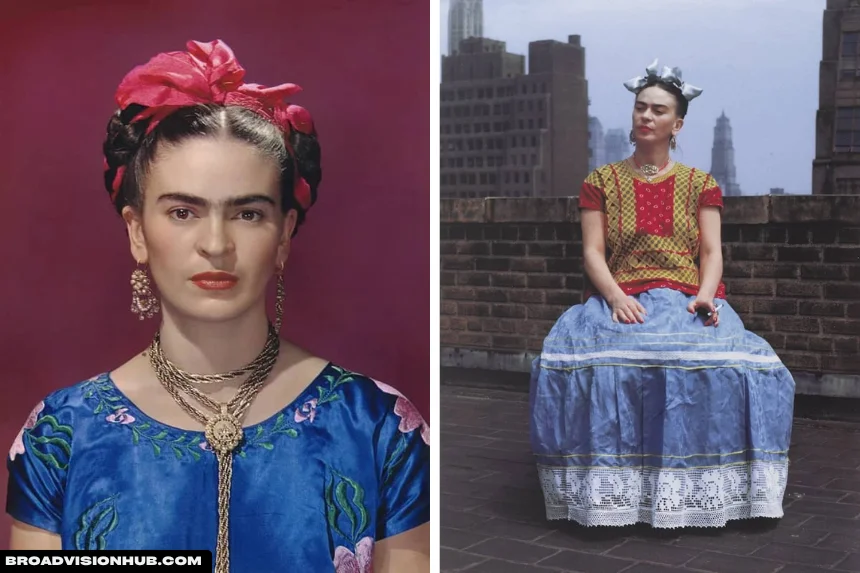
Frida Kahlo net worth searches often lead to large modern dollar figures, yet those numbers can be misleading. No precise personal net-worth figure is established in the museum, institutional, and auction-house sources used for this article. Kahlo earned money from paintings, exhibitions, commissions, and later teaching, but she died in 1954—decades before her artwork began commanding today’s extraordinary auction prices.
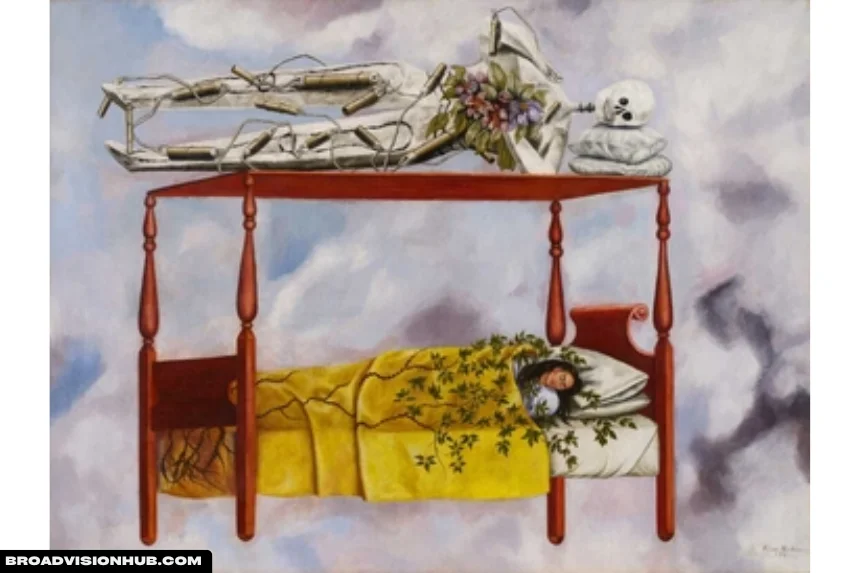
That distinction matters more than ever. In November 2025, Frida Kahlo’s El sueño (La cama) sold for $54.66 million at Sotheby’s in New York. The sale established a new auction record for Kahlo and, according to Sotheby’s, a new auction record for a work by a woman artist.
However, the $54.66 million sale does not represent Frida Kahlo’s personal wealth. Instead, it reflects the modern art market’s valuation of a rare work created by an artist whose cultural and commercial importance grew dramatically after her death.
Therefore, understanding Frida Kahlo’s finances requires separating three things: what she earned while alive, what property and assets she had access to, and what collectors are willing to pay for her paintings today.
What Was Frida Kahlo’s Net Worth?
Frida Kahlo’s exact net worth at the time of her death in 1954 is not reliably documented in the institutional sources used for this article. She earned income from paintings, exhibitions, commissions, and teaching, but modern auction prices should not be confused with her personal fortune. Her current auction record is $54.66 million for El sueño (La cama), sold in 2025.
This is a more accurate answer than attaching an unsupported multimillion-dollar estimate to her name.
Kahlo lived from 1907 to 1954 and died at age 47. The official Museo Frida Kahlo timeline records her birth on July 6, 1907, and her death on July 13, 1954.
During her lifetime, she gradually built an independent artistic career. Nevertheless, her financial circumstances were very different from the prices attached to her work today.
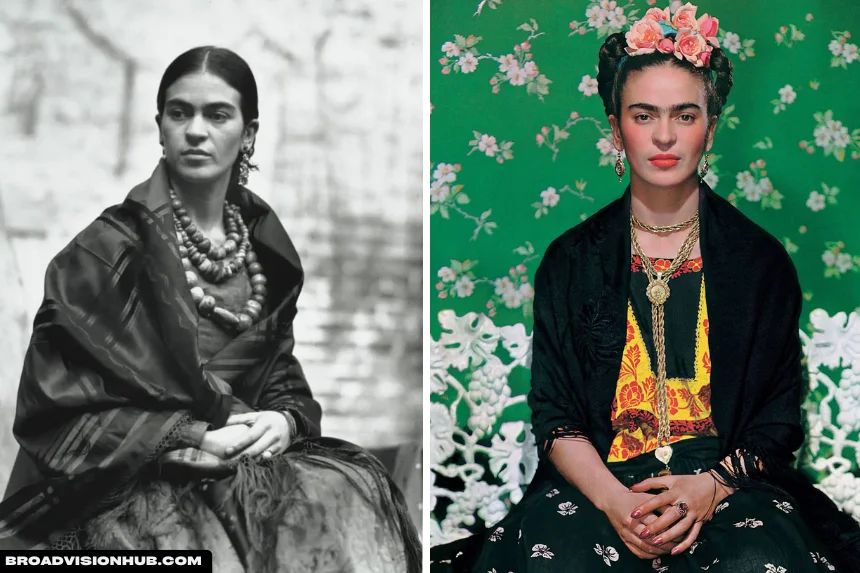
Frida Kahlo Quick Facts
| Frida Kahlo Fact | Detail |
|---|---|
| Full name | Magdalena Carmen Frida Kahlo Calderón |
| Born | July 6, 1907 |
| Birthplace | Coyoacán, Mexico |
| Died | July 13, 1954 |
| Age at death | 47 |
| Nationality | Mexican |
| Profession | Painter |
| Husband | Diego Rivera |
| Known for | Self-portraits and autobiographical paintings |
| Exact net worth at death | Not reliably documented in the institutional sources used here |
| Current auction record | $54.66 million |
| Record artwork | El sueño (La cama) |
| Record sale year | 2025 |
| Previous major record | Diego y yo at $34.9 million |
| Famous home | Casa Azul |
The Museo Frida Kahlo identifies her full name as Magdalena Carmen Frida Kahlo Calderón and records her birth in Coyoacán on July 6, 1907.
Frida Kahlo Net Worth vs. the Value of Her Paintings
The most important thing to understand about Frida Kahlo net worth is that personal wealth and artwork value are completely different concepts.
A person’s net worth generally refers to the value of assets they personally own, minus liabilities.
An auction price, however, tells us what a buyer paid for a specific work at a particular sale.
Those two numbers are not interchangeable.
For example, El sueño (La cama) sold for $54.66 million on November 20, 2025.
Frida Kahlo had been dead for more than seven decades at that point.
Therefore, the sale does not tell us that she had a $54.66 million fortune during her lifetime. Nor does it mean her estate automatically received the entire sale amount.
Instead, the price shows how highly collectors currently value an important Kahlo painting.
Why Auction Prices Do Not Equal Frida Kahlo’s Wealth
Consider a simple example.
An artist sells a painting during their lifetime. Decades later, the owner—or another collector who acquired it afterward—sells that same painting for a much higher amount.
The later auction price belongs to the modern transaction. It does not retroactively become part of the artist’s historical income.
That distinction is particularly important with Kahlo because her market value increased enormously after her death.
Sotheby’s recorded another major milestone in 2021 when Diego y yo sold for $34.9 million, then an auction record for Kahlo and a record for Latin American art.
Four years later, El sueño (La cama) surpassed that figure at $54.66 million.
Consequently, modern headlines about Kahlo paintings selling for tens of millions should be understood as evidence of her posthumous art-market value, not her personal net worth in 1954.
Was Frida Kahlo Rich During Her Lifetime?
It is difficult to reduce Frida Kahlo lifetime finances to a simple label such as “rich” or “poor.”
Her financial circumstances changed significantly over time.
Early in her artistic life, money was a practical concern.
The Museo Frida Kahlo timeline states that in 1927, Kahlo continued painting partly because she wanted to earn money and help her parents cover the medical costs associated with her injuries.
That fact gives important context.
At that stage, painting was not merely a path toward international fame. It also had a direct financial purpose.
Moreover, the Kahlo family home itself had financial pressures. The official museum chronology records that Diego Rivera later paid off a mortgage on the family property and had the residence placed in Frida’s name.
Therefore, the surviving record does not support the idea that Kahlo spent her entire adult life surrounded by effortless personal wealth.
However, her financial situation improved as her artistic reputation grew.
By the late 1930s, she was holding exhibitions abroad, selling paintings, gaining collectors, and receiving recognition from major figures in the art world.
So, while a precise Frida Kahlo net worth at death remains unsupported by a reliable accounting figure, there is clear evidence that her ability to earn independently from art developed substantially over time.
How Did Frida Kahlo Make Money?
Frida Kahlo made money primarily through her work as an artist.
Her documented income-related activities included:
- selling paintings;
- exhibiting work through galleries;
- completing commissioned or requested works;
- attracting private collectors; and
- teaching art later in her career.
However, the balance between these sources changed over time.
Early in her career, she painted partly to help deal with medical expenses. Later, she began selling works through international exhibitions.
Eventually, teaching also became part of her professional life.
Selling Paintings
The clearest evidence of Kahlo earning directly from her art comes from her exhibitions.
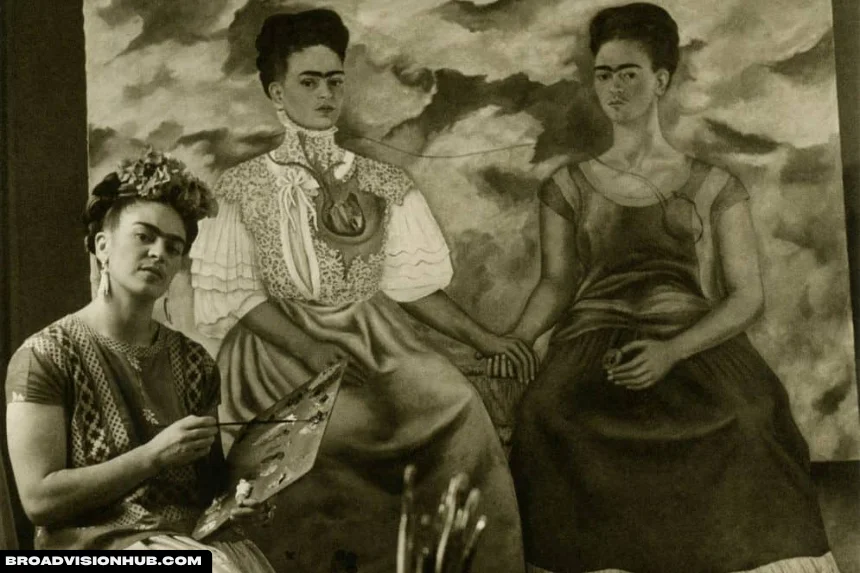
The official Museo Frida Kahlo timeline records that her first solo exhibition in New York took place in 1938 at Julien Levy’s gallery. The museum notes that she sold several paintings during the exhibition and received strong reviews.
This was a major step.
Kahlo was no longer simply painting privately or within Diego Rivera’s artistic circle. Instead, she had entered an international commercial gallery environment under her own name.
That matters when considering her finances because sales from exhibitions created a more independent income stream.
Commissions and Requested Works
Kahlo also produced works requested by patrons or institutions.
For example, the Museo Frida Kahlo records that The Suicide of Dorothy Hale was painted after a request connected with the family of American actress Dorothy Hale.
Additionally, the museum documents a still-life commission associated with the Mexican presidency during the early 1940s.
Not every commissioned artwork necessarily provides enough surviving documentation to calculate Kahlo’s exact earnings. Nevertheless, such projects demonstrate that professional requests formed part of her career.
Teaching Art
Later, Kahlo also worked as a teacher.
The Museo Frida Kahlo states that she became a professor at La Esmeralda, Mexico’s national school of painting and sculpture, beginning in 1942. As her health worsened, she eventually taught some students from her home.
Teaching therefore became another documented professional activity.
However, the surviving public institutional records used here do not provide enough salary information to calculate how much this contributed to her total lifetime wealth.
How Frida Kahlo Became a Professional Artist
Frida Kahlo did not originally begin painting because she expected to become one of the most commercially valuable artists in history.
Instead, her path toward art began after a catastrophic accident.
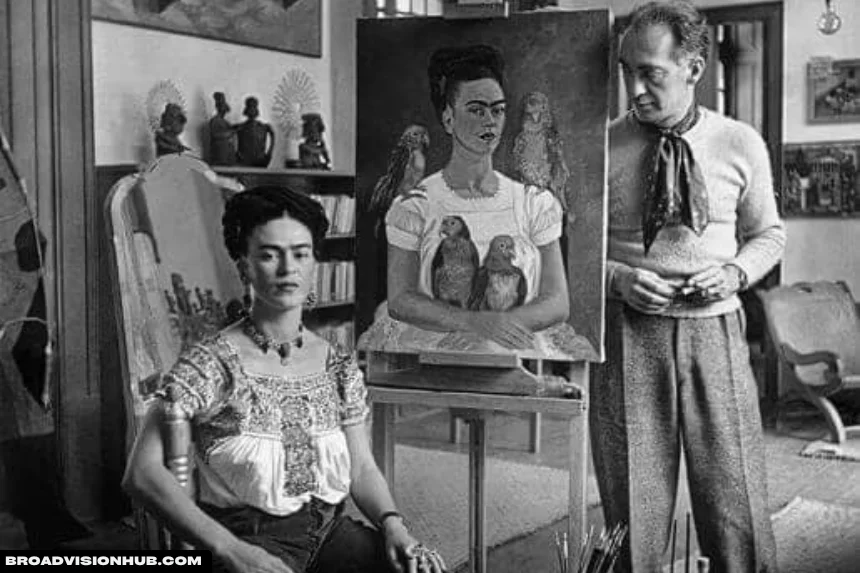
In 1925, Kahlo suffered severe injuries when a bus she was travelling in collided with a streetcar. MoMA states that she began painting that year while recovering from the near-fatal accident.
The Museo Frida Kahlo provides similar context. After returning home, Kahlo spent months largely confined to bed. Her family arranged a mirror and a specially adapted easel so she could paint while lying down.
This period produced her early self-portraits and established a subject that would remain central throughout her career: herself.
The 1925 Accident and the Beginning of Her Painting Career
The bus accident changed Kahlo’s life physically and professionally.
Her injuries created long-term medical problems and led to repeated treatments throughout her life. However, the long recovery also gave her time to develop painting seriously.
MoMA says Kahlo went on to produce a relatively small but consistent body of work across roughly three decades. Her paintings frequently explored identity, physical pain, personal experience, and her relationship with Diego Rivera.
At first, painting was closely connected to recovery.
Then, it became connected to income.
By 1927, the Museo Frida Kahlo records that she was continuing to paint partly to help her parents with medical expenses.
This progression is important for understanding Frida Kahlo’s financial history:
recovery → painting → income → exhibitions → international recognition
Her career did not begin with multimillion-dollar collectors. Instead, it developed gradually from extremely personal circumstances.
Frida Kahlo’s Growing Recognition
By the late 1930s, Kahlo’s career was becoming increasingly international.
French writer and Surrealist theorist André Breton encountered her work in Mexico and encouraged broader international exposure.
Soon afterward, Kahlo’s professional opportunities expanded considerably.
Frida Kahlo’s First Solo Exhibition in New York
In 1938, art dealer Julien Levy invited Kahlo to exhibit at his New York gallery.
According to the Museo Frida Kahlo, the exhibition became her first solo show. More importantly from a financial perspective, she sold several paintings there.
The exhibition helped establish her as an artist who could attract buyers independently of Diego Rivera.
That distinction matters.
Rivera was already far more established internationally. However, Kahlo was increasingly building her own collector base and artistic reputation.
Between 1937 and 1938, the museum says she produced about 20 paintings, many of which were shown in New York.
Therefore, the period marked both a creative and commercial expansion.
Frida Kahlo Exhibits in Paris
Kahlo’s international profile grew again in 1939.
She travelled to Paris after an invitation connected with André Breton and exhibited there with help from Marcel Duchamp.
One especially important development followed.
After the Mexique exhibition, the French government purchased Kahlo’s The Frame. The Museo Frida Kahlo notes that the work later became part of the collection associated with the Centre Pompidou.
This purchase demonstrated that Kahlo’s work had begun attracting institutional attention in Europe.
It also represented a major contrast with her situation roughly a decade earlier, when she was painting partly to help pay medical expenses.
Recognition Continued Into the 1940s
Kahlo’s professional visibility continued to expand during the next decade.
In 1943, her work appeared at the Philadelphia Museum of Art and in Peggy Guggenheim’s women-artists exhibition at the Art of This Century gallery in New York.
At the same time, she was teaching at La Esmeralda.
Therefore, by the 1940s, Kahlo had developed multiple professional roles:
painter, exhibiting artist, seller of artworks, internationally recognized figure, and teacher.
Nevertheless, none of this creates a reliable basis for assigning a precise modern-style net-worth number to her.
Her documented financial story is more nuanced.
Frida Kahlo began painting amid severe health and financial pressures. She gradually sold more work, entered international exhibitions, attracted institutional recognition, and established an increasingly independent career.
The next part of that financial story involves Diego Rivera, their shared property and finances, and the dramatic rise in the value of Kahlo’s paintings after her death.
How Diego Rivera Influenced Frida Kahlo’s Career and Finances
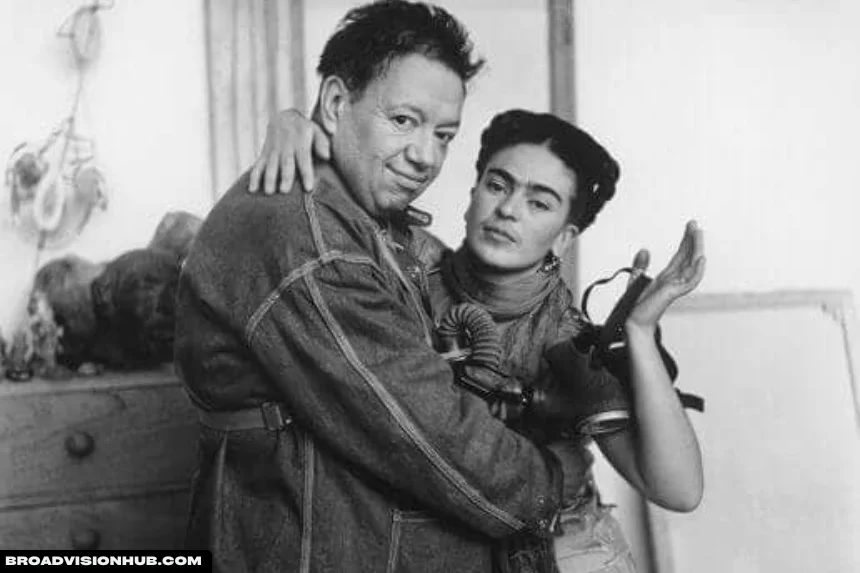
Diego Rivera played an important role in both Frida Kahlo’s personal life and her early financial circumstances. When the couple married in 1929, Rivera was already a highly established Mexican muralist with international commissions and a considerably larger professional reputation.
Consequently, the economic balance between the two artists was not equal during the early years of their marriage.
Rivera also provided direct financial assistance to Kahlo’s family. According to the Museo Frida Kahlo chronology, he paid off the mortgage and debts attached to the Kahlo family home in 1930 and registered the property in Frida’s name.
That property was Casa Azul, the house that would later become inseparable from Kahlo’s identity and legacy.
Therefore, Rivera’s financial position clearly affected Kahlo’s material circumstances. However, it would be misleading to conclude that she never developed income or professional standing of her own.
As Part A showed, Kahlo increasingly sold paintings, participated in international exhibitions, attracted collectors, and later taught art.
In other words, Rivera provided significant financial support, but Kahlo’s artistic career gradually developed its own commercial foundation.
Was Frida Kahlo Financially Dependent on Diego Rivera?
There is no simple yes-or-no answer.
During parts of their marriage, Rivera clearly had greater financial resources and professional earning power. His payment of the Casa Azul mortgage is one documented example.
Moreover, Rivera had already built a major international career when Kahlo was still developing hers.
However, Kahlo increasingly earned money independently.
Her 1938 solo exhibition in New York resulted in painting sales. She also received commissions, exhibited internationally, attracted collectors, and later worked as a teacher.
Therefore, it is more accurate to describe their financial relationship as unequal but changing.
Kahlo benefited from Rivera’s economic position and artistic network, yet she gradually established herself as a professional artist capable of earning through her own work.
This distinction is especially important when discussing Frida Kahlo net worth. Combining Rivera’s success with Kahlo’s finances and then treating the couple’s economic position as her individual personal fortune would produce an unreliable estimate.
Their lives and careers overlapped, but their earnings and assets should not automatically be treated as identical.
Frida Kahlo and Diego Rivera’s Divorce
Frida Kahlo and Diego Rivera officially divorced on November 6, 1939. However, their separation did not permanently end their relationship.
The Museo Frida Kahlo chronology confirms the 1939 divorce and records that the couple remarried in San Francisco on December 8, 1940.
The period around their divorce is particularly relevant to Kahlo’s professional development.
By then, she had already held her New York exhibition and gained greater recognition outside Mexico. Therefore, her identity as an artist was becoming increasingly independent from Rivera’s reputation.
Although their relationship remained deeply interconnected, Kahlo was no longer simply being introduced to the art world as the wife of a famous muralist.
Her work was attracting its own collectors, critics, and institutions.
That independent reputation ultimately became far more valuable after her death than anyone in the 1930s or 1940s could reasonably have predicted.
How Much Are Frida Kahlo Paintings Worth Today?
There is no single price that applies to every Frida Kahlo painting.
The value of an artwork depends on several factors, including:
- the specific painting;
- subject matter;
- date;
- size;
- condition;
- provenance;
- rarity;
- exhibition history; and
- whether comparable works remain in private ownership.
However, Kahlo’s most important paintings can now command tens of millions of dollars at auction.
The clearest example came in November 2025.
Sotheby’s sold her 1940 painting El sueño (La cama) for $54.66 million. The auction house confirmed that the result established a new auction record for Kahlo and for any woman artist.
Before that sale, Kahlo’s auction record had stood at $34.9 million for Diego y yo, sold at Sotheby’s in 2021.
Therefore, the top end of the Frida Kahlo art market has risen dramatically.
Still, those record prices should not be applied to every painting bearing her name.
A major self-portrait with exceptional provenance can occupy a completely different market level from a smaller or less significant work.
What Is Frida Kahlo’s Most Expensive Painting?
As of July 2026, Frida Kahlo’s most expensive painting sold at auction is El sueño (La cama), which realized $54.66 million at Sotheby’s in New York on November 20, 2025.
The painting dates from 1940 and is also known in English as The Dream (The Bed).
It depicts Kahlo asleep in a bed while a skeleton decorated with flowers and explosives appears above her.
The imagery connects several themes that repeatedly appeared in Kahlo’s life and work, including:
- mortality;
- physical vulnerability;
- sleep;
- Mexican cultural traditions;
- personal identity; and
- the close relationship between life and death.
Moreover, the painting had another quality that made it especially attractive to the market: rarity.
Sotheby’s said the work returned to the international market in 2025 after approximately 45 years.
That scarcity helped make the sale a major event.
El sueño (La cama) — $54.66 Million
El sueño (La cama) sold for exactly $54,660,000 at Sotheby’s on November 20, 2025.
The result was significant on several levels.
First, it became the highest auction price ever recorded for Frida Kahlo.
Second, it surpassed Kahlo’s previous $34.9 million auction record.
Third, Sotheby’s says it broke the previous auction record for any work by a woman artist.
Therefore, this was not simply another expensive Kahlo sale. It represented a broader art-market milestone.
The Same Painting Sold for $51,000 in 1980
Perhaps the most striking comparison involves the painting’s earlier auction history.
Sotheby’s says El sueño (La cama) was purchased through the auction house for $51,000 in 1980.
In 2025, the same work realized:
$54.66 million.
The comparison looks like this:
| Sale Year | Artwork | Sale Price |
|---|---|---|
| 1980 | El sueño (La cama) | $51,000 |
| 2025 | El sueño (La cama) | $54.66 million |
This does not mean every Kahlo painting increased at exactly the same rate.
Nevertheless, it provides a remarkable illustration of how dramatically her art-market status changed over 45 years.
More importantly, it demonstrates why modern auction figures cannot be used to calculate Frida Kahlo net worth during her lifetime.
The vast majority of that increase happened decades after her death.
Diego y Yo and Frida Kahlo’s Previous $34.9 Million Record
Before El sueño (La cama) reset the record in 2025, Kahlo’s most famous auction benchmark belonged to Diego y yo, or Diego and I.
Sotheby’s sold the painting for $34.9 million in New York in November 2021.
At the time, the result shattered Kahlo’s previous auction high of approximately $8 million.
Moreover, Sotheby’s described the $34.9 million sale as a new auction record for Latin American art.
The painting itself carries obvious connections to Kahlo’s relationship with Diego Rivera.
It depicts Kahlo’s face with a small image of Rivera appearing on her forehead. Therefore, the work transforms their difficult personal relationship into a highly recognizable psychological self-portrait.
Its subject matter, rarity, provenance, and importance within Kahlo’s career all contributed to its appeal.
Why Diego y Yo Was So Important
The 2021 sale represented more than a high price for a single painting.
It showed how far Kahlo had moved within the international art market.
For decades, Diego Rivera had been the more commercially dominant name during their lifetimes.
However, Diego y yo ultimately surpassed previous Latin American auction benchmarks and reinforced Kahlo’s extraordinary posthumous rise.
In that sense, the painting’s auction history reflects a remarkable reversal.
During the early years of their relationship, Rivera had greater fame and financial power.
Decades after both artists died, however, Kahlo’s work became capable of generating some of the highest auction prices ever recorded for Latin American art.
Why the 2025 Sale Changed Frida Kahlo’s Auction Record
For four years, Diego y yo remained Kahlo’s auction record at $34.9 million.
Then, in November 2025, El sueño (La cama) sold for $54.66 million.
The difference was substantial:
| Artwork | Sale Year | Auction Price |
|---|---|---|
| Diego y yo | 2021 | $34.9 million |
| El sueño (La cama) | 2025 | $54.66 million |
The later result exceeded the earlier record by nearly $20 million.
Therefore, articles that still identify Diego y yo as Frida Kahlo’s most expensive auctioned painting are outdated as of 2026.
The current record belongs to El sueño (La cama).
Frida Kahlo Auction Record Timeline
Kahlo’s auction history shows how dramatically collectors’ willingness to pay for her work has changed.
| Year | Artwork or milestone | Price / significance |
|---|---|---|
| 1980 | El sueño (La cama) | Sold for $51,000 |
| 2016 | Earlier Kahlo auction benchmark | Approximately $8 million |
| 2021 | Diego y yo | $34.9 million |
| 2025 | El sueño (La cama) | $54.66 million |
| 2025 | New broader milestone | Auction record for a work by a woman artist |
Sotheby’s confirms both the $34.9 million 2021 result and the $54.66 million 2025 sale.
This timeline also illustrates something important about Frida Kahlo net worth.
The enormous financial appreciation attached to her name primarily belongs to the secondary art market after her death.
Kahlo herself did not receive $34.9 million for Diego y yo or $54.66 million for El sueño (La cama).
Those prices emerged generations later.
Why Is Frida Kahlo’s Art Worth Millions?
Frida Kahlo’s record prices cannot be explained by one factor alone.
Instead, several characteristics combine to make major works unusually desirable.
These include:
- limited supply;
- distinctive self-portraiture;
- museum-level importance;
- international cultural recognition;
- strong provenance;
- rarity in private hands; and
- growing demand for historically important women artists.
Together, these factors can create intense competition when an important Kahlo painting reaches auction.
Limited Supply of Major Frida Kahlo Works
Kahlo did not leave behind an enormous body of paintings compared with some other internationally famous artists.
Moreover, many important works are already in museums or major collections.
As a result, collectors cannot assume that another comparable painting will appear at auction soon.
This scarcity can make a major privately held work especially valuable.
Sotheby’s highlighted this issue when marketing El sueño (La cama). The auction house noted that many of Kahlo’s important self-portraits are now held by major museums and that El sueño was among the most significant examples still in private hands.
Therefore, limited availability is a major part of the pricing story.
Demand for Frida Kahlo Self-Portraits
Kahlo’s self-portraits occupy a particularly important position within her work.
They are not conventional portraits designed merely to record appearance.
Instead, Kahlo repeatedly used her own image to explore:
- physical pain;
- emotional conflict;
- Mexican identity;
- marriage;
- mortality;
- gender;
- medical trauma; and
- psychological experience.
Consequently, important self-portraits can embody several of the themes most strongly associated with her reputation.
Both Diego y yo and El sueño (La cama) place Kahlo herself at the centre of the composition.
That connection between artist and subject makes such works particularly recognizable and desirable.
Museum-Level Importance
Many significant Frida Kahlo works belong to museums and public collections.
Therefore, they rarely enter the commercial market.
When a museum-quality work remains privately owned and eventually appears at auction, buyers may view the opportunity as unusually difficult to repeat.
This can increase competitive bidding.
In the case of El sueño (La cama), Sotheby’s emphasized that the painting had not appeared on the international market for approximately 45 years.
That long absence made the 2025 sale especially notable.
Frida Kahlo’s Global Cultural Recognition
Kahlo’s reputation now extends far beyond specialist art history.
Her face, clothing, flowers, eyebrows, self-portraits, and personal story have become internationally recognizable.
Moreover, her work connects with themes that continue to attract academic and popular interest, including:
- disability and chronic pain;
- women’s experiences;
- Mexican identity;
- politics;
- sexuality;
- self-representation;
- personal trauma; and
- cultural heritage.
As a result, Kahlo exists simultaneously as an important modern artist and a major cultural icon.
That unusually broad recognition can increase demand for authentic works.
Provenance and Rarity
Provenance refers to an artwork’s documented ownership history.
For high-value art, strong provenance can matter enormously.
Collectors want confidence about:
- authenticity;
- ownership history;
- exhibition record;
- publication history; and
- legal title.
Moreover, a painting with an important historical ownership trail may attract additional interest.
Rarity matters as well.
When only a small number of comparable works remain available to private collectors, scarcity can push prices higher.
Therefore, the $54.66 million paid for El sueño (La cama) reflected much more than the cost of canvas and paint.
Buyers were competing for an exceptionally rare piece of Frida Kahlo’s artistic legacy.
Did Frida Kahlo Make Millions From Her Paintings?
There is no evidence in the institutional and auction records used for this article that Frida Kahlo personally received the modern multimillion-dollar amounts now associated with her paintings.
She certainly sold art during her lifetime.
However, today’s eight-figure auction prices developed long after her death.
Therefore, saying that Kahlo “made $54 million from a painting” would be false.
The more accurate statement is:
Frida Kahlo earned income as a working artist during her lifetime, while some of her paintings later became worth tens of millions of dollars on the secondary art market.
This distinction is central to understanding her financial history.
Was Frida Kahlo More Financially Valuable After Her Death?
In terms of measurable auction prices, Frida Kahlo’s art became dramatically more valuable after her death.
However, that statement requires careful wording.
Kahlo was already an exhibiting and recognized artist during her lifetime. She sold paintings, participated in major shows, and attracted institutional attention.
Nevertheless, the extraordinary global market associated with her name today developed over subsequent decades.
The increase from $51,000 for El sueño (La cama) in 1980 to $54.66 million for the same work in 2025 offers a particularly clear illustration.
Therefore, the financial legacy connected to Frida Kahlo today is vastly larger than the personal earnings documented during her lifetime.
Yet that modern value belongs to a broader network of collectors, museums, intellectual-property interests, exhibitions, and the art market.
It should not be rewritten as a fictional personal fortune that Kahlo possessed when she died in 1954.
The next part of her financial story involves one of the most important physical assets associated with her life: Casa Azul, the famous Blue House in Coyoacán that later became the Museo Frida Kahlo.
Did Frida Kahlo Own Casa Azul?
Casa Azul, or the Blue House, is one of the most important physical assets associated with Frida Kahlo’s life and legacy.
Located in Coyoacán, Mexico City, the property was Kahlo’s family home. She spent much of her life there, first with her family and later with Diego Rivera. Moreover, she created a significant portion of her work inside the house.
The official Museo Frida Kahlo describes Casa Azul as Kahlo’s “private universe” and says she spent most of her life there. Today, the building preserves paintings, photographs, documents, furniture, personal belongings, folk art, and pre-Columbian objects connected with Kahlo and Rivera.
The property’s financial history is also relevant to Frida Kahlo net worth.
Earlier in Kahlo’s life, Diego Rivera helped settle debts connected with the property and had the house placed in Frida’s name, according to the Museo Frida Kahlo chronology.
However, Casa Azul should not simply be assigned a speculative present-day real-estate value and added to a fictional personal net-worth calculation.
Its modern importance is primarily cultural, historical, artistic, and institutional.
What Happened to Frida Kahlo’s Estate?
The question of Frida Kahlo’s estate is more complicated than asking who inherited a bank account or collection of paintings.
A major part of the legacy associated with Kahlo and Diego Rivera eventually became connected to a museum trust.
Following Kahlo’s death in 1954, Rivera worked to preserve important parts of their artistic and cultural heritage for the Mexican public.
In August 1955, Diego Rivera created a trust through Banco de México for the Diego Rivera and Frida Kahlo museums. A 2025 official statement from Museo Frida Kahlo describes it as a private, nonprofit trust that administers both Museo Frida Kahlo–Casa Azul and Museo Diego Rivera-Anahuacalli.
Banco de México separately confirms that a trust was established in 1955 at Rivera’s request to preserve Frida Kahlo’s legacy at Casa Azul and Rivera’s pre-Hispanic collection at Anahuacalli.
Therefore, it would be too simplistic to describe Frida Kahlo’s modern “estate” as a single collection of assets owned by one heir.
Instead, important parts of the Kahlo-Rivera legacy became preserved through an institutional structure designed to maintain museums and cultural collections.
Casa Azul Becomes the Museo Frida Kahlo
Casa Azul officially opened as the Museo Frida Kahlo in July 1958.
The museum says Frida Kahlo and Diego Rivera wanted the house to become a museum that could be enjoyed by the Mexican public. After Kahlo’s death, their friend Carlos Pellicer helped develop the exhibition design.
The result transformed a private residence into one of the most important physical locations associated with Kahlo.
Today, visitors encounter far more than paintings.
The collection includes:
- personal belongings;
- photographs;
- correspondence and documents;
- books;
- furniture;
- Mexican folk art;
- pre-Columbian sculpture; and
- paintings associated with Kahlo and Rivera.
Consequently, Casa Azul represents a type of value that cannot easily be expressed through a conventional net-worth estimate.
It combines historic property, artwork, archives, personal objects, cultural significance, and an internationally recognized museum identity.
Who Controls Casa Azul Today?
Casa Azul is administered through the Fideicomiso de los Museos Diego Rivera y Frida Kahlo, with Banco de México acting as fiduciary.
That relationship is not merely historical.
A recent Banco de México document continues to identify the central bank as fiduciary of the trust relating to the Diego Rivera and Frida Kahlo museums.
The Museo Frida Kahlo also directs requests involving reproduction of Kahlo and Rivera artworks in Mexico to the Banco de México museum trust.
Therefore, the institutional structure remains an important part of Kahlo’s modern legacy.
Is Casa Azul Owned by Frida Kahlo’s Family?
It would be misleading to describe Casa Azul today as an ordinary private residence simply owned and controlled by Kahlo’s descendants.
Instead, the property functions as the Museo Frida Kahlo and is administered within the museum trust structure established to preserve the Kahlo-Rivera cultural legacy.
That distinction matters when discussing Frida Kahlo net worth.
The museum is not equivalent to personal cash, stocks, or a house that could simply be added to an individual balance sheet.
Casa Azul and Frida Kahlo’s Financial Legacy
Casa Azul demonstrates why Kahlo’s modern financial legacy cannot be reduced to a single number.
During her lifetime, the house was a family residence, artistic workspace, and important part of her personal property history.
Afterward, however, it became a museum.
As a result, its value today is connected not only to property but also to:
- tourism;
- museum admissions;
- preservation;
- exhibitions;
- archives;
- intellectual and reproduction rights;
- cultural heritage; and
- Frida Kahlo’s continuing international reputation.
The museum’s stated mission includes preserving and promoting knowledge of Kahlo’s life, work, artistic environment, and Mexican cultural traditions.
Therefore, Casa Azul may be one of the most important components of Kahlo’s legacy without being a useful number for calculating what she personally was worth when she died.
Who Owns Frida Kahlo’s Paintings Today?
There is no single owner of all Frida Kahlo paintings.
Her surviving works are distributed among:
- museums;
- cultural institutions;
- private collections;
- foundations or trusts; and
- individual collectors.
Some paintings rarely or never enter the commercial market.
Others remain privately owned and may eventually appear at auction.
This limited availability helps explain why an important work can attract extraordinary bidding when it does become available.
For example, Sotheby’s described El sueño (La cama) as an exceptionally important Kahlo work returning to the international market after roughly 45 years. The painting ultimately sold for $54.66 million in November 2025.
Therefore, asking “Who owns Frida Kahlo’s art?” does not have one universal answer.
Ownership depends on the particular painting.
Who Gets the Money When a Frida Kahlo Painting Sells?
When a privately owned Frida Kahlo painting sells at auction today, the multimillion-dollar sale price does not become money that Kahlo personally earned.
She died in 1954.
Instead, a modern auction involves the current owner or consignor selling an artwork to a new buyer, subject to the auction house’s terms, fees, taxes, and applicable legal rights.
This distinction is crucial.
For example, when El sueño (La cama) sold for $54.66 million in 2025, the transaction reflected the painting’s modern market value.
It did not increase Frida Kahlo’s historical net worth.
Similarly, the $34.9 million paid for Diego y yo in 2021 represents a modern secondary-market transaction rather than money Kahlo received during her life.
Frida Kahlo’s Cultural Value vs. Financial Value
Frida Kahlo’s legacy now exists in several different forms.
Financial value
Her most important paintings can command tens of millions of dollars.
Museum value
Casa Azul attracts interest because of its connection to her life, artwork, belongings, and personal environment.
Historical value
Kahlo occupies a significant position within 20th-century Mexican and international art history.
Cultural value
Her image has become recognizable far beyond museums and auction houses.
Academic value
Researchers continue examining her work through themes such as identity, physical pain, gender, disability, Mexican culture, politics, and self-representation.
Therefore, even the $54.66 million auction record captures only one dimension of Kahlo’s modern importance.
Was Frida Kahlo More Famous After Her Death?
Frida Kahlo was not an unknown artist during her lifetime.
She exhibited internationally, sold paintings, gained critical attention, and developed relationships with influential artists, collectors, and institutions.
However, her global fame expanded dramatically after her death in 1954.
Over subsequent decades, museum exhibitions, scholarship, biographies, popular culture, and an increasingly competitive art market brought her work to much larger international audiences.
Her auction history illustrates this rise particularly clearly.
A painting that sold for $51,000 in 1980—El sueño (La cama)—returned to Sotheby’s in 2025 and sold for $54.66 million.
That difference does not measure Kahlo’s personal wealth.
Instead, it measures how dramatically the market’s valuation of a major Kahlo painting changed over approximately 45 years.
Frida Kahlo’s Wealth and Art-Market Timeline
| Year | Financial or career milestone |
|---|---|
| 1907 | Frida Kahlo is born in Coyoacán, Mexico |
| 1925 | Serious bus accident changes her life; painting becomes central during recovery |
| 1927 | Continues painting partly to help with family medical expenses |
| 1929 | Marries Diego Rivera |
| 1930 | Rivera helps resolve debts connected with Casa Azul |
| 1938 | First major solo New York exhibition; several works sell |
| 1939 | Exhibits in Paris and gains further international recognition |
| 1940s | Continues exhibiting, selling art, receiving commissions, and teaching |
| 1954 | Kahlo dies at age 47 |
| 1955 | Rivera establishes museum trust through Banco de México |
| 1958 | Casa Azul opens as Museo Frida Kahlo |
| 1980 | El sueño (La cama) sells for $51,000 |
| 2021 | Diego y yo sells for $34.9 million |
| 2025 | El sueño (La cama) sells for $54.66 million |
| 2026 | $54.66 million remains Kahlo’s auction record as of July |
The 1955 trust structure remains documented by both Banco de México and the Museo Frida Kahlo.
Frequently Asked Questions About Frida Kahlo Net Worth
What was Frida Kahlo’s net worth when she died?
There is no reliably documented precise net-worth figure for Frida Kahlo at the time of her death in 1954 in the institutional and auction sources used for this article.
Although some websites publish estimated figures, those numbers should not automatically be treated as verified historical facts.
Kahlo earned money through her art, exhibitions, commissions, and teaching. However, that does not provide enough information to reconstruct an exact personal balance sheet.
How rich was Frida Kahlo?
Frida Kahlo’s financial circumstances changed throughout her life.
During her younger years, money and medical expenses were important concerns. Later, she increasingly sold paintings, exhibited internationally, accepted professional work, and taught art.
However, there is insufficient evidence to label her personal fortune with a specific modern dollar amount.
Was Frida Kahlo rich when she died?
It is safer to say that Frida Kahlo had established herself as a professional artist by the time of her death rather than claim she was either extremely wealthy or destitute.
She had achieved meaningful artistic recognition and generated income from her career.
Nevertheless, no authoritative accounting located for this article establishes a precise net worth at death.
How did Frida Kahlo make money?
Frida Kahlo earned money primarily through her artistic career.
Her income-related activities included:
- painting sales;
- gallery exhibitions;
- commissions;
- private collectors; and
- teaching.
Her earning ability grew as her international reputation developed.
How much are Frida Kahlo paintings worth?
Values vary enormously depending on the painting.
Factors include subject, size, rarity, provenance, condition, historical importance, and whether comparable works remain available to private collectors.
At the highest end of the market, major Kahlo works can sell for tens of millions of dollars.
What is Frida Kahlo’s most expensive painting?
As of July 2026, Frida Kahlo’s auction record belongs to El sueño (La cama).
The 1940 painting sold for $54.66 million at Sotheby’s in November 2025.
How much did El sueño (La cama) sell for?
El sueño (La cama) sold for $54,660,000 in November 2025.
The result established a new auction record for Frida Kahlo and, according to Sotheby’s, a new auction record for a work by a woman artist.
How much did Diego y yo sell for?
Frida Kahlo’s Diego y yo sold for $34.9 million at Sotheby’s in November 2021.
That was Kahlo’s auction record until El sueño (La cama) surpassed it in 2025.
Why are Frida Kahlo paintings so expensive?
Major Frida Kahlo paintings are expensive because several factors combine:
- relatively limited supply;
- strong museum representation;
- rarity in private collections;
- global cultural recognition;
- demand for her self-portraits;
- important provenance; and
- her position within modern art history.
When a particularly significant work appears after decades outside the market, competition among collectors can become especially strong.
Did Frida Kahlo make millions from her paintings?
There is no evidence that Frida Kahlo personally received the modern eight-figure auction prices associated with her work.
She sold paintings during her lifetime, but prices such as $34.9 million and $54.66 million emerged many decades after her death.
Therefore, those sales should not be presented as her personal earnings.
Was Frida Kahlo worth $54.7 million?
Not based on the evidence used for this article.
The approximately $54.7 million figure refers to the 2025 auction sale of El sueño (La cama).
It is the price paid for one painting in a modern auction, not a verified estimate of Frida Kahlo’s personal net worth.
Who gets the money when a Frida Kahlo painting sells today?
Generally, the proceeds of a modern secondary-market sale relate to the current seller or consignor, subject to auction fees, taxes, contractual arrangements, and any applicable legal rights.
Frida Kahlo herself does not receive modern auction proceeds because she died in 1954.
What happened to Frida Kahlo’s estate?
Important elements of the Kahlo-Rivera cultural legacy became connected to the museum trust established by Diego Rivera through Banco de México.
The trust administers Museo Frida Kahlo–Casa Azul and Museo Diego Rivera-Anahuacalli.
However, this should not be interpreted to mean the trust owns every Frida Kahlo painting in existence.
Her artworks are distributed among different museums, institutions, and private owners.
Who owns Casa Azul?
Casa Azul operates as the Museo Frida Kahlo within the institutional museum trust structure associated with Banco de México.
Banco de México continues to act as fiduciary for the trust relating to the Diego Rivera and Frida Kahlo museums.
When did Casa Azul become a museum?
Casa Azul opened as the Museo Frida Kahlo in July 1958.
The official museum says the house and gardens have since preserved paintings, personal possessions, photographs, documents, books, furniture, folk art, and other objects associated with Kahlo and Rivera.
Is Casa Azul part of Frida Kahlo’s financial legacy?
Yes, although its importance cannot reasonably be reduced to a speculative real-estate price.
Casa Azul represents Kahlo’s artistic, historical, cultural, and institutional legacy.
Today, it functions as a museum rather than simply as a privately traded residential property.
Was Frida Kahlo more successful after her death?
Kahlo achieved genuine recognition during her lifetime.
However, her international fame, cultural influence, museum profile, and auction market expanded dramatically after 1954.
The rise of El sueño (La cama) from a $51,000 sale in 1980 to $54.66 million in 2025 provides one striking example of that posthumous market growth.
Understanding Frida Kahlo’s True Financial Legacy
The question of Frida Kahlo net worth does not have the simple multimillion-dollar answer that some celebrity-finance pages suggest.
No reliable institutional evidence establishes an exact personal fortune at the time Kahlo died in 1954.
What the historical record does show is more interesting.
Kahlo began painting amid serious physical and financial pressures. Over time, she sold works, held international exhibitions, attracted collectors, received professional opportunities, and established herself as an artist independent of Diego Rivera’s reputation.
Meanwhile, her financial legacy grew dramatically after her death.
Casa Azul became a museum, important elements of the Kahlo-Rivera legacy were preserved through a trust associated with Banco de México, and Kahlo’s paintings became increasingly valuable in the international art market.
That rise reached a new milestone in November 2025 when El sueño (La cama) sold for $54.66 million at Sotheby’s.
Therefore, the most accurate way to understand Frida Kahlo’s wealth is to separate lifetime finances from posthumous art value.
Her personal net worth at death remains undocumented with precision.
Her modern financial and cultural legacy, however, is unmistakably enormous.