Children normally lose all 20 baby teeth, including eight incisors, four canines and eight molars. The lower front teeth usually fall out first at around ages 6–7. Afterward, children lose the remaining incisors, canines and baby molars. Most children finish the process between ages 12 and 13.
However, every child develops at a slightly different pace. Therefore, losing a particular tooth earlier or later than a classmate does not automatically indicate a problem.
Quick Answer
| Question | Answer |
|---|---|
| What teeth do kids lose? | All 20 primary, or baby, teeth |
| How many front teeth do they lose? | Eight incisors |
| How many canine teeth do they lose? | Four canines |
| How many molars do they lose? | Eight baby molars |
| Which teeth usually fall out first? | The lower central incisors |
| When does tooth loss usually begin? | Around ages 6–7 |
| When does it usually finish? | Around ages 12–13 |
| Do kids lose their 6-year molars? | No; these are permanent teeth |
| What replaces baby molars? | Permanent premolars |
| Do all children follow the same order? | No; normal timing varies |
How Many Teeth Do Kids Lose?
Most children develop a complete set of 20 primary teeth by approximately age three. These include:
- Eight incisors
- Four canines
- Eight molars
Eventually, children lose all 20 baby teeth. Meanwhile, permanent teeth emerge to replace them.
An adult normally has 28 permanent teeth before wisdom teeth appear. If all four wisdom teeth develop, the total can reach 32.
Therefore, children do not lose 32 teeth during childhood. They lose the 20 teeth belonging to their primary set.
What Teeth Do Kids Lose First?
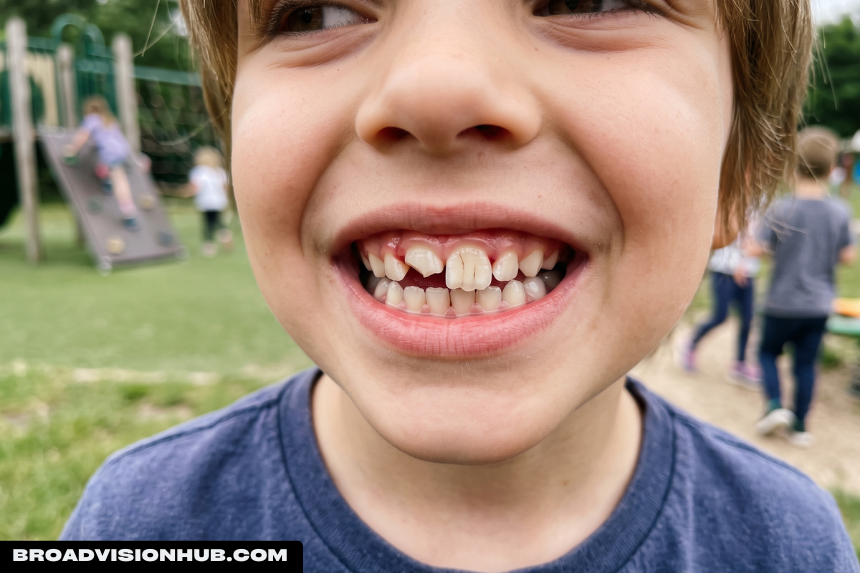
The lower central incisors usually become loose first. These are the two middle teeth in the bottom front of the mouth.
Most children lose them at approximately ages 6–7. Shortly afterward, the upper central incisors and lower lateral incisors usually begin loosening.
The American Academy of Pediatrics explains that children generally begin losing their front incisors around age six.
However, some children begin at five, while others do not lose their first tooth until seven. Family growth patterns and individual development can influence the timing.
Complete Baby Tooth Loss Chart
| Tooth type | Position | Typical loss age |
| Lower central incisors | Bottom middle front teeth | 6–7 years |
| Upper central incisors | Top middle front teeth | 7–8 years |
| Lower lateral incisors | Beside the bottom middle teeth | 7–8 years |
| Upper lateral incisors | Beside the top middle teeth | 8–9 years |
| Lower canines | Pointed bottom teeth | 9–11 years |
| Upper first molars | First upper baby molars | 9–11 years |
| Lower first molars | First lower baby molars | 10–12 years |
| Upper second molars | Back upper baby molars | 9–12 years |
| Upper canines | Pointed upper teeth | 11–12 years |
| Lower second molars | Back lower baby molars | 11–13 years |
These age ranges come from the AAPD dental growth and development chart. Nevertheless, the precise sequence can vary.
Which Front Teeth Do Kids Lose?
Children lose all eight primary incisors. These are the flat front teeth used for biting food.
They include:
- Two upper central incisors
- Two lower central incisors
- Two upper lateral incisors
- Two lower lateral incisors
The lower central incisors commonly fall out first. Next, the upper central incisors and lower lateral incisors usually loosen. Finally, the upper lateral incisors generally complete the front-tooth stage.
Consequently, many children have a noticeable gap-toothed smile between ages six and nine.
When Do Kids Lose Their Top Front Teeth?
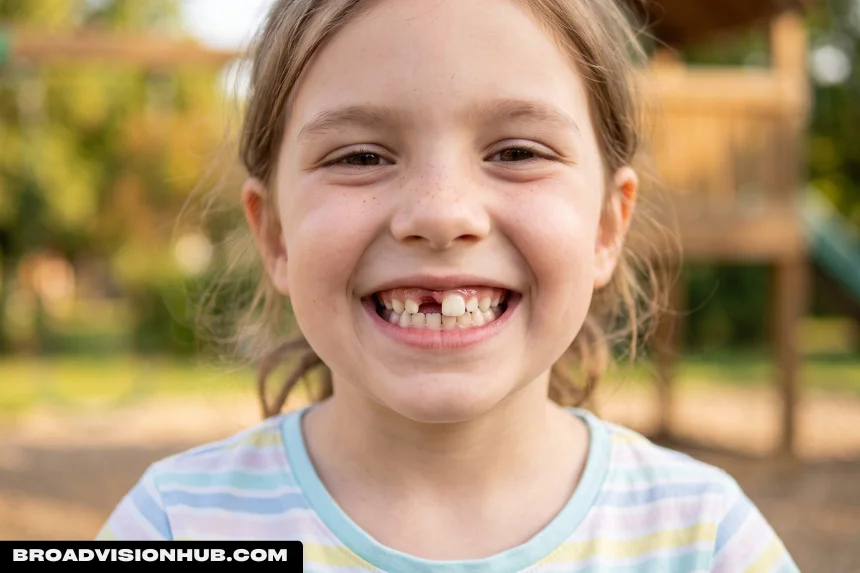
The two upper central incisors usually fall out between ages 7 and 8.
Because these teeth are highly visible, their loss often produces the familiar large front gap. However, the permanent central incisors may begin emerging relatively soon afterward.
Upper lateral incisors generally fall out between ages 8 and 9. Therefore, the complete replacement of the upper front teeth may take several years.
Temporary gaps and uneven-looking teeth are common during this mixed stage. Nevertheless, a dentist can evaluate extreme crowding, pain or a permanent tooth that appears unable to emerge.
When Do Kids Lose Their Bottom Teeth?
The lower central incisors are commonly the first teeth a child loses. They usually fall out between ages 6 and 7.
Next, the lower lateral incisors typically loosen between ages 7 and 8. The lower canines generally follow later, around ages 9–11.
Finally, the lower baby molars usually fall out between ages 10 and 13.
However, lower permanent teeth sometimes emerge behind baby teeth instead of directly underneath them. This situation can create a temporary double row known informally as “shark teeth.”
Do Kids Lose Their Canine Teeth?
Yes. Children lose all four primary canine teeth.
Canines are the pointed teeth positioned between the incisors and molars. They help tear food and guide the bite.
Lower canines usually fall out between ages 9 and 11. Meanwhile, upper canines generally fall out between ages 11 and 12.
Upper permanent canines need sufficient space to emerge correctly. Therefore, a dentist may monitor crowding closely during this stage.
Do Kids Lose Their Molars?
Children lose all eight baby molars. However, they do not naturally lose healthy permanent molars.
The baby molars include:
- Two upper first molars
- Two lower first molars
- Two upper second molars
- Two lower second molars
These teeth generally fall out between ages 9 and 13. Subsequently, permanent premolars emerge in their places.
This naming system creates understandable confusion. The adult teeth replacing baby molars are called premolars, while permanent molars grow farther back in the mouth.
Do Kids Lose Their 6-Year Molars?
No. The teeth commonly called 6-year molars are permanent teeth.
They usually emerge around ages 5½–7 behind the last baby molars. Because no baby tooth falls out first, parents may mistakenly assume these new teeth are temporary.
However, these molars must last throughout adulthood. Therefore, they need careful brushing from the moment they appear.
The deep grooves on permanent molars can collect food and bacteria. Consequently, a dentist may recommend dental sealants to help prevent cavities.
Do Kids Lose Their 12-Year Molars?
No. The so-called 12-year molars are also permanent teeth.
These second permanent molars typically emerge around ages 12–14 behind the first permanent molars. Once again, they do not push out or replace baby teeth.
Therefore, parents should not expect them to become naturally loose. A loose permanent molar requires dental evaluation.
What Replaces Baby Molars?
Permanent premolars replace baby molars.
Children normally develop:
- Four first premolars
- Four second premolars
Premolars sit between the permanent canines and permanent molars. They help tear, crush and grind food.
Because baby teeth do not include premolars, this name may seem unfamiliar to parents. Nevertheless, all eight premolars take over spaces previously occupied by primary molars.
Why Do Baby Teeth Fall Out?
Baby teeth fall out because permanent teeth develop underneath them.
As a permanent tooth moves toward the mouth, it causes the root of the baby tooth to dissolve, or resorb. Consequently, less root remains to hold the baby tooth in place.
Eventually, only a small amount of gum tissue may support it. The tooth then falls out naturally or comes free with gentle wiggling.
Therefore, a naturally shed baby tooth often looks as though it has no root. The root has not broken off; instead, the body gradually absorbed it.
What Is Mixed Dentition?
Mixed dentition is the period when a child has both baby and permanent teeth.
This stage generally begins around age six and continues until approximately ages 12–13. During this time, the mouth may look uneven because teeth emerge at different speeds.
A child may have:
- Permanent front teeth
- Baby canines
- Baby molars
- Permanent first molars
- Gaps awaiting new teeth
Although the appearance can seem disorganized, it is often a normal part of development. Nevertheless, regular dental visits allow a professional to monitor spacing, eruption and bite alignment.
Should Parents Pull a Loose Baby Tooth?
Usually, a loose baby tooth should fall out naturally.
Children can gently wiggle it with a clean finger or tongue. Over time, the remaining tissue should loosen.
However, parents should not force a tooth that causes pain or remains firmly attached. Pulling too early may cause unnecessary discomfort and bleeding.
If a tooth is hanging by a tiny amount of tissue and the child wants help, a parent can use clean gauze to remove it gently. Nevertheless, stop if the child experiences significant pain or resistance.
Avoid tying the tooth to a door, toy or other object. That sort of drama belongs in cartoons, not dental care.

What Should You Do After a Baby Tooth Falls Out?
A small amount of bleeding is normal after natural tooth loss.
Have the child bite gently on a clean piece of gauze for several minutes. In addition, avoid hard, sharp or very hot foods until the area feels comfortable.
The child should continue brushing. However, they should clean the tender area gently during the first day.
Contact a dentist if:
- Bleeding does not stop with pressure
- The pain becomes severe
- The gum develops significant swelling
- Pus or an unpleasant odor appears
- Part of an injured tooth may remain
- The tooth fell out after a hard impact
Is It Normal to Lose Teeth at Age Five?
Some children naturally lose their first tooth at age five, particularly when their baby teeth appeared early.
However, a tooth that becomes loose because of decay, gum infection or an accident needs dental attention. Early loss can affect the space reserved for the permanent tooth.
A dentist may recommend a space maintainer when a baby molar disappears long before its replacement is ready. Consequently, nearby teeth are less likely to move into the empty space.
What If a Child Loses a Tooth Too Early?
Premature tooth loss can result from:
- Tooth decay
- A fall or sports injury
- Gum infection
- Abnormal root resorption
- Certain medical or developmental conditions
Early loss of a front baby tooth may mainly affect appearance and speech temporarily. However, early loss of a baby molar can allow neighboring teeth to shift.
As a result, the permanent tooth may have insufficient space to emerge correctly. Therefore, arrange a dental examination instead of assuming no treatment is needed.
What If a Child Has Not Lost Any Teeth by Age Seven?
Not losing a tooth by age seven can still fall within normal development.
Children who got their first baby teeth later may also lose them later. In addition, family patterns can affect timing.
Nevertheless, routine dental examinations can confirm that permanent teeth are developing normally. A dentist may recommend an X-ray when eruption appears significantly delayed or asymmetrical.
Contact a dentist when:
- No baby teeth are loose by age eight
- One side develops very differently from the other
- A permanent tooth does not appear after a baby tooth falls out
- The child has pain, swelling or missing teeth
- Baby teeth remain long beyond the expected range
What Are Shark Teeth?
“Shark teeth” describes permanent teeth that emerge behind baby teeth, creating a temporary double row.
This commonly affects the lower front teeth. It occurs when the permanent tooth follows a slightly different path and does not dissolve enough of the baby tooth’s root.
Often, the baby tooth eventually loosens and falls out. Then, the tongue and normal growth may help guide the permanent tooth forward.
However, consult a dentist if:
- The baby tooth remains firm
- The permanent tooth continues emerging
- The child has pain or swelling
- There is not enough space
- The double row persists
A dentist may recommend removing the baby tooth when it prevents normal eruption.
What If a Baby Tooth Is Knocked Out?
A baby tooth knocked out by an accident should not be placed back into its socket.
Reinserting it could damage the permanent tooth developing underneath. Nevertheless, a dentist should examine the child for gum, bone and permanent-tooth injuries.
Contact a dentist promptly, particularly when:
- Bleeding continues
- The child has severe pain
- The tooth may have been pushed into the gum
- The jaw or face appears injured
- You cannot determine whether the tooth was primary or permanent
What If a Permanent Tooth Is Knocked Out?
A knocked-out permanent tooth is a dental emergency.
The American Academy of Pediatrics provides first aid for a knocked-out permanent tooth. Acting immediately gives the tooth its best chance of survival.
Parents should:
- Pick up the tooth by its crown, not its root.
- Avoid scrubbing or scraping it.
- Rinse it gently with milk or saline if dirty.
- Reinsert it when possible and safe.
- Otherwise, keep it moist in milk or a tooth-preservation solution.
- Go to a dentist or emergency department immediately.
Do not store a knocked-out permanent tooth in plain tap water. Most importantly, do not delay professional care.
How to Protect New Permanent Teeth
New permanent teeth need protection as soon as they appear.
The CDC’s oral health tips for children recommend regular brushing with fluoride toothpaste. Parents should also supervise younger children until they develop reliable brushing skills.
Helpful habits include:
- Brushing twice daily
- Using fluoride toothpaste
- Cleaning between touching teeth
- Limiting frequent sugary drinks and snacks
- Drinking fluoridated water when available
- Attending regular dental appointments
- Asking about sealants for permanent molars
- Wearing a mouthguard during contact sports
Although baby teeth eventually fall out, they still need treatment when they develop cavities. Healthy baby teeth preserve space, support speech and help children chew.
When Should a Child See a Dentist?
Arrange a dental appointment when:
- A loose tooth causes significant pain
- The gum becomes swollen
- A tooth falls out much earlier than expected
- A baby tooth remains after the permanent tooth emerges
- A permanent tooth does not appear
- Tooth loss occurs in an unusual sequence
- A tooth becomes loose after an injury
- A permanent tooth feels loose
- The child develops severe crowding
- A tooth turns gray or dark after trauma
- Bleeding does not stop
- The child has a toothache
Regular checkups also allow the dentist to identify problems before they cause pain.
Frequently Asked Questions
What teeth do kids lose?
Children lose all 20 baby teeth. Specifically, they lose eight incisors, four canines and eight primary molars.
How many teeth do kids lose?
Most children lose 20 teeth. However, these are primary teeth rather than permanent ones.
Which tooth usually falls out first?
The lower central incisors usually fall out first. Therefore, the first gap often appears in the bottom front of the mouth.
What age do kids start losing teeth?
Most begin around ages 6–7. Nevertheless, starting at five or seven may still be normal.
What age do kids stop losing teeth?
Most finish between ages 12 and 13. However, individual development may be earlier or later.
Do kids lose all their baby teeth?
Yes. Eventually, all 20 primary teeth normally fall out and are replaced by permanent teeth.
Do kids lose their front teeth?
Yes. Children lose all eight baby incisors, generally between ages 6 and 9.
Do kids lose their canine teeth?
Yes. Lower canines commonly fall out around ages 9–11, while upper canines usually fall out around ages 11–12.
Do kids lose their back teeth?
They lose their eight baby molars. However, permanent molars should remain.
Do kids lose their 6-year molars?
No. Six-year molars are permanent teeth that emerge behind the baby teeth. Therefore, they require lifelong care.
Do kids lose their 12-year molars?
No. These are also permanent teeth. Consequently, looseness in one of these molars needs dental evaluation.
What teeth replace baby molars?
Permanent premolars replace baby molars. Meanwhile, permanent molars emerge farther back without replacing another tooth.
Why does a baby tooth have no root after falling out?
The emerging permanent tooth causes the baby tooth’s root to resorb. Therefore, little or no visible root remains when it falls out.
Is it normal for a five-year-old to lose a tooth?
Yes, it can be normal. However, a dentist should check tooth loss caused by decay or injury.
Is it normal for a seven-year-old not to have lost teeth?
Yes, some children develop later. Nevertheless, regular dental visits can confirm that permanent teeth are forming correctly.
Should I pull my child’s loose tooth?
Usually, allow it to fall out naturally. However, a tooth hanging by a small amount of tissue may come free with gentle help and clean gauze.
What should I do if a baby tooth is knocked out?
Do not put it back into the socket. Instead, contact a dentist so the child can be checked for additional injury.
What should I do if a permanent tooth is knocked out?
Treat it as an emergency. Keep it moist, avoid touching the root and reach a dentist immediately.
What are shark teeth?
Shark teeth occur when permanent teeth emerge behind baby teeth. Although the situation often resolves, a dentist should evaluate a baby tooth that remains firm.
How long does it take for an adult tooth to appear?
Some permanent teeth appear within weeks, while others take several months. However, a dentist should check a prolonged or concerning delay.
Conclusion
Children normally lose all 20 baby teeth. The lower central incisors usually fall out first around ages 6–7. Subsequently, the remaining incisors, canines and baby molars loosen as permanent teeth develop.
Most children finish losing their primary teeth by ages 12–13. However, normal timing and order can vary.
Importantly, the permanent first molars that appear around age six do not replace baby teeth. Therefore, parents should recognize them as adult teeth and protect them with careful brushing, fluoride and possibly dental sealants.
Contact a dentist about pain, swelling, injury, very early tooth loss or permanent teeth that do not emerge as expected. Additionally, treat a knocked-out permanent tooth as an immediate dental emergency.
Medical Disclaimer
This article provides general educational information and does not replace advice, diagnosis or treatment from a dentist or other qualified healthcare professional. Contact a dentist about pain, swelling, dental injury, unusually early tooth loss or concerns about permanent-tooth development.
Read more about Ralph Macchio Wife